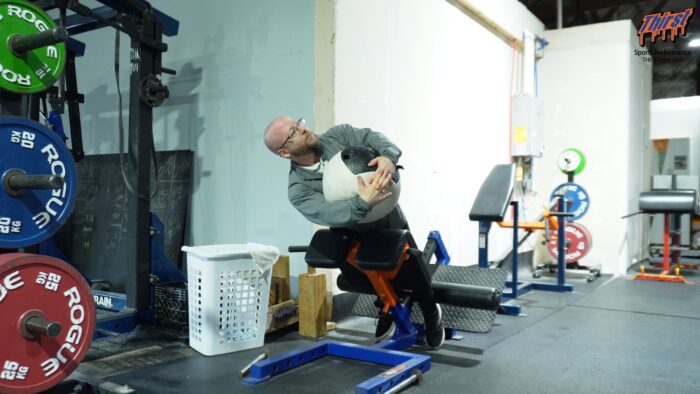

GHH/Back Extension With Med Ball Rotation

The 45-degree back extension with medball rotation adds loaded thoracic rotation to a classic glute-ham hyper, building a stronger, more resilient posterior chain while priming your lower back for heavy deadlifts, squats, and hinge work. Learn how to perform it correctly, the common mistakes to avoid, and how to program it as a warm-up or finisher for wrestlers, powerlifters, older lifters, and general fitness clients. Strength coach Brandon Smitley breaks down the cues, muscles worked, and progressions in this complete exercise guide.

Velocity Based Training Explained: The Science That Makes Athletes Stronger & More Explosive

Velocity based training (VBT) replaces guesswork-heavy percentages with real-time bar speed data, letting the load-velocity relationship tell you exactly how hard to train on any given day. In this complete guide, strength coach Brandon Smitley of THIRST Gym breaks down autoregulation, velocity loss thresholds, and rate of force development—and shows how athletes, powerlifters, and everyday lifters can use VBT to train smarter and get genuinely stronger.

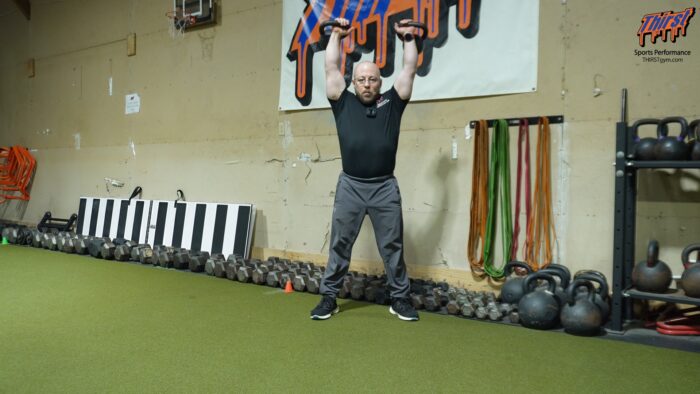
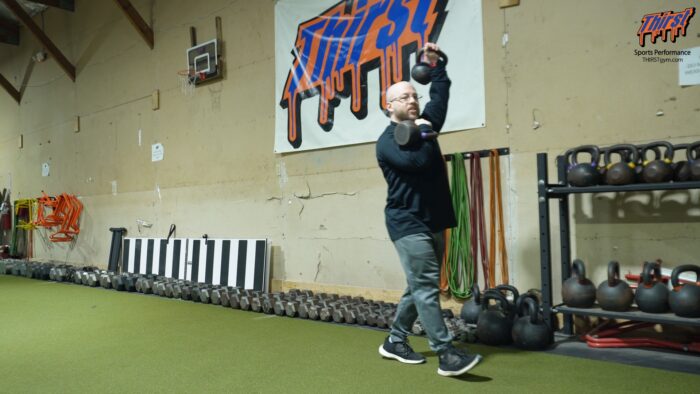
Off-Set KB Front Rack Carry With Waiter Carry

The offset kettlebell front rack carry with waiter carry is a full-body loaded carry that builds abdominal strength, shoulder stability, and hip health all at once. In this complete guide, strength coach Brandon Smitley of THIRST Gym breaks down the biomechanics, coaching cues, and programming for using this offset kettlebell carry as a finisher, conditioning tool, or warm-up. Learn how to load, position, and program it for wrestlers, powerlifters, combat athletes, and everyday lifters alike.

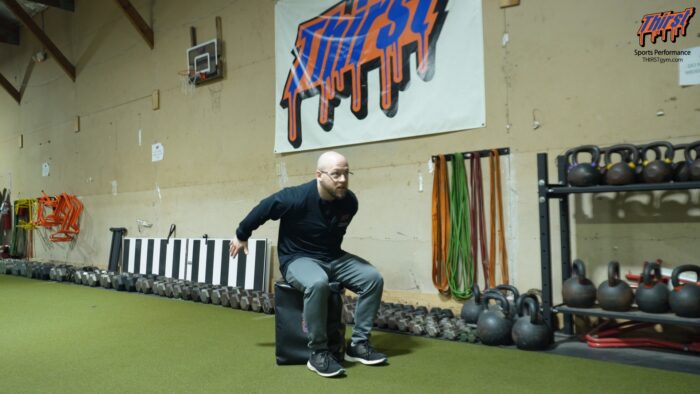
Seated Vertical Jump

The seated vertical jump is a simple, equipment-light plyometric exercise that builds explosive power and rate of force development by teaching athletes to produce force from a dead stop. In this guide, Brandon Smitley of THIRST Gym breaks down proper box height, jump stance, landing mechanics, and programming so you can jump higher and get off the ground faster. It’s the perfect power drill whether you’re in a fully equipped facility or training at home with just a chair.

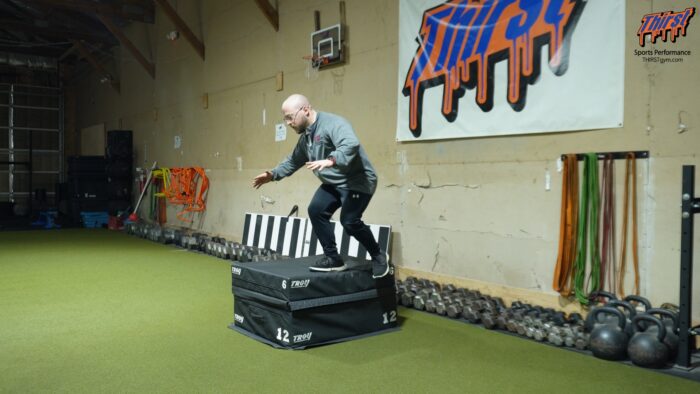
Single Leg Lateral Box Jump

The single leg lateral box jump is one of the best drills for building frontal plane power, single-leg explosiveness, and the hip stability that protects your knees during cutting and change of direction. In this guide, Brandon Smitley of THIRST Gym breaks down how to perform the exercise in both lateral and medial directions, how to program it for in-season athletes, and why it’s a powerful tool for wrestlers and combat sport athletes. Learn the coaching cues, landing mechanics, and progressions that make this single-leg plyometric drill so effective.

Single Leg Lateral Box Jump To Bilateral Landing

The single-leg lateral box jump to bilateral landing is an advanced plyometric that builds single-leg power, lateral change-of-direction ability, and hip stability in one efficient drill. Learn how to set it up, train both the lateral and medial variations, and program it correctly to expose and correct left-to-right asymmetries. Brandon Smitley of THIRST Gym in Terre Haute, Indiana breaks down the biomechanics, coaching cues, and sets-and-reps for this frontal-plane power exercise.

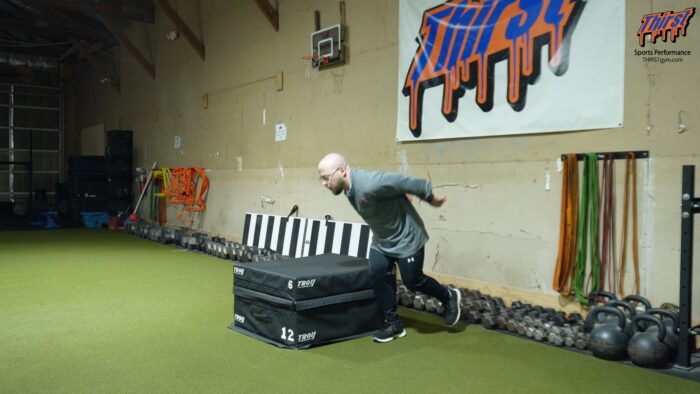
Hip Turn To Sprint and Back

Master the hip turn to sprint and back, an advanced reactive change of direction drill that combines the hip turn, linear sprint mechanics, and a return redirect into one explosive sequence. Learn the proper athletic stance, coaching cues, common mistakes, and exact set and rep programming to build change of direction speed for combat sports, field, and court athletes. A complete coaching breakdown of one of the most transferable speed and agility drills you can run.

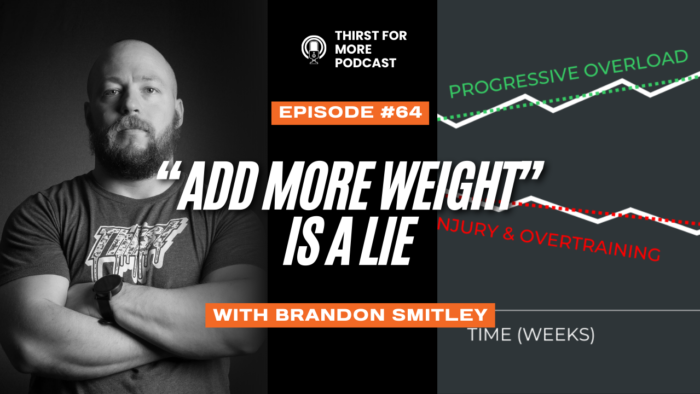
Progressive Overload Myths: The Evidence-Based Truth Coaches Need to Know

Progressive overload is more than adding weight to the bar. This guide breaks down seven common progressive overload myths and reveals the six real overload variables — load, volume, density, range of motion, exercise variation, and technique — that drive strength, hypertrophy, conditioning, and mobility progress. Learn how to program progressive overload correctly for beginners, intermediates, advanced lifters, and aging athletes with evidence-based coaching from THIRST Gym.