
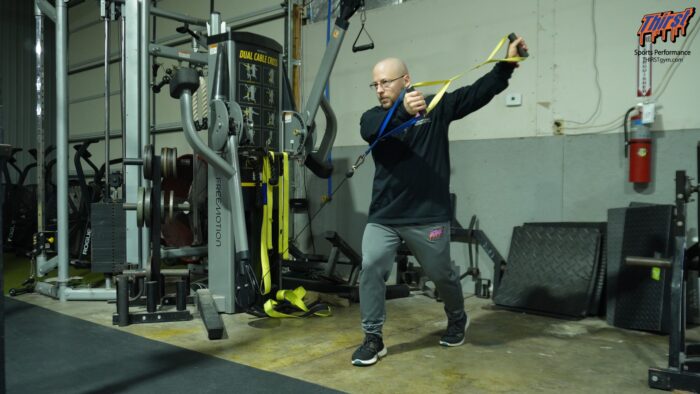
Split Stance WTS Cable Lift

The split stance cable lift is an underrated rotational core exercise that builds anti-rotation strength, hip stability, and change of direction performance for athletes, powerlifters, and combat sports competitors. Learn how to set up the lift with a cable machine and lift and chop strap, when to choose each foot position variation, and how to program it for serious carryover to sport and the platform.
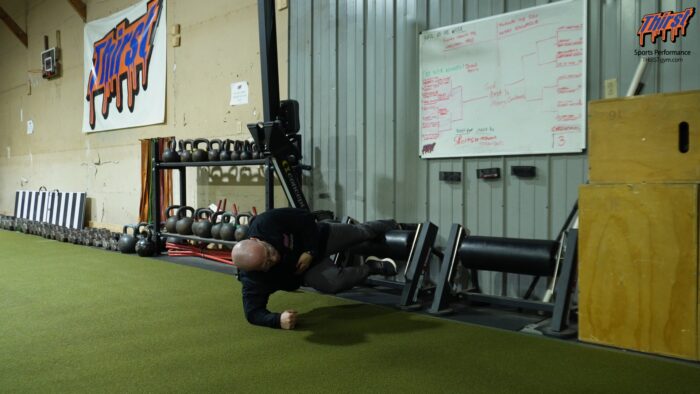
Copenhagen Side Plank March

The Copenhagen side plank march builds adductor strength, lateral core stability, and hip flexor endurance in a single challenging movement. This progression of the standard Copenhagen plank adds a marching component that increases trunk stability demands while maintaining isometric loading through the top leg adductors. Learn proper setup, technique, and programming recommendations to effectively incorporate this exercise into your strength and conditioning routine.

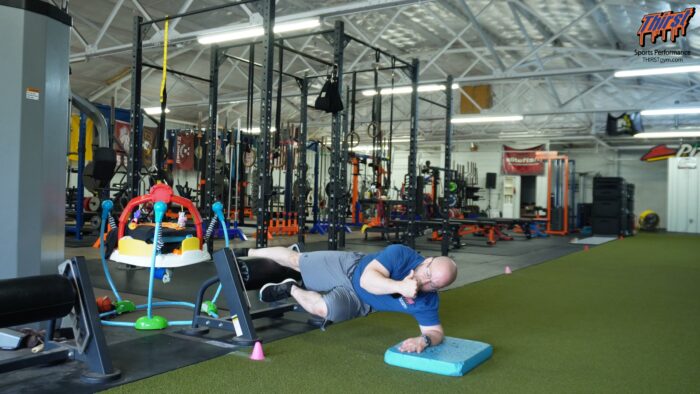
Cross Connect Copenhagen Plank

Master the Cross Connect Copenhagen Plank, an advanced core exercise that combines lateral stability with dynamic cross-pattern movement to improve athletic performance and functional strength. This challenging variation of the traditional Copenhagen plank targets your hip adductors, obliques, and deep core muscles while simulating natural gait mechanics for better movement quality. Learn proper technique, programming guidelines, and key benefits of this minimal-equipment exercise that transforms how your body moves both in training and daily life.

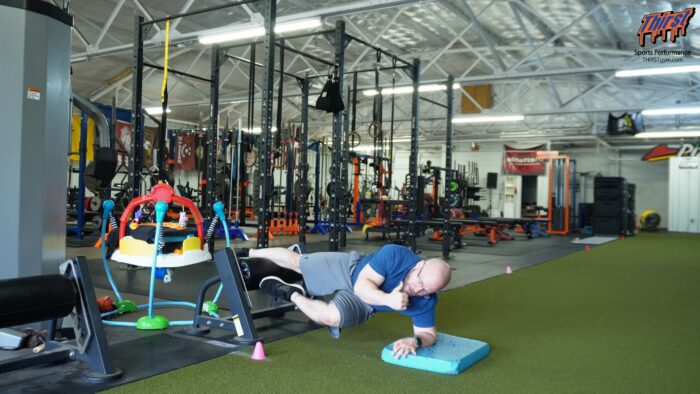
Cross Connect Copenhagen Plank Hold

The Cross Connect Copenhagen Plank Hold combines traditional adductor strengthening with functional movement patterns that mimic natural gait cycles, making it superior to standard Copenhagen planks for athletes and fitness enthusiasts seeking comprehensive core stability and groin injury prevention. This advanced variation challenges your inner thigh muscles, obliques, and neuromuscular coordination simultaneously while maintaining proper breathing throughout the hold. Learn the step-by-step setup, common form mistakes to avoid, and progression options that make this exercise accessible for beginners yet challenging enough for advanced practitioners.