
Copenhagen Side Plank March: Build Adductor and Core Strength with This Advanced Progression
The Copenhagen side plank has earned its place as one of the most effective adductor and lateral core strengthening exercises in strength and conditioning. The Copenhagen side plank march takes that foundation and adds a dynamic movement component that increases demand on the hip flexors, challenges trunk stability, and makes the exercise significantly more difficult without requiring any additional equipment. If you’ve mastered the standard Copenhagen plank and are looking for a smart, practical way to progress, this variation deserves a place in your programming.
Watch the video below on how to maximize this exercise.
Setup and Equipment
To perform the Copenhagen side plank march, you’ll need something to elevate your top leg. A standard utility bench works perfectly well for most people and is the most common piece of equipment you’ll find in any gym. If you have access to a split squat pad, that is the preferred option. The split squat pad is narrower and lower to the ground, allowing your bottom leg to slide directly underneath the pad rather than being forced out in front of you. That bottom leg positioning makes a meaningful difference in comfort and overall body alignment, so it’s worth using the split squat pad when available.
How to Perform the Copenhagen Side Plank March
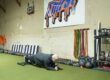
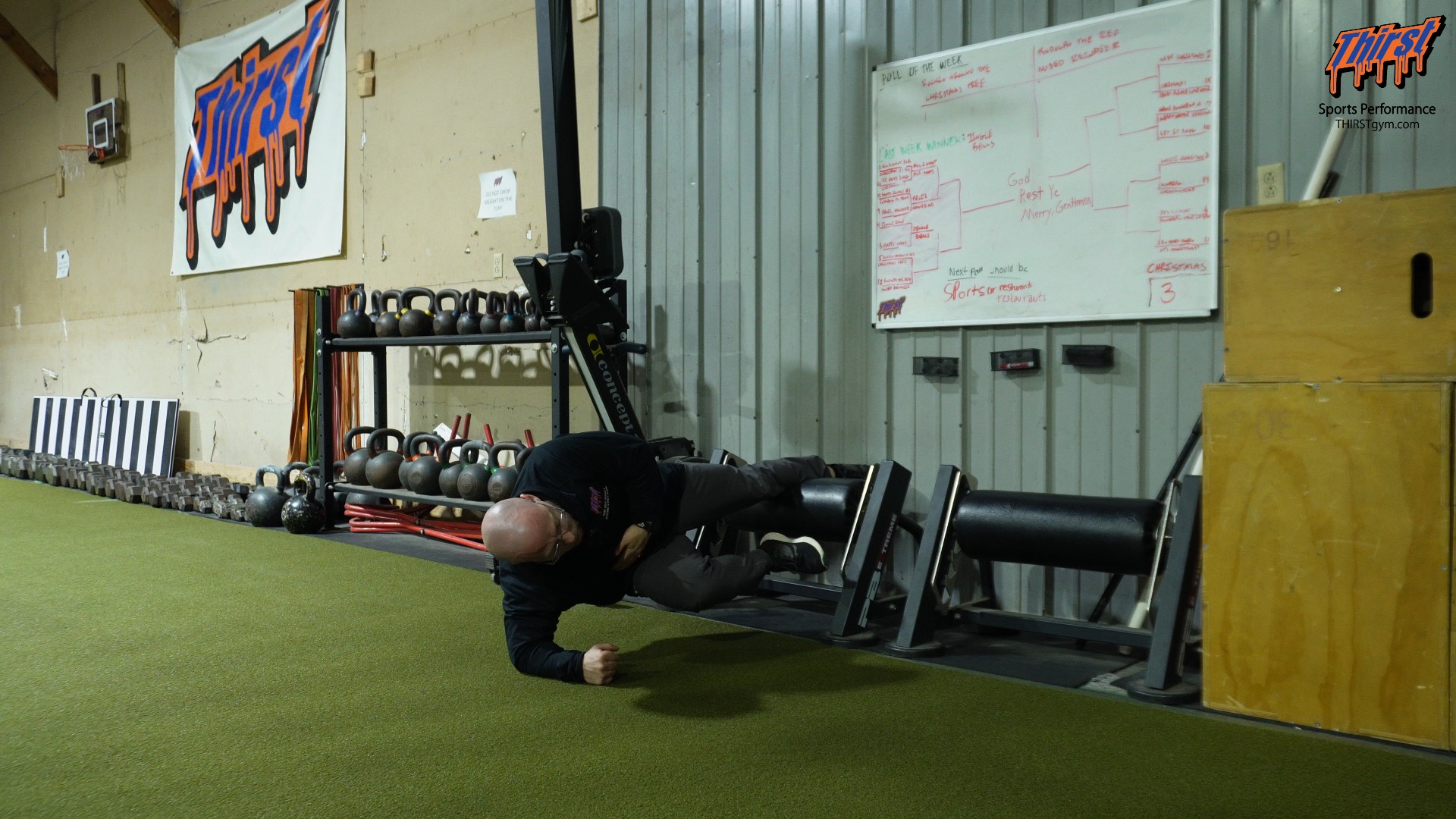
Begin by setting up in your standard Copenhagen plank position. Your top leg rests on the elevated surface — whether that’s the bench or split squat pad — and that contact point lifts your hips up into a full side plank position. Your bottom leg either slides underneath the pad or extends out in front of you depending on your equipment choice. From this position, your body should form a straight line from head to foot, with your hips elevated and your core fully braced.
Once you’re stable in that side plank position, the march begins. Simply bring your bottom leg up and forward in a controlled hip flexion movement, then return it back to the starting position. That’s the march. You’re not moving quickly or explosively — you’re moving deliberately while maintaining every other aspect of the side plank with precision.
What the Exercise Is Actually Training
The Copenhagen side plank march is working several things simultaneously, which is a large part of why it’s such an efficient exercise. The top leg is driving adductor strength through an isometric contraction — the adductors are working hard to maintain that elevated position against gravity the entire time. Meanwhile, the down-side obliques and lateral trunk musculature are stabilizing the body to prevent any collapse through the hips or rotation through the torso. The marching motion introduces a long-lever hip flexion challenge with the bottom leg, adding movement complexity and making trunk stability significantly harder to maintain.
This combination of isometric adductor loading on the top leg with active hip flexion work on the bottom leg, all while the obliques fight to hold position, gives you exceptional training value in a single movement. For athletes and clients who need strong groin musculature, resilient lateral core stability, and integrated lower body strength, this exercise checks all of those boxes at once.
Who Should Be Using This Exercise
The Copenhagen side plank march is best suited for individuals who have already built a solid foundation with the standard Copenhagen plank. If you can hold a clean Copenhagen plank for 20 to 30 seconds per side with good form, you’re likely ready to begin progressing into the march variation. This exercise is particularly valuable for wrestlers, combat sport athletes, soccer players, hockey players, and anyone whose sport demands groin strength, change of direction ability, or lateral stability under fatigue. It’s also an excellent tool for general strength training populations looking to address adductor weakness or improve overall trunk function.
Programming Recommendations
Start conservatively with this exercise, especially if the march component feels unstable or your hips drop during the movement. Work up to two to three sets of eight to fifteen reps per side, making sure that each rep maintains full tension and a level hip position throughout. Quality of each individual rep matters far more than accumulating volume quickly. As the exercise becomes more manageable, you can increase reps, slow the tempo of the march, or extend the range of hip flexion to continue progressing the challenge.
The Copenhagen side plank march fits well within a lower body strength session, a warm-up superset with a compound movement, or as part of a dedicated core and stability circuit. Pair it with hip extension work like Romanian deadlifts or hip thrusts to ensure you’re training all planes of lower body strength and not leaving any gaps in your programming.