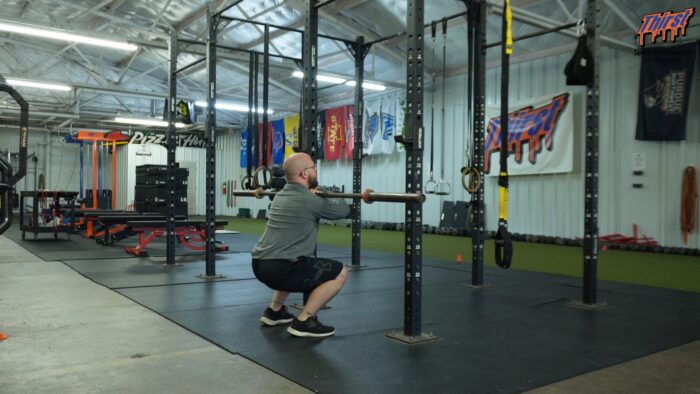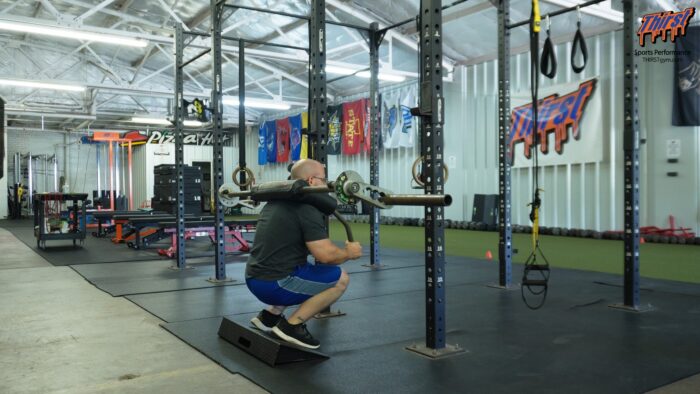

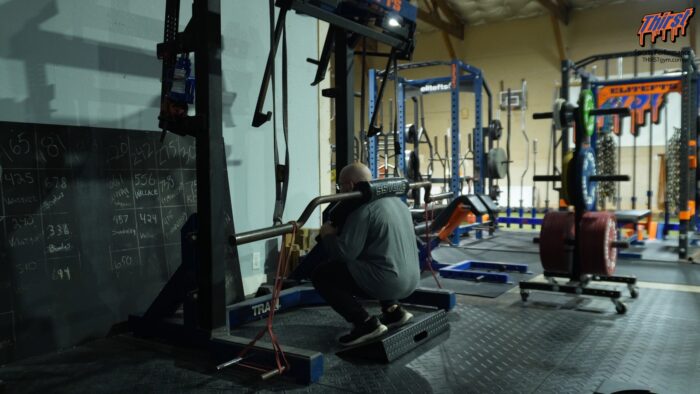
Front Rack Pause Squat

The front rack pause squat builds exceptional strength and control in the bottom position of your squat while improving mobility and reinforcing proper mechanics. This powerful barbell accessory exercise combines anterior loading with deliberate pause work to develop the positional strength, core stability, and upper back tension that translates directly to bigger front squats, back squats, and Olympic lifts. Learn proper setup, execution techniques, and programming strategies to integrate this squat variation into your strength training routine for maximum results.

5 Overlooked Accessories That Add 50+ lbs to Your Total

Most powerlifters are missing out on fifty pounds or more on their total because they’re overlooking five critical accessory exercises that build core stability, upper back thickness, and unilateral leg strength. This comprehensive guide reveals how to properly execute and program the dead bug, Croc row, Bulgarian split squat, JM press, and suitcase carry to address weak links in your squat, bench press, and deadlift. Learn the exact progressions, loading parameters, and programming strategies that can add serious pounds to your powerlifting total in just six to eight weeks.

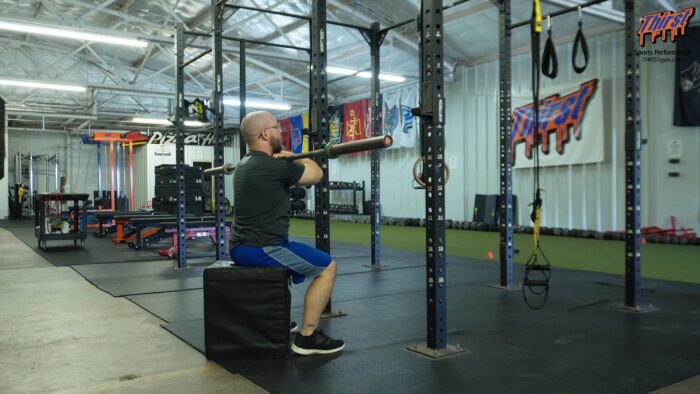
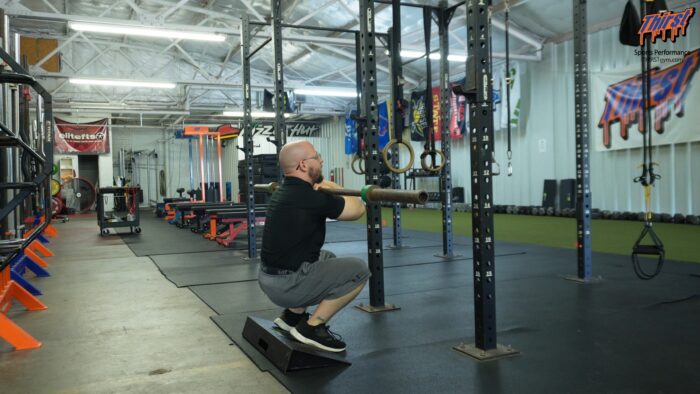
Front Rack Box Squat

Master the front rack box squat to build exceptional lower body strength while perfecting your front squat technique. This powerful anterior loaded variation helps you control squat depth, fix forward lean issues, and develop the upright torso positioning that translates to better squatting patterns across the board. Whether you’re teaching youth athletes their first barbell movements or breaking through strength plateaus, this box squat progression delivers results for lifters at every level.Retry

Heels Elevated Transformer Bar Squat

The heels elevated transformer bar squat delivers powerful quadriceps development and front squat mechanics without the wrist mobility demands or upper back strength limitations that hold most lifters back from traditional front squatting. By combining strategic heel elevation with the Kabuki Transformer Bar’s adjustable anterior loading system, you can achieve exceptional squat depth while maintaining a vertical torso position that maximizes quad engagement and minimizes lower back stress. This specialized variation allows you to load heavier than goblet squats while training the same beneficial movement patterns that make front squats so effective for building leg strength and athletic power.

Why Your Quads Won’t Grow (And 5 Exercises That Actually Work)

Discover why traditional squats and leg extensions only deliver 30% of your potential quad gains, and learn the advanced quadriceps exercises and programming techniques that will transform your leg training. This comprehensive guide reveals knee-dominant movement patterns, heel-elevated variations, and minimal-equipment alternatives that maximize muscle activation and hypertrophy. Master these science-backed quad training strategies to build stronger, more muscular legs regardless of your gym setup or experience level.

Heels Elevated Front Squat

Master the heels elevated front squat with this complete exercise guide that transforms your quad development and squat technique. Learn proper setup, equipment options, and step-by-step execution to maximize lower body strength while maintaining perfect vertical positioning. Discover why this powerful variation helps you overcome mobility limitations and achieve deeper squats with better muscle activation.

The Big 3: Why The Squat, Bench Press, and Deadlift Still Rule

Discover why the squat, bench press, and deadlift remain the foundation of effective strength training programs for everyone from complete beginners to elite powerlifters. This comprehensive guide breaks down proper technique, common mistakes, programming strategies, and practical variations for each of the big three exercises to help you build maximum strength and muscle mass efficiently. Learn how to safely progress these foundational compound movements, avoid injury, and create balanced total-body development that translates to real-world performance and long-term training success.

Core Training for Powerlifters: Beyond the Six-Pack

Discover how to build bulletproof trunk strength that will transform your squat, bench press, and deadlift performance through proven powerlifting techniques that go far beyond traditional ab training. This comprehensive guide reveals the anatomy, bracing methods, and specific anti-extension, anti-rotation, and anti-flexion exercises that elite strength athletes use to create maximum force transfer and spinal stability under heavy loads. Learn the programming strategies and exercise progressions that will turn your midsection into an unbreakable foundation for lifting personal records while maintaining long-term spinal health.

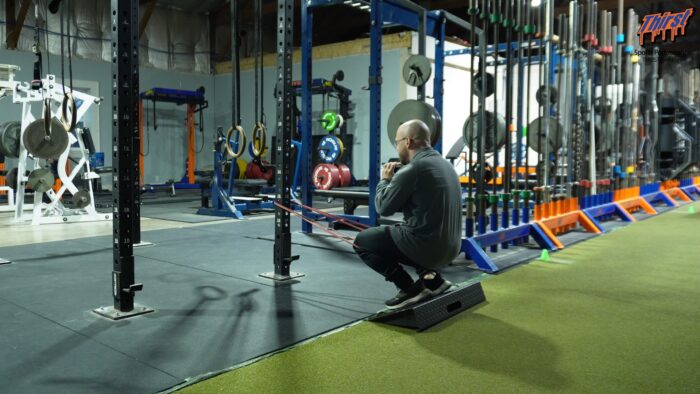
Floating Heel Landmine Goblet Squat

The floating heel landmine goblet squat is a revolutionary squat variation that combines heel elevation with landmine training to dramatically improve quad development and squat depth while eliminating ankle mobility limitations. This innovative exercise allows you to achieve deeper ranges of motion than traditional squats by staying on your toes throughout the movement, creating a more quad-dominant movement pattern that’s perfect for athletes and fitness enthusiasts looking to break through strength plateaus. Whether you’re struggling with ankle mobility issues or simply want to add an effective new squat variation to your routine, this landmine exercise delivers exceptional results for lower body strength and functional movement.

Breaking Plateaus: Programming For Squat PRs

Struggling with squat plateaus that seem impossible to break through? This comprehensive guide reveals the exact programming principles, assessment strategies, and training adjustments that strength athletes and powerlifters use to systematically overcome sticking points and build bigger squats. Learn how to manipulate volume, intensity, frequency, and variation while identifying the specific weaknesses—whether neural fatigue, muscular imbalances, or technical breakdowns—that are actually limiting your squat progress.