

The Wrestler’s Strength Blueprint: Off-Season, Pre-Season & In-Season Programming

Wrestling strength training should change across the year. Learn how to periodize your off-season, pre-season, and in-season lifting and conditioning so you build size and strength in the summer, convert it to power in the fall, and peak for the postseason. Coach Brandon Smitley of THIRST Gym lays out the full blueprint.
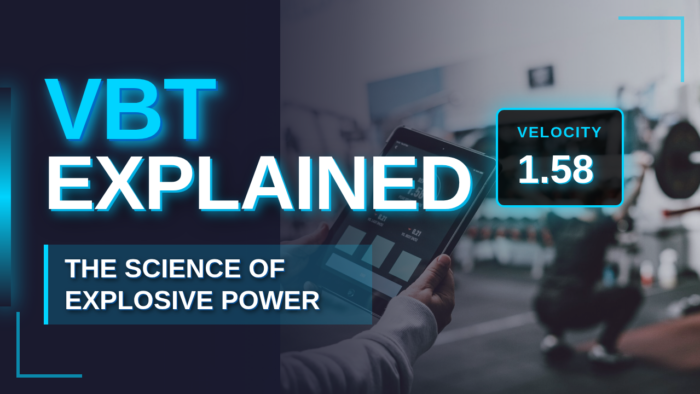
Velocity Based Training Explained: The Science That Makes Athletes Stronger & More Explosive

Velocity based training (VBT) replaces guesswork-heavy percentages with real-time bar speed data, letting the load-velocity relationship tell you exactly how hard to train on any given day. In this complete guide, strength coach Brandon Smitley of THIRST Gym breaks down autoregulation, velocity loss thresholds, and rate of force development—and shows how athletes, powerlifters, and everyday lifters can use VBT to train smarter and get genuinely stronger.

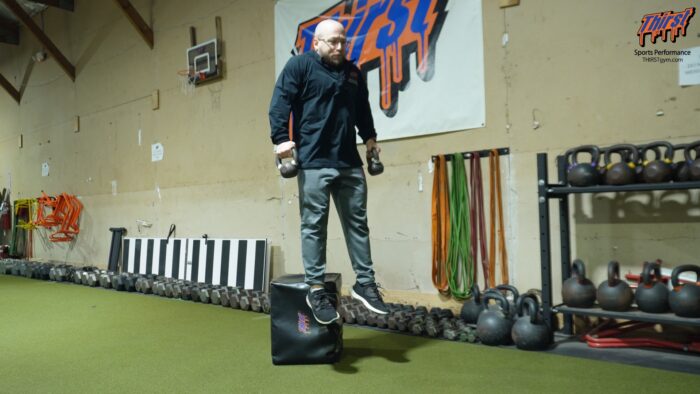
Seated Weighted Vertical Jump

The seated weighted vertical jump is a concentric-only power exercise that develops explosive starting strength and rate of force development by eliminating the stretch-shortening cycle. In this guide, strength coach Brandon Smitley of THIRST Gym breaks down proper setup, load selection, programming, and sport-specific applications for wrestlers, powerlifters, and team-sport athletes. Learn who should use this advanced jump variation and how to program it for a more explosive first step.

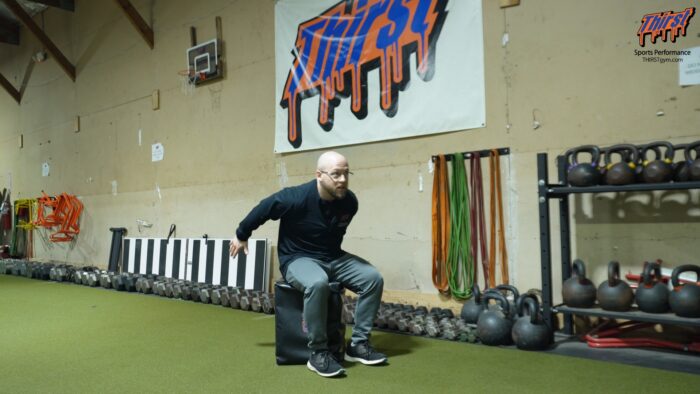
Seated Vertical Jump

The seated vertical jump is a simple, equipment-light plyometric exercise that builds explosive power and rate of force development by teaching athletes to produce force from a dead stop. In this guide, Brandon Smitley of THIRST Gym breaks down proper box height, jump stance, landing mechanics, and programming so you can jump higher and get off the ground faster. It’s the perfect power drill whether you’re in a fully equipped facility or training at home with just a chair.

The Science of Reactive Strength: Plyometrics That Actually Transfer to Sport Performance

Most plyometric training doesn’t transfer to sport performance because coaches confuse explosive strength with reactive strength — two qualities that demand entirely different programming. This in-depth guide breaks down all three phases of the stretch-shortening cycle, explains how to use the reactive strength index (RSI) to monitor contact time and readiness, and identifies the five programming mistakes that kill transfer. You’ll also get a specificity spectrum for exercise selection, a full 16-week plyometric periodization template, and sport-specific applications for sprinters, soccer players, and basketball athletes.

Why Bodybuilding Training Makes Wrestlers WORSE (And What to Do Instead)

Strength training for wrestlers built on bodybuilding splits can quietly make you worse on the mat by adding bodyweight without proportional force, power, or the right energy systems. This complete guide breaks down the physiology behind why bodybuilding training fails wrestlers and lays out four principles — plus a sample 3-day off-season program — to build explosive, sport-specific strength that carries over to competition.

Training Older Adults: Why Everything About “Senior Fitness” Is Probably Wrong

The traditional “senior fitness” model — light weights, resistance bands, and Bosu ball balance drills — is not just ineffective for older adults; research shows it may actually be accelerating their decline. In this post, Brandon Smitley of THIRST Gym breaks down the physiology of aging, dismantles the most damaging myths in senior fitness, and delivers a research-backed framework for programming high-quality strength and power training for clients over 60. Whether you are a personal trainer looking to better serve your older clients or an older adult who wants to train with real intention, this is the resource you have been waiting for.

Band Assisted Split Squat Jumps

The band assisted split squat jump is a highly effective unilateral plyometric exercise for developing single-leg power, rate of force development, and reactive strength in athletes. Using a resistance band and pull-up bar, athletes can train two distinct power qualities — reactive bounding or dead stop explosiveness — with just three to five reps per side. Learn proper setup, execution, and programming recommendations for this tool from THIRST Gym’s exercise index.

Single Arm DB Push Jerk

The single arm dumbbell push jerk is a full-body power exercise that uses an explosive lower body drive to launch a dumbbell into a locked-out overhead catch position — developing both power production and absorption in a single movement. Learn proper front rack setup, dip-and-drive mechanics, and how to land and absorb the load safely overhead. Program it for three to five sets of three to five reps per arm to build athletic upper body power without a barbell or platform.