
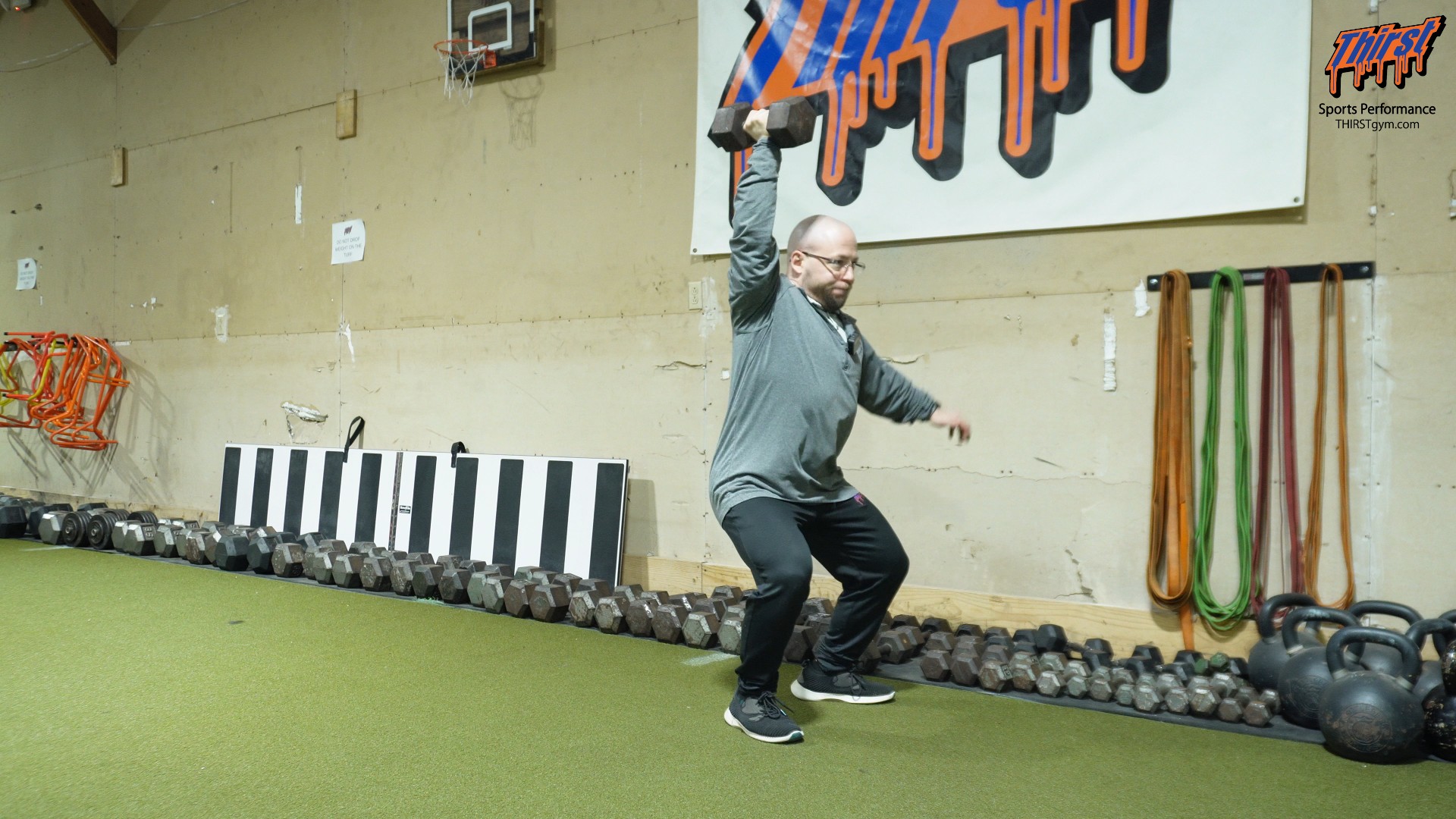
Single Arm Dumbbell Push Jerk: A Full-Body Power Builder
When most lifters think about developing upper body power, they gravitate toward pressing movements — bench press variations, overhead press, dumbbell work. What they often overlook is the role the lower body plays in generating and expressing that power. The single arm dumbbell push jerk changes that equation entirely, turning what might look like a shoulder exercise into a full-body power development tool that belongs in the training programs of athletes, powerlifters, and general fitness enthusiasts alike.
Watch the video below on how to maximize this exercise.
What Is the Single Arm Dumbbell Push Jerk?
The push jerk is a derivative of the Olympic weightlifting clean and jerk, adapted here for unilateral dumbbell training. Unlike a strict overhead press, the push jerk incorporates a coordinated lower body drive to initiate the movement, followed by a re-bend to catch and absorb the load overhead. The result is a ballistic, explosive movement that trains power output across the entire kinetic chain — not just the shoulders and triceps.
The single arm variation adds an additional challenge: managing unilateral load forces your core to resist rotation and lateral lean while simultaneously coordinating a powerful, symmetrical drive from the legs. This makes it particularly valuable for athletes who produce and absorb force asymmetrically, including wrestlers, combat sport athletes, and field and court sports players.
Setup and Starting Position
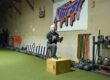
You’ll need just one dumbbell for this exercise. Begin by cleaning the dumbbell into a front rack position with the working arm. Critically, your hand should be positioned close to your face — not flared out wide to the side. A proper front rack keeps the load stacked over your base of support and allows for a more vertical, efficient drive path.
Your foot position should be slightly outside hip width, approximating a power position. This stance is deliberate: you want to be set up to express lower body force, not to squat deep. Think of it like an athletic ready position — loaded and coiled, not passive.
The Dip and Drive
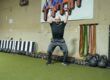
The movement begins with a controlled but quick dip. This is not a squat. You’re breaking at the hips and knees just enough to load the legs — a shallow quarter-squat depth at most. The key word here is fast. The dip needs to be brisk and aggressive so that the subsequent drive is equally explosive. A slow, lazy dip kills the elastic energy you’re trying to create and turns the push jerk into nothing more than a push press.
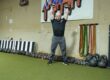
As you transition from the dip to the drive, think about pushing the floor away with your entire foot while simultaneously driving the dumbbell upward. Your legs initiate the movement — the dumbbell should feel like it’s getting launched, not pressed. The arms finish the job, but they’re following the momentum your lower body created.
The Catch and Landing
Here’s where the push jerk separates itself from the push press: instead of riding the dumbbell to full lockout while standing, you actively re-dip under the weight and catch it in a quarter-squat position with the arm locked out overhead. This means you should actually be receiving the dumbbell at a lower overhead position than if you had simply pressed it to lockout standing tall.
Landing is just as important as launching. Absorb the catch with soft knees, feet returning to roughly the same power-position stance, and the core braced to stabilize the overhead load. This eccentric absorption component is part of what makes the push jerk a genuine athletic training tool — it’s not just about producing force, but about controlling it.
Why This Exercise Works
The single arm dumbbell push jerk is a rare movement that meaningfully trains both power production and power absorption in one rep. The explosive drive phase develops rate of force development — the ability to produce large amounts of force quickly — while the catch phase trains deceleration and overhead stability. Together, these qualities transfer directly to athletic performance in sport and contribute to injury resilience in overhead positions.
From a practical standpoint, it’s also far more accessible than barbell Olympic lifting. There’s no need for a barbell, bumper plates, or a dedicated weightlifting platform. A single dumbbell and enough overhead clearance is all that’s required, making this a viable option in commercial gyms, home setups, and athletic performance facilities alike.
Load and Rep Recommendations
For this exercise, aim for three to five sets of three to five repetitions per arm. The low rep range is intentional — this is a power exercise, not a hypertrophy or conditioning movement. Every rep should feel fast and controlled. If the weight starts to feel slow and grindy, that’s a clear signal the load is too heavy to achieve the training effect you’re after. Back it down, keep it explosive, and let the quality of movement drive your progress.