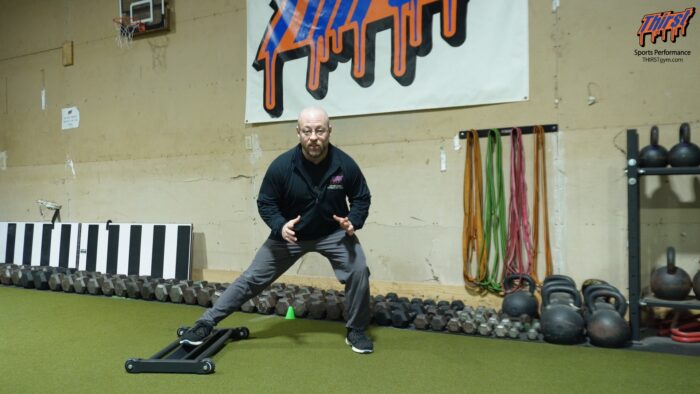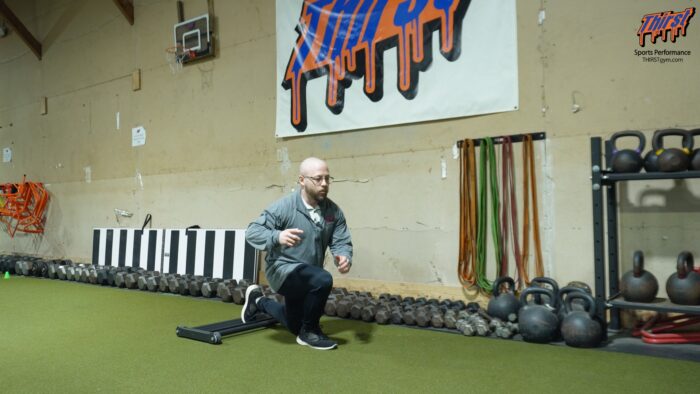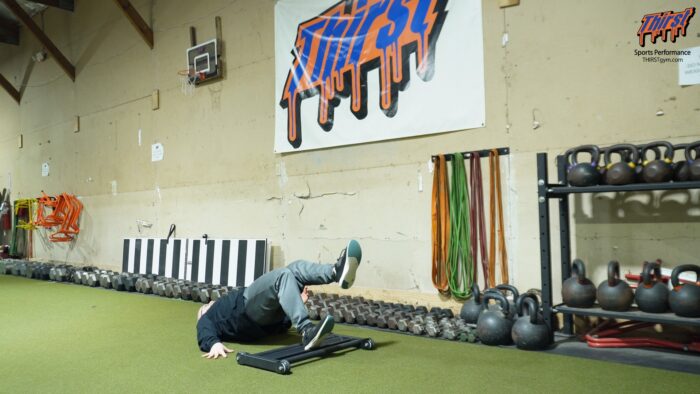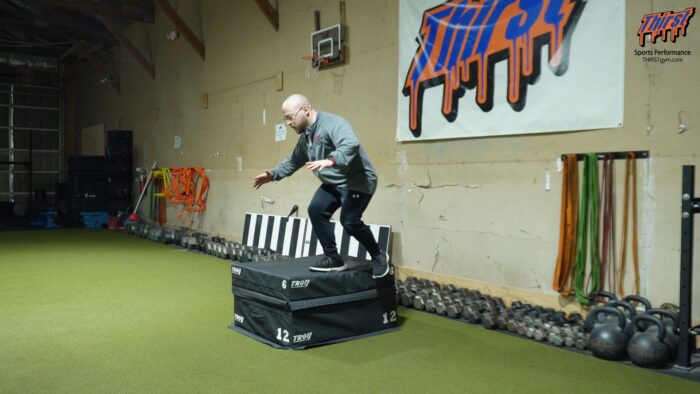

Off-Set KB Drop And Catch Lateral Lunge To Slantboard

The offset kettlebell drop and catch lateral lunge to slant board is a deceleration drill that teaches athletes to put on the brakes, yield into the hip, and stop cleanly before redirecting. Ideal for bigger, tighter athletes who struggle with lateral movement, this slant board exercise builds change-of-direction control, hip mobility, and single-leg stability. Learn the full setup, coaching cues, common mistakes, and programming from Brandon Smitley of THIRST Gym in Terre Haute, Indiana.

Off-Set KB Drop And Catch Lateral Lunge

Learn the offset kettlebell drop and catch lateral lunge, a powerful deceleration and change-of-direction exercise that teaches athletes how to plant, brake, and stop efficiently. Brandon Smitley of THIRST Gym in Terre Haute, Indiana breaks down the biomechanics, coaching cues, common mistakes, and programming for wrestlers, combat athletes, and anyone looking to move more athletically. A must-know drill for building resilient, injury-resistant change of direction.

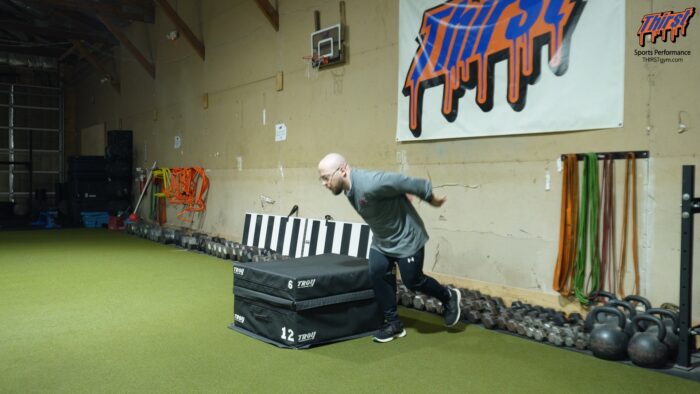
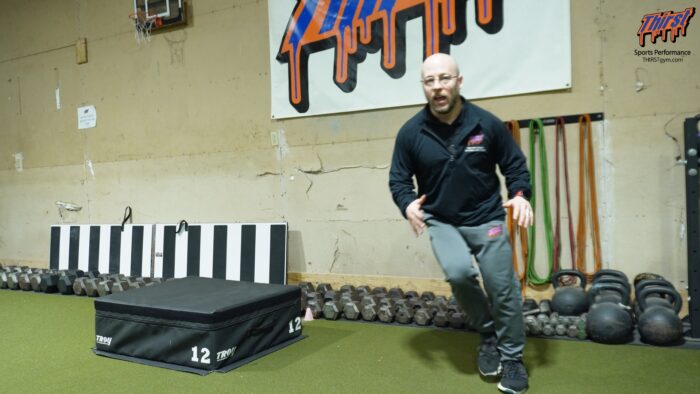
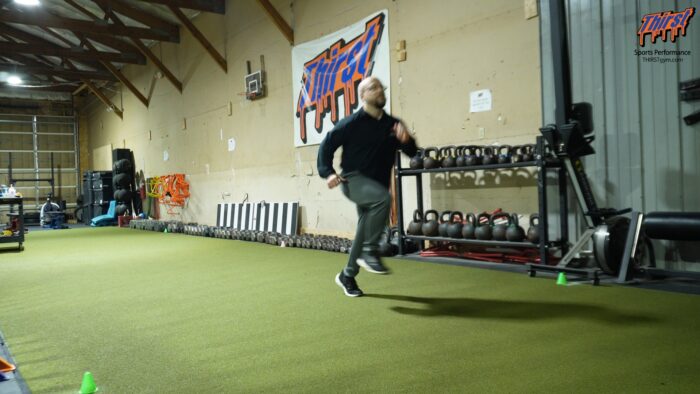
Toe Taps To Lateral Push Out

Toe taps to lateral push out is a reactive agility drill that builds ankle stiffness, frontal-plane control, and the split-second decision-making athletes need to change direction under pressure. Using nothing more than a low box and a timer beep, this drill turns a rehearsed pattern into true open-skill agility for wrestlers, court and field athletes, and advanced high schoolers. Learn the biomechanics, progressions, common mistakes, and programming from Brandon Smitley at THIRST Gym in Terre Haute, Indiana.

Standing Rack Supported Hip CARS

Standing rack-supported hip CARs are a simple, effective hip mobility drill that uses controlled articular rotations to unlock your hip’s full range of motion — flexion, extension, and rotation. Learn how to perform this versatile mobility exercise, the common mistakes to avoid, and how to program it as a warm-up or mobility filler for squats, deadlifts, wrestling, and athletic performance.

In-Place Lateral Lunge With Plate Reach

The in-place lateral lunge with plate reach is a beginner-friendly hip mobility exercise that builds frontal-plane strength, lengthens the adductors, and teaches you how to load each hip with confidence. Learn the proper stance, the plate-reach counterbalance technique, the most common mistakes to avoid, and how to program this drill as a teaching tool or pre-training warm-up. It’s a foundational lateral lunge variation for wrestlers, combat athletes, powerlifters, and anyone who wants healthier, more mobile hips.

Lateral Lunge With Plate Reach

The lateral lunge with plate reach is one of the best teaching exercises for building frontal-plane movement, hip control, and clean lateral mechanics. Learn how the plate counterbalance unlocks proper depth, why a light 5–10 lb plate beats going heavy, and how to coach foot position, knee tracking, and programming for athletes and general fitness clients alike. A simple, low-cost drill that lays the foundation for goblet and sandbag lateral lunge progressions.

Hatfield FFE Reverse Lunge

The Hatfield front foot elevated reverse lunge is one of the most effective single-leg exercises for building lower body strength and size, combining hand-assisted stability with an increased range of motion to load the glutes, quads, and hamstrings heavier than a traditional reverse lunge ever could. In this exercise index breakdown, I walk through setup, technique, programming recommendations, and exactly when to use this variation. It’s also one of my go-to single-leg movements for lifters dealing with low back issues who still want to train hard.

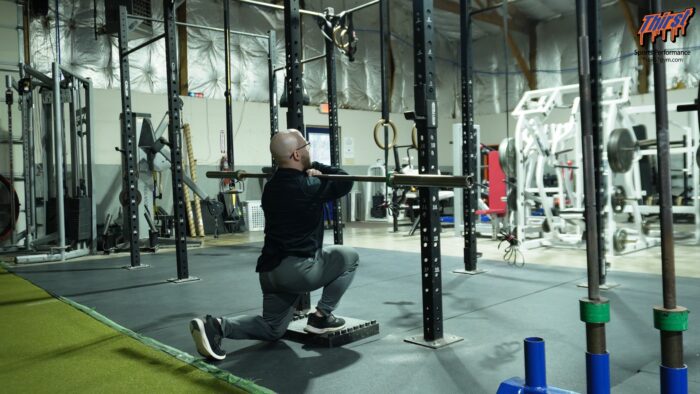
Hatfield Reverse Lunge

The Hatfield reverse lunge is a single-leg strength exercise that uses a safety squat bar and band pegs (or a second barbell) for stability, allowing you to load heavier than a traditional reverse lunge while training the glutes, hamstrings, and quads unilaterally. In this guide, I break down the setup, technique, biomechanics, and programming recommendations so you can use this lunge variation to build lower-body strength, size, and athletic performance. It’s also one of the best lunge variations for in-season athletes and lifters managing low back issues.