
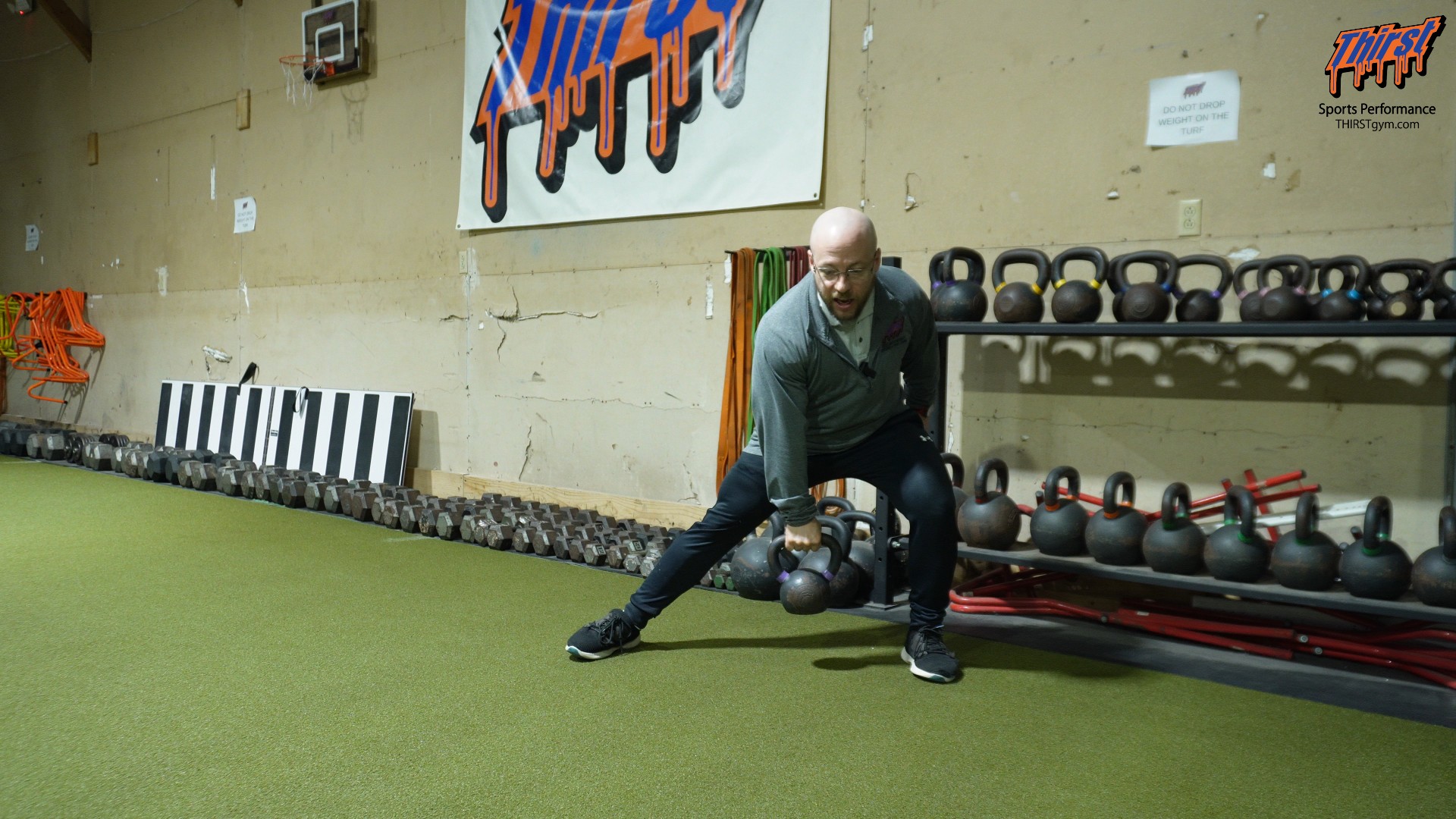
The Offset Kettlebell Drop and Catch Lateral Lunge: A Coach’s Guide to Teaching Deceleration and Change of Direction
Most strength and conditioning conversations are dominated by how much force an athlete can produce. We obsess over how high they jump, how fast they sprint, and how much weight they can move. But ask any seasoned coach what separates the great athletes from the merely strong ones, and a surprising number will point to the opposite quality: the ability to stop. Deceleration, the often-overlooked counterpart to acceleration, is where injuries are prevented, where change of direction is won, and where athleticism truly reveals itself. The offset kettlebell drop and catch lateral lunge is one of the most effective teaching tools available for training that exact quality, and it deserves a place in far more programs than it currently occupies.
This article breaks down what the exercise is, why it works on a biomechanical level, exactly how to coach it, the most common mistakes you’ll encounter, and how to program it for everyone from competitive wrestlers and combat athletes to general fitness clients who simply want to move better. By the end, you’ll understand not just how to perform the movement, but why it belongs in any program serious about building well-rounded, resilient athletes.
Watch the video below on how to maximize this exercise.
What Is the Offset Kettlebell Drop and Catch Lateral Lunge?
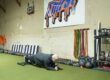
At its core, this exercise is a lateral lunge with two clever modifications layered on top. The first is the offset load: a single kettlebell is held in one hand rather than loading both sides evenly. The second, and the real magic of the movement, is the “drop and catch” component. As the athlete steps laterally into the lunge, they briefly release the kettlebell mid-rep, then re-catch it as they settle into the bottom position.
That small release does something profound. It forces the body to relax for a split second and then immediately re-tighten and re-brace to control the load as it returns to the hand. The athlete cannot rely on momentum or a continuously gripped weight to stabilize them. Instead, they have to actively reorganize their entire kinetic chain in an instant, exactly the kind of rapid stabilization demand that shows up when an athlete plants a foot and cuts in the opposite direction.
A kettlebell is the preferred implement here because the handle and offset center of mass make the drop and re-catch smooth, comfortable, and efficient. That said, if a kettlebell isn’t available, a dumbbell will work in a pinch. It’s slightly less forgiving in the hand, but the training effect remains intact. You don’t need a rack of specialized equipment for this drill. A single moderate kettlebell and a small patch of open floor is all it takes.
Why Deceleration Deserves Your Attention
To appreciate why this exercise matters, it helps to understand what’s actually happening when an athlete changes direction. Picture a defender in any field or court sport sprinting one way, then needing to instantly redirect to chase an opponent. Before they can re-accelerate in the new direction, they have to absorb and arrest all of the momentum carrying them the old way. That braking action is deceleration, and it places enormous eccentric demands on the muscles surrounding the hip, knee, and ankle.
Athletes who decelerate poorly leak energy, take extra steps to slow down, and ultimately change direction more slowly than their better-braking counterparts. Worse, poor deceleration mechanics are strongly associated with non-contact injuries, particularly at the knee, because a body that can’t control its own momentum tends to dump that uncontrolled force into vulnerable joints and connective tissue.
Here’s the part many lifters miss: the ability to stop is itself a trainable skill, not just a byproduct of being strong. You can be tremendously strong in a back squat and still be a clumsy, inefficient decelerator. The neuromuscular coordination required to plant, brake, and hold a stable athletic position has to be specifically practiced. That’s precisely what the drop and catch lateral lunge teaches, which is why it functions as a priming and teaching exercise rather than a max-effort strength builder.
The Biomechanics Behind the Drop and Catch
When you release the kettlebell at the start of the lunge and re-catch it as you reach the bottom, you create a brief disruption in tension. The moment the weight leaves your hand, your stabilizing muscles momentarily reduce their effort. The instant it lands back in your palm, those same muscles have to fire hard to control the load and prevent it from pulling you off balance.
This rapid relax-then-brace sequence trains what we might call reactive stability. The torso, hips, and the lead leg all have to coordinate to absorb the returning weight while maintaining a strong, athletic landing position. Because the load is offset to one side, the trunk also has to resist being pulled laterally, which lights up the obliques and the deep core musculature in a way that a symmetrically loaded lunge never will.
The lead leg, meanwhile, is doing the bulk of the deceleration work. As you sink into the lateral lunge, the hip, glute, quad, and adductor on that side lengthen under load to absorb and control your bodyweight plus the kettlebell. The goal is to “yield” that load smoothly, settling into the bottom position and owning a complete stop before reversing. That yielding capacity, the ability to accept force eccentrically and bring everything to a controlled halt, is the exact mechanical quality that transfers to planting and cutting on the field or mat.
How to Perform the Offset Kettlebell Drop and Catch Lateral Lunge
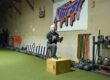
Begin standing tall with both feet together and the kettlebell held in one hand. The first key coaching point is hand and direction selection: the kettlebell should always be in the hand opposite the direction you’re lunging. If you’re lunging to your left, the kettlebell stays in your right hand. If you’re lunging to your right, it stays in your left. This offset positioning across the body is what creates the anti-lateral-flexion challenge for the trunk and helps you build that strong braced position.
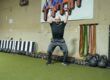
From this starting stance, take a controlled step out to the side into your lateral lunge. As you initiate that step and begin to descend, release the kettlebell. This isn’t a dramatic toss into the air. It’s a small, deliberate release, just enough to break the constant tension so your body has to re-organize. As you reach the bottom of the lunge, re-catch the kettlebell, allowing it to settle around the middle of your body near chest height.
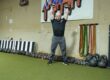
In that bottom position, you’re checking several things at once. The leg you’re lunging into should have the knee tracking over the toe, with the foot planted firmly. The trailing leg stays long and extended. Your chest should be turned slightly toward the working side, which helps you organize a strong, balanced position and sets you up to push back powerfully. The kettlebell should remain centered around the middle of your body rather than drifting out and pulling you off balance.
Once you’ve caught the weight and settled into a clean, fully controlled bottom position, the rep isn’t over. The emphasis here is on owning the stop. Hold that braced athletic position for a beat. Don’t rush. Then drive powerfully back to your starting position, just as you would finish any well-executed lateral lunge, returning both feet together before beginning the next repetition.
Common Mistakes and How to Fix Them
The single most frequent error with this exercise is using too much weight, and it announces itself clearly. If you go to catch the kettlebell and you find yourself still sinking or drifting downward as you catch it, unable to bring everything to a crisp stop, the load is too heavy. Either the weight genuinely exceeds what you can control eccentrically, or you simply don’t yet have the yielding strength to handle it cleanly. Either way, the fix is the same: drop down to a lighter kettlebell. The objective is a clean, efficient stop in a strong athletic position, not grinding through a heavy load. This is a teaching and priming exercise, and there is no prize for loading it like a strength movement.
A second common mistake is treating the rep as a continuous bounce, dropping into the lunge and immediately rebounding into the next one without ever truly stopping. This defeats the entire purpose. The value lives in the deliberate, complete stop. Athletes who rush from rep to rep never practice the braking and holding skill the drill is designed to build. Coach a full pause in the bottom position before every push back up.
Allowing the knee to cave inward on the lead leg is another fault to watch for, just as it would be in any lateral lunge. The knee should track in line with the toe. If you see it collapsing inward, that’s often a sign the load is too heavy, the athlete is moving too fast, or they need more practice with the basic lateral lunge pattern before adding the drop and catch layer.
Finally, watch for the kettlebell drifting away from the body’s centerline. When the weight swings out wide, it pulls the athlete off balance and undermines the stable position you’re trying to build. Cue the athlete to keep that kettlebell tracking around the middle of the body, with the chest turned slightly toward the working side.
Programming the Exercise: Sets, Reps, and Pairings
Because this is a teaching and priming movement rather than a strength or conditioning grinder, the prescription is deliberately low in volume and high in quality. Aim for roughly three to five repetitions per side. Within that range, every single rep should feature a good, controlled yield and a genuine, owned stop. The moment quality degrades, the set is finished.
You’ll almost certainly notice that one side feels more coordinated and effective than the other. This is completely normal and nothing to be alarmed about. Most athletes have a dominant side for cutting and deceleration, and these asymmetries reveal themselves clearly in a drill like this. Over time, you can use that information to give the weaker side a little extra attention.
Where this exercise truly shines is as a primer paired with more dynamic work. Because it teaches the body how to stop and decelerate in a controlled, low-velocity setting, it pairs beautifully with plyometric and change-of-direction drills performed at higher speeds. The drop and catch lunge essentially grooves the braking pattern, and then the faster work expresses that pattern at game-relevant velocities.
A practical approach is to pair the drop and catch lateral lunge with whatever lateral plyometric or agility drill fits your athlete’s needs, running them together for about three to five sets. The lunge primes the deceleration mechanics, and the plyometric or change-of-direction exercise then challenges the athlete to apply those mechanics dynamically. This pairing is especially powerful when your goal is helping athletes learn to stop more quickly and plant more efficiently.
While its greatest value is for athletes, there’s nothing stopping a general fitness client from using it as a regular accessory movement, particularly someone who plays recreational sports and wants to move more athletically and resiliently. The single-leg stability, core control, and balance demands carry over nicely to everyday robustness.
Who Benefits Most From This Exercise?
The athletes who stand to gain the most are those whose sports demand rapid, repeated changes of direction. Wrestlers and combat sports athletes, including those in MMA, Brazilian jiu-jitsu, and boxing, live in a world of constant lateral adjustment, level changes, and explosive redirection. Teaching them to plant, brake, and re-set efficiently pays dividends in both performance and durability. Their ability to absorb force, stop on a dime, and re-fire in a new direction often decides who controls a scramble or lands the cleaner strike.
Field and court athletes such as soccer players, basketball players, and football players similarly depend on elite deceleration to defend, evade, and re-accelerate. For these athletes, the drill is a natural fit within a speed and agility block.
Youth athletes are another population where this exercise earns its keep. Young athletes are still developing fundamental movement competency, and a low-load, teaching-focused drill like this is an ideal way to instill good deceleration habits before bad ones take root. Teaching a young athlete how to stop properly is one of the most valuable, and most overlooked, gifts a coach can give them.
Even athletes in sports we don’t immediately associate with cutting can benefit. Golfers and swimmers, for instance, both rely on rotational control and the ability to organize a stable position against an offset load, and the trunk and hip demands of this drill carry over more than you might expect.
Bringing It All Together
The offset kettlebell drop and catch lateral lunge is a deceptively simple movement that solves a real and frequently neglected problem: most athletes are far better at producing force than they are at absorbing and controlling it. By layering a brief load release and re-catch onto a familiar lateral lunge pattern, the exercise forces the body to relax, re-brace, and own a stable athletic stop, the exact skill that underpins efficient change of direction and resilient, injury-resistant movement.
Keep the load light enough that every catch ends in a crisp, controlled stop. Hold the kettlebell opposite your lunging direction, keep it centered on the body, track the knee over the toe, and above all, truly own the stop on every rep. Program it for three to five quality reps per side, pair it with your plyometric and agility work, and you’ll have a powerful teaching tool for building athletes who don’t just go fast, but can stop on command.