
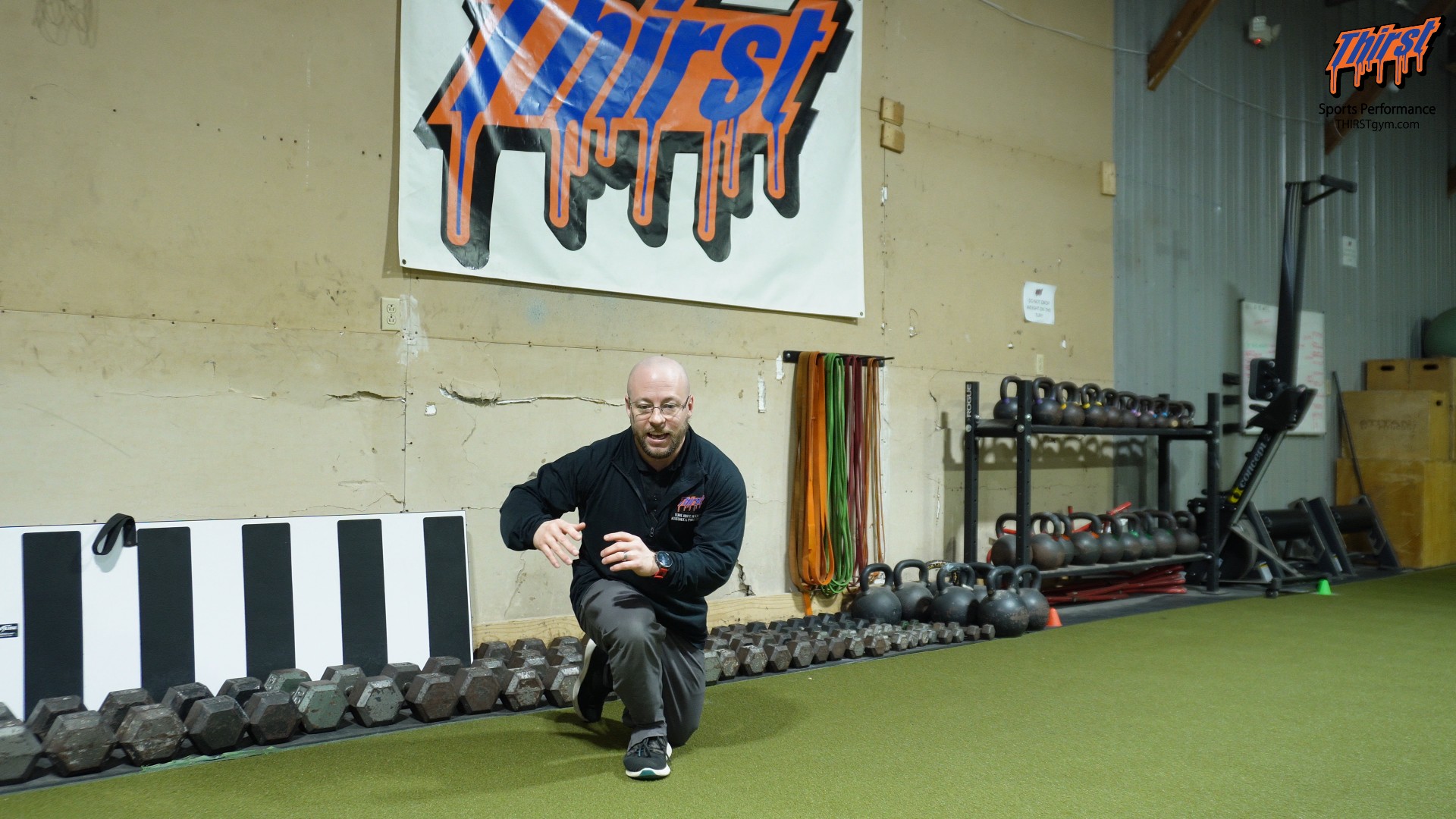
The Lateral Lunge to Curtsy Lunge: A Frontal Plane Flow for Better Hips, Stronger Glutes, and More Athletic Movement
Most lifters spend the overwhelming majority of their training time moving in a single direction. We squat up and down. We deadlift up and down. We run, row, and bike forward. From a strength and conditioning standpoint, this sagittal-plane bias makes sense — it’s where the biggest, most measurable numbers live. But it also leaves a glaring hole in the way most people move, because human beings don’t live their lives exclusively in a straight line. Athletes cut, shuffle, and change direction. General fitness clients reach, twist, and step sideways to load the dishwasher or catch their balance on an icy sidewalk. Combat athletes circle, sprawl, and shoot from angles that have nothing to do with a straight forward-and-back pattern.
That’s exactly why the lateral lunge to curtsy lunge has earned a permanent spot in my coaching toolkit at THIRST Gym. It’s a frontal-plane movement that flows beautifully, requires almost no equipment, and slots into your training in at least three distinct ways. Whether you’re a wrestler trying to own your hips, a powerlifter looking to clean up your warm-up, or a general fitness client who simply wants to move better and feel more athletic, this combination delivers a lot of value for very little setup.
Watch the video below on how to maximize this exercise.
What the Lateral Lunge to Curtsy Lunge Actually Is
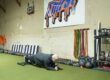
At its core, this is two well-known exercises stitched together into one continuous flow. You take a lateral lunge, return to the center, and then immediately transition into a curtsy lunge on the same side before coming back again. The beauty is in the combination: the lateral lunge drives you out to the side, loading the inner thigh and teaching you how to sit into your hip, while the curtsy lunge crosses the working leg behind your body, challenging the glutes and the rotational stabilizers of the hip in a completely different way.
All you really need is a little bit of open floor space and the willingness to move side to side. You can absolutely load it up — and I’ll cover when and how to do that below — but I genuinely prefer this movement as a bodyweight flow. It works as part of a dynamic warm-up, as a standalone mobility or movement-prep drill you can do at home, or as a conditioning finisher to close out a hard session. Few exercises are that flexible.
How to Perform It Step by Step
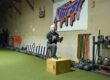
Start standing tall with both feet together and your weight balanced evenly. From there, take a big, deliberate step out to the side into your lateral lunge. The foot you step with should plant flat, toes pointing forward or just slightly out, while you push your hips back and down, allowing that knee to bend as the opposite leg stays long and straight. You should feel a strong stretch through the inner thigh of the straight leg and a working sensation in the glute and quad of the bent leg.
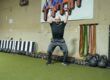
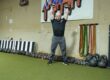
Drive back to the center, returning to that tall, feet-together starting position. Without pausing for long, transition into your curtsy lunge by stepping the same working leg back and across behind your body — think of it as crossing one leg behind the other, the way you might dip into a formal curtsy. Lower until your back knee gently approaches or lightly touches the ground, keeping your front shin relatively vertical and your torso upright. Then return to center once more.
That’s one full repetition: lateral lunge out, back to center, curtsy lunge behind, back to center. You can perform all of your reps on one side before switching, or you can alternate side to side, flowing from a lateral lunge on one leg into a curtsy lunge on the same leg and rolling continuously back and forth. Both approaches are valid; alternating tends to feel more like a true flow and keeps your heart rate up, while staying on one side can help you really hone in on a stiff or weak hip before moving on.
Why Frontal-Plane Training Matters So Much
Here’s the part most people skip over. The reason this movement is so valuable has very little to do with the exercises themselves and everything to do with the plane of motion they live in. By stepping side to side, you’re training the frontal plane — the dimension of movement responsible for everything that happens laterally to your body. This is the plane that controls how well you can shift your weight from one hip to the other, decelerate a sideways force, and stay stable when you’re loaded off-center.
When you sit into the bottom of that lateral lunge, you’re lengthening and loading the adductors, the muscles of the inner thigh that quietly stabilize the pelvis and contribute far more to athletic power than most lifters realize. You’re also practicing the skill of getting into and out of your back hip — actively sitting into the hip socket, loading it, and then driving out of it. That ability to access the back hip is foundational to nearly everything athletic: a wrestler’s stance and level changes, a sprinter’s stride, a lifter’s hinge.
The curtsy portion adds a rotational and stability demand on top of that. As the working leg crosses behind, the gluteus medius and the deep hip rotators have to fire to keep your pelvis level and your knee tracking properly. Over time, this combination builds hips that are simultaneously more mobile and more controlled — developing the glutes, hamstrings, and adductors while teaching your nervous system to be comfortable and stable in positions it rarely visits. The end result is an athlete who is more mobile, more balanced, and frankly just more capable of moving well in any direction.
Three Ways to Program It
The flexibility of this movement is one of its biggest selling points. Here’s exactly how I’d plug it into a program depending on your goal.
As a dynamic warm-up. This is my favorite use. Before you squat, deadlift, or do anything athletic, run through five to eight reps on each side, alternating back and forth. The goal here is to open the hips up well before you ask them to perform under heavy load. Treat it as movement preparation rather than a workout — smooth, controlled, and progressively deeper with each rep. By the time you’re done, your hips will feel noticeably more available and ready to work.
As a loaded strength exercise. If you want to use this as a true strength movement, dial the volume back to three to five reps on each side and hold a load in the goblet position — a single dumbbell or kettlebell cradled against your chest. The added load increases the demand on the adductors and glutes considerably, and keeping the weight in front helps you stay upright and own each position. Because the range of motion and stability demand are already high, you don’t need much weight to make this challenging.
As a conditioning finisher. To close out a session, ditch the load to start and perform the flow for a set amount of time using just your bodyweight. Somewhere between sixty seconds and two to three minutes per set tends to be the sweet spot. Keep alternating sides throughout so you balance the work evenly between hips rather than smoking one side. Once you can comfortably maximize that time domain, add a little bit of load to make it more challenging again. This is a fantastic low-impact way to keep the heart rate elevated while reinforcing quality hip movement when you’re already fatigued — which, not coincidentally, is exactly when athletes tend to break down.
Common Mistakes to Watch For
A few things tend to go sideways with this drill. The most common is rushing it. When this becomes a flailing, momentum-driven movement, you lose the very hip control you’re trying to build. Slow down and own each position. Second, watch the knee on the curtsy lunge — it should track in line with the foot rather than collapsing inward. If your knee caves, shorten the range until you can control it. Third, keep your torso tall, especially under load; folding forward turns the exercise into a different movement entirely and pulls the work away from the hips. Finally, don’t chase depth you don’t have yet. Range of motion will improve over weeks of consistent practice, so meet your hips where they are today and let the mobility come.
Who Should Be Doing This
Honestly? Almost everyone. For wrestlers, grapplers, and combat sports athletes, the ability to load and unload the back hip and move powerfully in the frontal plane is non-negotiable, and this drill builds exactly that. For powerlifters, it’s a low-cost way to restore hip mobility that heavy sagittal-plane training tends to erode over time, making your squat and deadlift positions easier to hit. And for general fitness clients, it’s one of the most efficient ways to build mobile, durable, athletic hips without needing a rack full of equipment — you can do it in your living room with nothing but a few feet of floor.
The lateral lunge to curtsy lunge isn’t flashy, and it won’t show up on a one-rep-max leaderboard. But movements like this are quietly responsible for keeping you healthy, mobile, and athletic for the long haul. Add it to your warm-ups, sprinkle it into your strength work, or use it to finish off a session — your hips will thank you.
If you’ve got questions about how to fit this into your own training, drop them in the comments or reach out. And if you want more coaching like this, the THIRST For More Podcast and our channel are loaded with it.