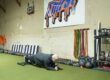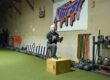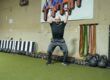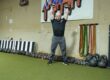

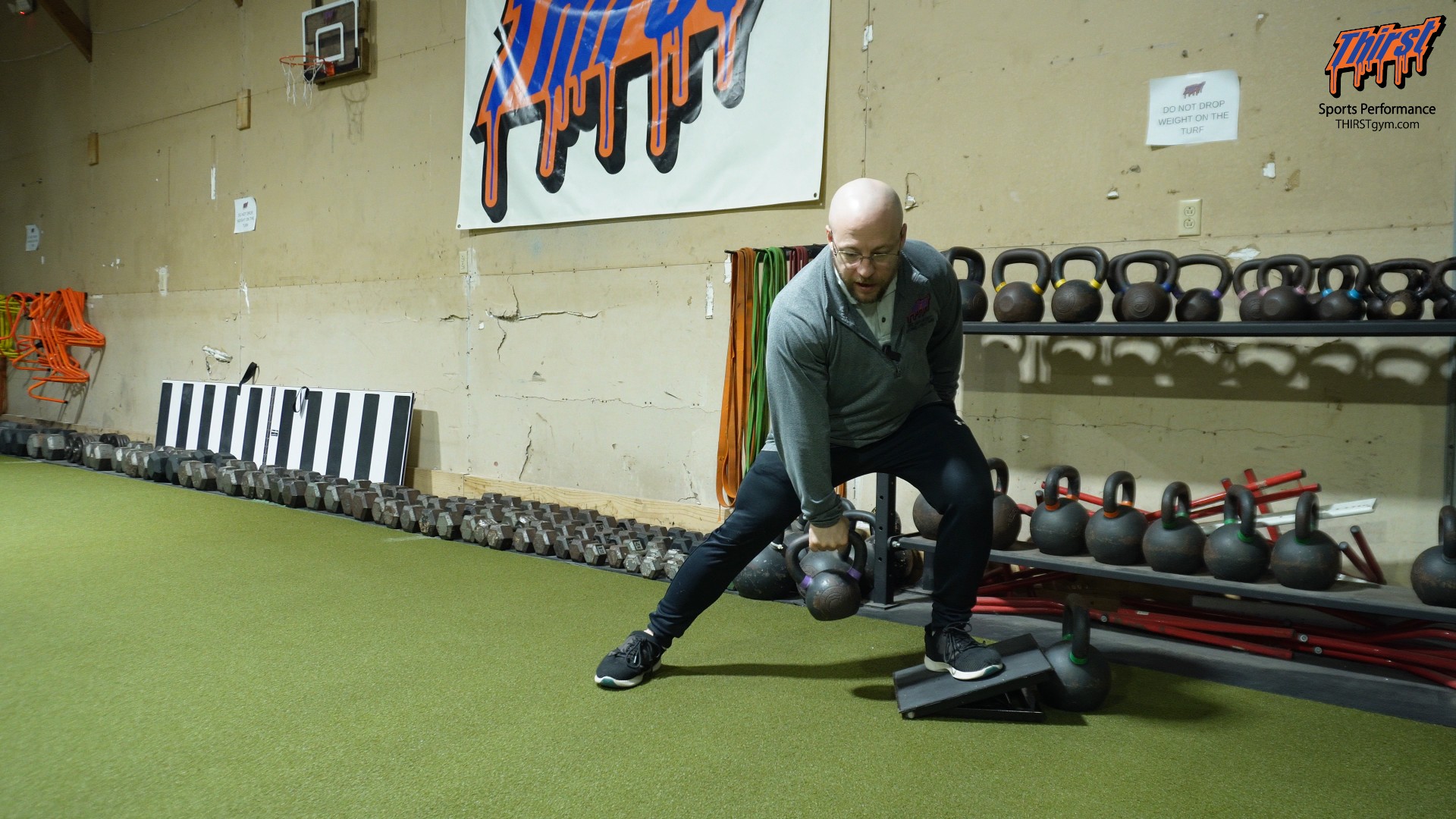
The Offset Kettlebell Drop and Catch Lateral Lunge to Slant Board: A Deceleration Drill That Teaches Athletes to Put On the Brakes
Speed gets all the attention, but the athletes who change direction the best are usually the ones who can stop the best. Acceleration and top-end velocity matter, yet the ability to decelerate, absorb force, and re-position the body to push off in a new direction is what separates a clean cut from a blown one. The offset kettlebell drop and catch lateral lunge to slant board is a deceleration drill built specifically to train that quality. It teaches athletes to yield into the hip, control lateral momentum, and learn what it actually feels like to put on the brakes before that skill ever gets asked of them at full speed on the field or mat.
This is a low-cost, high-return drill that fits beautifully into a speed, agility, or plyometric block. It is especially useful for the bigger, tighter, more powerful athletes who struggle to get into a quality lateral lunge in the first place. Below is a complete breakdown of why it works, how to set it up, how to coach it, the most common mistakes to avoid, and exactly where it belongs in a training program.
Watch the video below on how to maximize this exercise.
Why Deceleration Training Matters More Than Most Coaches Admit
Most change-of-direction work lives or dies on the deceleration phase. When an athlete plants to cut, the muscles around the hip, knee, and ankle have to rapidly absorb force eccentrically, decelerate the body’s momentum, and then immediately reverse it to drive in a new direction. If that braking step is sloppy, the athlete either loses time bleeding off momentum over too many steps, or worse, lands in a poorly aligned position that puts the knee and ankle at risk.
The problem is that deceleration is rarely trained directly. Athletes spend hours sprinting and bounding, building the engine that produces force, but comparatively little time learning to absorb it. That gap shows up as athletes who can run fast in a straight line but look clumsy and unstable the moment they have to redirect. It also shows up in injury risk, since uncontrolled deceleration into a poorly positioned knee is one of the more common mechanisms behind non-contact lower-body injuries.
The offset kettlebell drop and catch lateral lunge to slant board attacks this gap directly. The entire point of the drill is to create a big, deliberate stop, to teach the body to sink into the hip and hold a strong, aligned position, and to do it slowly and intentionally before that same pattern gets sped up into a true plyometric cut.
What This Exercise Is and What It Trains
At its core, this is a lateral lunge performed onto an elevated slant board while holding a kettlebell in an offset position. As you lunge sideways, you drop the kettlebell a few inches and catch it again in the same hand at the moment your foot lands, which forces you to time and stabilize a sudden load right as you are trying to come to a complete stop.
The drill develops three things at once. First, it trains lateral deceleration, teaching the athlete to absorb sideways momentum and stop cleanly rather than drifting or collapsing. Second, it builds hip mobility and end-range control by demanding the athlete sink into the trailing hip with the help of the slant board’s angle. Third, it improves single-leg lateral stability under an unstable, off-center load, which is far closer to the chaotic demands of real sport than a symmetrical, balanced exercise would be. It belongs in the family of deceleration plyometric and speed-agility drills, and it earns its keep as a teaching tool that prepares an athlete for harder, faster lateral work.
The Equipment You Need
You only need two things. The first is a kettlebell in the light-to-moderate range. The weight is intentionally modest, and that is not a limitation, it is the design. A dumbbell will work perfectly well if that is what you have on hand, though a kettlebell tends to feel more comfortable and natural for the drop and catch because of how it hangs and how the handle sits in the palm. Either implement gets the job done.
The second piece is some kind of slant board or wedge. A purpose-built agility and plyometric slant board, like the padded options from Perform Better, works great and gives you a little extra grip, but you do not need anything fancy. The same wedge or slant board you might use for a squat pattern will do the job. The angle is what matters, not the brand.
One practical setup note: make sure the board cannot slide out from under you when you land. If you are training on turf or any surface where the board might shift, place a kettlebell or another heavy object behind it to anchor it. On rubber gym matting this is usually less of a concern, but it is worth checking before you load up a single-leg landing. A board that slips at the moment of impact turns a teaching drill into an injury waiting to happen, so treat anchoring it as a basic safety step.
Why the Slant Board Earns Its Place
You could perform a lateral lunge on flat ground, so why elevate the lunging foot on a slant board at all? The angle does something specific and useful: it helps the athlete settle into the back, or trailing, hip more effectively while keeping the whole system better aligned. As the foot lands on the elevated, angled surface, the geometry nudges the hips and knee into a cleaner position, encouraging the knee to track over the midfoot and toes rather than caving inward or drifting past the foot.
This is exactly why the drill is so valuable for tighter, bigger, and stronger athletes who struggle to lateral lunge well to begin with, or who move poorly laterally in general. These athletes often lack the hip mobility or motor control to drop into a deep, square lateral lunge on flat ground. The slant board meets them where they are, guiding them into the back portion of the hip and giving them access to a position they could not otherwise hit cleanly. Over time, that repeated exposure to a well-aligned end range builds both the mobility and the confidence to own those positions.
Why the Offset Kettlebell Load Changes Everything
The genius of the drill is in the word offset. The kettlebell is held in the hand opposite the lunging leg, and it is held on one side of the body rather than balanced across both hands. That off-center load creates a constant pull toward the direction you are moving. As you lunge laterally, the weight naturally wants to keep pulling you in that direction, which makes it genuinely harder to stop and hold a complete, controlled yield at the bottom.
That added challenge is the entire feature. By forcing the athlete to resist being pulled past their stopping point, the drill builds the exact quality that struggling athletes lack: the ability to come to a true, complete stop and settle into a strong position rather than drifting, leaking momentum, or stumbling out the side. The drop and catch layers on top of this. Releasing and re-catching the kettlebell at the moment of landing introduces a brief, sudden load that the athlete has to absorb and stabilize right when they are asking the hip to brake. It is a small detail that significantly increases the demand on the stabilizers and sharpens the timing of the whole pattern.
It is worth emphasizing the other half of the equation, too. A good yield is not just about stopping; it is also about being able to push back out of that position efficiently. Because the offset load challenges the athlete to organize a strong, square base at the bottom, it also sets them up to drive powerfully back to the start. That two-way quality, stopping cleanly and then redirecting forcefully, is the heart of athletic change-of-direction movement.
How to Perform the Offset Kettlebell Drop and Catch Lateral Lunge to Slant Board
Start by positioning yourself a short distance away from the slant board, off to the side of it, since you need room to lunge sideways into it. Take a couple of bodyweight lateral lunges first to dial in your spacing. You want to be far enough away that you reach a full, lengthened lunge position when your foot lands on the board, but not so far that you have to reach or fall into it. Getting this distance right before you add load makes the whole drill cleaner.
Decide which direction you are lunging. If you are lunging to your left, the kettlebell goes in your right hand, always on the side opposite the lunging leg. Begin standing tall with your feet together and the kettlebell hanging at your side.
From there, perform a lateral lunge sideways onto the board. As you step out and your foot lands on the elevated, angled surface, drop the kettlebell a few inches and catch it again in the same hand right as your foot makes contact. You will likely hear your foot hit the board as you catch the weight, and that audible, decisive landing is a good sign. Aim to create a big, clean stop. Take a nice big step, then stop, with no drifting or extra little adjustment steps.
In the bottom position, you are looking for a long, lengthened front leg, the leg you lunged into, with the knee tracking over the midfoot and the whole body staying relatively square. The lunging foot sits elevated on the board, which is completely normal and is the point. You should feel the kettlebell helping you settle and yield into that hip rather than pulling you off balance. Hold that strong, aligned position for a beat, feel the brakes engage, and then push off forcefully from the elevated leg to return to the start position with your feet together. Repeat for your reps, then switch sides.
What a Good Rep Looks and Feels Like
The single best cue for this drill is the stop. The athlete should be able to take a big lateral step, land, and freeze in a balanced, square position without their momentum carrying them sideways. If they wobble, hop, or take a small correction step after landing, the rep is not finished being taught.
The knee should stay in line with the midfoot and toes. It should not collapse inward or shoot out over the toes. The hips should sit back into the trailing hip, which is where the slant board helps. The torso stays relatively upright and square rather than twisting toward the kettlebell. And critically, the athlete should feel the kettlebell assisting the deceleration, giving them something to yield against, rather than yanking them out of position. When all of that lines up, the drill feels controlled and powerful, and the push back to the start is crisp.
The Most Common Mistakes
The single biggest mistake is using too heavy a kettlebell. This is the error that quietly ruins the drill. If the weight is too heavy, it keeps sinking the athlete down past their stopping point and prevents them from creating a clean, controlled stop. The whole purpose of the exercise is learning to put on the brakes, and an overly heavy load defeats that purpose by making a true yield impossible. Stay light to moderate. This is a skill and coordination drill, not a strength drill, and the load should challenge timing and control, not maximal output.
The second common mistake is poor spacing. Setting up too close turns the lunge into a short, shallow step that never reaches a real lengthened position, while setting up too far forces the athlete to fall into the board and chase their balance. Take the bodyweight practice reps to get this right.
A third mistake is rushing. Athletes who hurry through the reps skip right over the moment that matters, the deliberate stop and hold. Slow down enough to actually feel the brakes engage and the hip settle. Speed comes later, once the pattern is owned. Finally, watch for the knee drifting inward or the torso twisting toward the weight, both of which signal that the load is too heavy or the athlete is moving too fast to organize a clean position.
Programming: Sets, Reps, and Where It Fits
This drill works best as a low-rep, high-quality teaching piece rather than a fatigue-driven conditioning tool. A good starting point is about three to five reps per side, performed for roughly three to five total sets, paired with whatever speed, agility, or plyometric work you are emphasizing in that session. Because the goal is crisp, well-controlled stops, you do not want to push reps so high that fatigue degrades the position. The moment the stops get sloppy, the set is over.
Where it really shines is as a primer and a pattern reinforcer alongside true lateral movement work. Pair it with drills like lateral bounds, lateral shuffles, or any change-of-direction mechanic you happen to be developing. The sequence is logical: use the offset kettlebell drop and catch lateral lunge to slant board to teach and reinforce what a clean deceleration feels like, then carry that exact feeling into the faster, more dynamic drill. First the athlete learns to stop in a controlled environment, then they go prove they can stop using those same proper mechanics at speed. Used this way, the drill becomes the bridge between knowing what good deceleration should feel like and actually executing it when momentum and reaction time are working against you.
In a typical session, this fits early, after the warm-up and any potentiation work but before or interspersed with the main speed and agility block while the nervous system is fresh. It is a teaching and quality drill, so it deserves a clear head, not the tail end of a workout when the athlete is already fried.
Who Should Use This Drill
The athletes who benefit most are the bigger, stronger, tighter ones who struggle with lateral movement. Powerlifters and strength athletes carrying significant mass often move well vertically but poorly side to side, and the slant board gives them a way into positions they cannot otherwise reach. For these athletes, the drill is as much a mobility and movement-quality tool as it is a deceleration drill.
Combat sports athletes get enormous value from it as well. Wrestlers, mixed martial artists, jiu-jitsu competitors, and boxers all live and die on their ability to change levels and directions, to shuffle, to plant and redirect. Training clean lateral deceleration directly translates to sharper footwork, better takedown entries and defenses, and the ability to reset position without giving up balance. Youth and developing athletes also benefit, because the drill teaches foundational deceleration mechanics in a slow, controllable way before those athletes are asked to cut at full speed in competition. Even general fitness clients who want to move better, protect their knees, and build resilient hips will get a lot out of learning to decelerate with control.
Progressions and Regressions
If the offset version is too much at first, regress it by dropping the kettlebell entirely and performing the bodyweight lateral lunge to slant board, focusing purely on hitting a clean, aligned, well-stopped position. From there, add a light symmetrical load held at the chest before progressing to the offset position. Once the offset drop and catch is solid, you can progress toward more dynamic expressions, gradually increasing the speed of entry, reducing the pause at the bottom, and eventually transitioning into true reactive lateral bounds and cutting drills where the deceleration skill is applied under genuine plyometric demand.
The slant board itself is a variable, too. A steeper angle generally makes it easier to access the back hip for very tight athletes, while a shallower angle or flat ground raises the mobility demand as the athlete improves. Adjusting the board lets you meet each athlete exactly where they are and progress them at the right pace.
Recovery and Getting the Most From Your Training
Deceleration work is demanding on the body in a way that is easy to underestimate. Eccentric, force-absorbing training places real stress on the muscles and connective tissue around the hips and knees, which means recovery is part of the equation if you want to keep progressing without breaking down. Quality sleep, sensible training frequency, and solid nutrition all play a role in how well an athlete adapts to and recovers from this kind of work.
Final Thoughts
The offset kettlebell drop and catch lateral lunge to slant board is a simple drill that solves a real problem. It teaches athletes to decelerate, to yield into the hip, and to come to a complete, controlled stop in a well-aligned position, the exact skill that underpins every clean change of direction. It is forgiving enough for tighter, bigger athletes who struggle to lateral lunge, yet challenging enough through the offset load and drop and catch to sharpen timing and stability for advanced athletes as well. Keep the load light, prioritize a crisp stop over everything else, and pair it with your lateral and change-of-direction work to turn a teaching drill into measurable improvement on the field, the mat, or the platform.
If you give it a try with your athletes, pay attention to that stop. When they can land big, freeze square, and drive back out with control, you will know the skill is starting to stick.