
The Science of Reactive Strength: Plyometrics That Actually Transfer to Sport Performance

Most plyometric training doesn’t transfer to sport performance because coaches confuse explosive strength with reactive strength — two qualities that demand entirely different programming. This in-depth guide breaks down all three phases of the stretch-shortening cycle, explains how to use the reactive strength index (RSI) to monitor contact time and readiness, and identifies the five programming mistakes that kill transfer. You’ll also get a specificity spectrum for exercise selection, a full 16-week plyometric periodization template, and sport-specific applications for sprinters, soccer players, and basketball athletes.

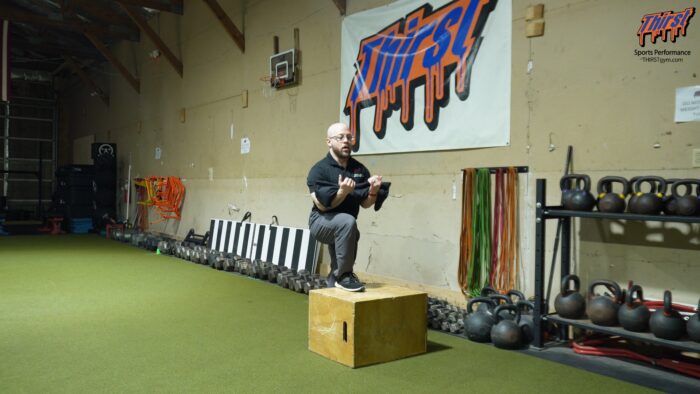
Single Leg Lateral Depth Drop To Lateral Bound

Master the single-leg lateral depth drop to lateral bound, a plyometric exercise that builds frontal-plane power, reactive strength, and elite change-of-direction speed. Learn proper box setup, step-by-step technique, common mistakes, and programming to develop the explosive side-to-side movement sport actually demands. A complete guide for athletes who need quicker feet and stronger single-leg force production.

Why Bodybuilding Training Makes Wrestlers WORSE (And What to Do Instead)

Strength training for wrestlers built on bodybuilding splits can quietly make you worse on the mat by adding bodyweight without proportional force, power, or the right energy systems. This complete guide breaks down the physiology behind why bodybuilding training fails wrestlers and lays out four principles — plus a sample 3-day off-season program — to build explosive, sport-specific strength that carries over to competition.

Forward Bounding

Forward bounding is a simple, low-equipment sprint mechanics drill that reduces ground contact time and builds the reactive, springy strength fast athletes rely on. Learn how to perform forward bounding correctly, the muscles it targets, common mistakes to avoid, and how to program it for sprinters, combat athletes, and youth athletes. All you need is a straight line and some open space to start running faster and moving more efficiently.

Front Rack (Barbell) FFE Split Squat

The front rack barbell front foot elevated split squat is one of the most complete single leg exercises you can program — combining deficit range of motion, heavy barbell loading, and a serious trunk and upper back demand. Learn the full setup, front rack options, step-by-step technique, common mistakes, and exactly how to program it for strength or hypertrophy. Whether you’re a powerlifter, a combat sports athlete, or just want stronger legs, this is the split squat variation worth mastering.

Progressive Overload Myths: The Evidence-Based Truth Coaches Need to Know

Progressive overload is more than adding weight to the bar. This guide breaks down seven common progressive overload myths and reveals the six real overload variables — load, volume, density, range of motion, exercise variation, and technique — that drive strength, hypertrophy, conditioning, and mobility progress. Learn how to program progressive overload correctly for beginners, intermediates, advanced lifters, and aging athletes with evidence-based coaching from THIRST Gym.

Feet Elevated Crunch

Learn how to perform the feet-elevated crunch, a strict, isolated ab exercise that targets the rectus abdominis while taking the hip flexors and lower back out of the equation. This step-by-step guide from Brandon Smitley of THIRST Gym covers setup, technique, common mistakes, loading options, and programming to help you build a stronger mind-muscle connection. Perfect for beginners, lifters, and combat sports athletes looking to train their abs with quality over ego.

Back Elevated Band Hip Abductions

Learn how to perform the back elevated banded hip abduction, a simple glute activation drill that teaches athletes to actually feel their hips work. This step-by-step guide from Brandon Smitley of THIRST Gym covers setup, coaching cues, common mistakes, and programming for warm-ups. Discover why this bridge-position band exercise beats standard clamshells for building real hip strength before you squat, deadlift, or compete.

5 Best Reverse Hyper Alternatives (No Machine Needed)

No reverse hyper at your gym? These five reverse hyper alternatives — from the loaded 45-degree back extension to the glute ham raise and kettlebell Jefferson curl — let you build a strong, resilient posterior chain anywhere. Coach Brandon Smitley breaks down exactly how to execute, load, and program each movement to drive bigger squats, heavier deadlifts, and better athletic performance.