
Glute Ham Roller Reverse Plank Walk: How to Build Trunk Strength and Shoulder Stability
Most athletes treat planks as a box to check at the end of a session. Hold for a minute, collapse on the floor, move on. The problem is that a static plank gets easy quickly, and once it’s easy it stops driving adaptation. The glute ham roller reverse plank walk takes everything a plank does well and adds movement, reaching, and a demand for control that a static hold can’t match. The result is an exercise that builds serious core strength while also training the shoulders and scapulae to work under load.
This guide covers how to set up and perform the glute ham roller reverse plank walk, which muscles it trains, the most common mistakes, how to program it for different goals, and how to scale it up or down for athletes at every level.
Watch the video below on how to maximize this exercise.
What Is the Glute Ham Roller Reverse Plank Walk?
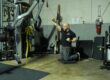
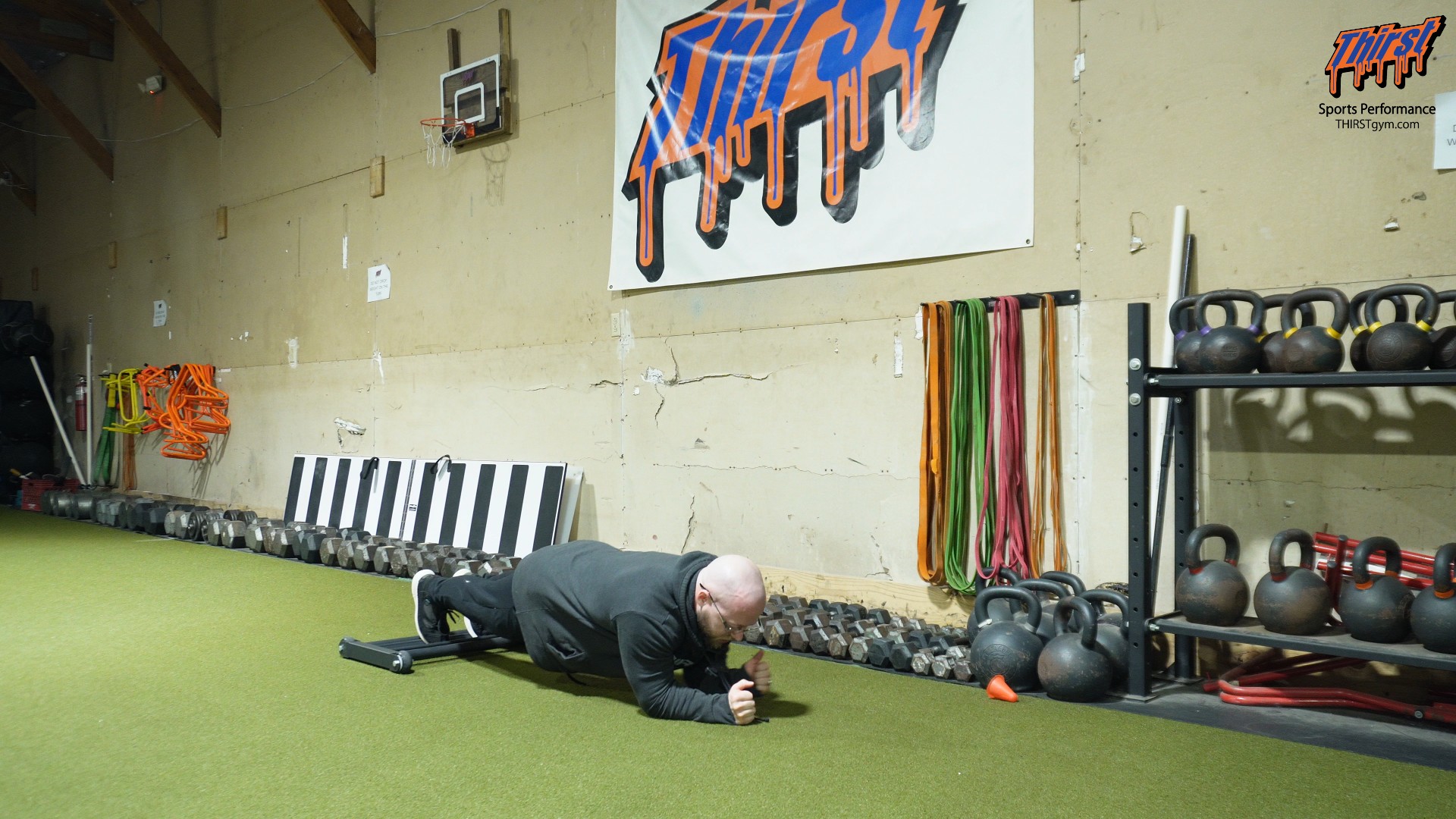
The glute ham roller reverse plank walk is a dynamic plank variation. Your feet rest in a glute ham roller, a wheeled floor device with notches or cradles for the feet, while you hold a forearm plank. From there, you walk yourself backward on your forearms, pushing your body in reverse while the roller travels with your feet.
Because your lower body rides on wheels, you can’t lean on friction from your toes to stay stable. Every inch of movement has to come from your arms and shoulders while your trunk holds a rigid, braced position. That combination of moving upper body and locked-in midsection is what makes the exercise so effective and so humbling the first time you try it.
Equipment and Space You’ll Need
The primary piece of equipment is a glute ham roller or a similar apparatus with wheels and a place to secure your feet. Most commercial versions have a molded notch or padded cradle that keeps your toes or the tops of your feet in place while you move.
Space matters more with this exercise than with most core work. You’re traveling, not holding a fixed position, so you want a clear lane of floor behind you. A stretch of turf, a smooth rubber floor, or an open area of a gym works well. Clear away plates, bars, and other equipment before starting so the roller has a clean path and you aren’t hunting for room mid-set.
If you don’t have a glute ham roller, sliders or a towel on a smooth floor can approximate the movement. They won’t feel identical because the friction is different, but they’ll train the same pattern and teach the same positions.
How to Perform the Glute Ham Roller Reverse Plank Walk
Setup
Place the roller on the floor and set your feet into the notch or cradle. Lower yourself onto your forearms so your elbows sit directly under your shoulders. Your body should form one straight line from your head through your hips to your heels.
Before you move at all, set your brace. Pull your ribs down toward your hips, squeeze your glutes, and tighten your midsection as though you’re about to take a punch to the stomach. Push the floor away slightly with your forearms so your upper back isn’t sagging between your shoulder blades. This is your starting position, and it’s the position you need to keep for the entire set.
Execution
From the braced plank, begin walking backward on your forearms. Push one forearm into the floor and shift it back a short distance, then repeat with the other side. Each push drives your body backward and the roller travels with your feet.
Keep each step small. Short, deliberate movements of your forearms keep your trunk under control. Long reaches make it far more likely that your hips drop or swing side to side. Think about moving the whole body as a single rigid unit rather than letting your torso wiggle to create momentum.
Continue for your prescribed time or distance, then lower yourself to the floor under control.
Tempo and Control
This is not an exercise to rush. Slow, controlled movement where you own every position delivers far more benefit than racing to cover ground. If you find yourself speeding up, it’s usually because your position is breaking down and you’re trying to finish before it falls apart completely. That’s the signal to slow down or end the set.
Muscles Worked
Abdominals and Anti-Extension Strength
The primary job of this exercise is resisting extension. Gravity is constantly trying to pull your hips toward the floor and arch your lower back, and your rectus abdominis and deep core musculature, including the transverse abdominis, have to fight that pull the entire time. Anti-extension strength is the foundation of a stable trunk for squatting, deadlifting, sprinting, and absorbing contact in sport.
Obliques and Anti-Rotation
Every time you lift one forearm to move it, you go from two points of upper-body support to one. That shift creates a rotational force trying to twist your torso toward the unsupported side. Your obliques work hard to stop that rotation and keep your hips square to the floor. This anti-rotation component is something a standard static plank simply doesn’t provide.
Serratus Anterior and Shoulder Stability
The reaching and pushing action of each step heavily involves the serratus anterior, the muscle along the side of the rib cage that controls the shoulder blade against the ribs. A strong, well-functioning serratus is essential for healthy overhead movement and stable pressing, and it’s frequently undertrained in lifting programs.
The rotator cuff and scapular stabilizers also work continuously to keep each shoulder supported as it alternates between bearing weight and moving. That’s why this exercise belongs in the trunk strength conversation and the shoulder health conversation at the same time.
Glutes and Lower Body
Your glutes and quads stay engaged to keep your hips extended and your legs straight. They aren’t the primary target, but a soft lower body almost always leads to sagging hips, so keeping them switched on is part of executing the exercise properly.
Coaching Cues That Clean Up the Movement
A few simple cues go a long way with this exercise. “Ribs down” keeps athletes from arching through the lower back. “Squeeze your glutes” locks the pelvis into a neutral position and helps keep the hips from dropping. “Push the floor away” keeps the upper back full and the shoulder blades from collapsing together. “Small steps” is probably the most useful cue of all, because it directly addresses the most common reason the position falls apart.
For athletes who struggle to sense their alignment, placing a dowel along the spine can help. The dowel should stay in contact with the back of the head, the upper back, and the hips throughout the set. If it rolls off or a gap opens up, the position has broken down.
Common Mistakes to Avoid
Hips Too High
Piking the hips up toward the ceiling shortens the lever and makes the exercise dramatically easier. It also turns the movement into something closer to a downward dog than a plank. If the hips are noticeably higher than the line from shoulders to heels, bring them down and re-brace.
Hips Sagging
The opposite fault is just as common. When the hips drop toward the floor, the load shifts out of the abdominals and onto the lower back. This is the position you most need to avoid, both because it defeats the purpose of the exercise and because it puts stress on the lumbar spine. Keep everything stacked and owned.
Rushing the Movement
Speed hides weakness. Athletes who move quickly often use momentum and hip swing to cover distance, which removes most of the core demand. Slow down, take smaller steps, and make every repetition look crisp.
Shrugging and Collapsing at the Shoulders
Letting the shoulders creep up toward the ears or letting the chest sink between the shoulder blades takes the serratus out of the movement and puts the shoulders in a vulnerable position. Keep a long neck and actively press away from the floor.
Letting the Hips Rotate
If your hips rock side to side with every step, your obliques aren’t controlling rotation. Narrow up your steps and slow down until you can move without the hips shifting.
How to Program the Glute Ham Roller Reverse Plank Walk
There are three effective ways to program this exercise, and each one serves a different purpose.
Training to Technical Failure
The simplest approach is to perform the movement until it becomes very difficult and your form starts to slip, then stop. This works well for experienced athletes who can recognize when their position is breaking down and will end the set honestly rather than grinding through bad reps.
Training for Time
Programming the exercise for a set duration, such as 10, 15, or 20 seconds, is ideal for athletes who tend to rush or perform the exercise poorly. When the goal is time rather than distance, there’s no incentive to hurry. You can tell an athlete to take their time, make every step look sharp, and not worry about how far they travel. That shift in focus almost always improves movement quality.
Training for Distance
Setting a target distance adds a competitive element that many athletes respond to. You can program multiple distances across sets or line up a group and see who can cover the most ground with clean form. This is the approach we prefer at THIRST, because it gives athletes a clear objective and makes progress easy to measure. The key is to hold everyone to strict standards so the competition rewards control rather than speed.
Sets and Volume
Two to three sets is the sweet spot for most athletes, with four sets as the absolute ceiling. This is a demanding exercise for both the trunk and the shoulders, and quality drops off quickly once fatigue sets in. More sets with poor positions won’t build more strength.
Where It Fits in a Session
The glute ham roller reverse plank walk works well as an accessory movement after your main lifts, paired with a lower-body exercise or a posterior chain movement. It can also be used in a warm-up at low volume to prime the trunk and shoulders before pressing or overhead work. Avoid placing it immediately before heavy bench press or overhead pressing at high volume, since fatigued shoulder stabilizers won’t do you any favors under a heavy bar.
Regressions and Progressions
Regressions
If the full movement is too challenging, start with a standard forearm plank and build the ability to hold a clean position for 30 to 45 seconds. From there, have the athlete perform the reverse walk over a very short distance, just a few steps, before resting. Plank shoulder taps from the hands are another useful stepping stone, since they introduce the anti-rotation demand of lifting one arm without the added instability of the roller.
Progressions
Once an athlete owns the basic movement, increase the distance or time gradually. Adding a brief pause after each step lengthens time under tension and exposes any control problems. Performing the walk from a high plank on the hands increases the shoulder and serratus demand. For advanced athletes, a weighted vest adds load without changing the movement pattern. Walking forward and backward in the same set is another excellent challenge, since changing direction forces the athlete to re-establish control.
Who Benefits Most From This Exercise
Wrestlers and Combat Sports Athletes
Wrestlers, grapplers, and MMA athletes spend a huge amount of time bearing weight through their arms while their trunk resists being bent, twisted, and broken down. Holding a strong base while scrambling, defending shots, or working from top position all depend on the exact qualities this exercise builds: a rigid midsection and stable, durable shoulders.
Powerlifters
For powerlifters, a stronger brace carries over directly to the squat and deadlift. The shoulder and serratus work also supports bench press health, giving the shoulder blades better control and helping balance out a program that’s heavy on pressing.
Team Sport and Youth Athletes
Youth athletes often lack trunk control and shoulder stability, and this exercise addresses both while being easy to turn into a competition. Programming it for distance in a group setting keeps younger athletes engaged, as long as coaches enforce strict form standards.
General Fitness Clients
For general population clients, the reverse plank walk is a step up from basic planks that builds real-world core strength and shoulder resilience. Start with time-based sets so the emphasis stays on quality, and progress conservatively.
Final Thoughts
The glute ham roller reverse plank walk is a simple idea with a big payoff. By adding movement and alternating arm support to a standard plank, it trains anti-extension and anti-rotation core strength, develops the serratus anterior, and builds the shoulder stability every athlete needs. Keep the movement slow and controlled, keep your body stacked from head to heels, and choose the programming method that matches your athletes. Whether you’re coaching wrestlers, powerlifters, youth athletes, or general fitness clients, this is a valuable addition to any strength and conditioning program.