
Hatfield Reverse Lunge

The Hatfield reverse lunge is a single-leg strength exercise that uses a safety squat bar and band pegs (or a second barbell) for stability, allowing you to load heavier than a traditional reverse lunge while training the glutes, hamstrings, and quads unilaterally. In this guide, I break down the setup, technique, biomechanics, and programming recommendations so you can use this lunge variation to build lower-body strength, size, and athletic performance. It’s also one of the best lunge variations for in-season athletes and lifters managing low back issues.

4 Essential Exercises Swimmers MUST Do in the Gym (Backed by Science)

Strength training for swimmers requires a sport-specific approach that addresses the unique biomechanical demands of the pool, including repetitive spinal extension, explosive starts and turns, and the bone density challenges of non-impact training. This complete dryland training guide breaks down the four essential strength and conditioning components every swimmer needs, including anti-extension core work, bilateral lower body strength, plyometric power development, and energy system training. Whether you’re a competitive swimmer, triathlete, or coach, learn the science-backed exercises and programming strategies that will help you swim faster, build durability, and prevent the chronic injuries that derail so many swimming careers.

Hatfield FFE Split Squat

The Hatfield front foot elevated split squat is one of the most effective single-leg exercises you can add to your training, combining safety squat bar loading with stability support to take balance out of the equation and let you push heavier weights for strength and hypertrophy. In this exercise index breakdown, Brandon Smitley of THIRST Gym walks you through the setup, technique, programming recommendations, and the biomechanical reasons this variation builds bigger glutes, stronger legs, and better mobility. Learn how to add this powerful split squat variation to your powerlifting accessory work or athletic development program today.

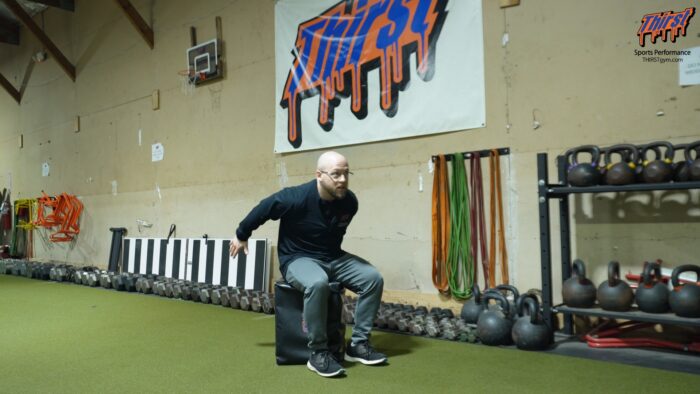
Half Kneeling Lateral Start To Sprint

The half kneeling lateral start to sprint is a powerful change of direction drill that develops explosive lateral power production and teaches athletes how to re-accelerate out of a cut. Ideal for soccer, basketball, tennis, and football athletes, this sprint variation builds the lateral propulsion and acceleration mechanics that separate elite competitors from the rest. Learn the proper setup, coaching cues, and programming guidelines from THIRST Gym owner Brandon Smitley.

Crossbody Cable Kickstand RDL

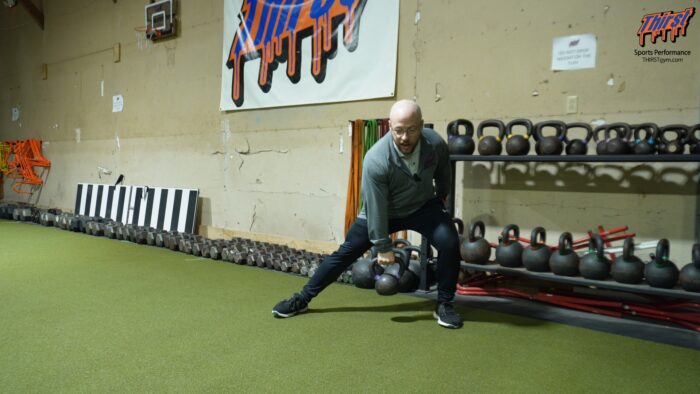
The crossbody cable kickstand RDL is one of the most effective loaded mobility exercises you can add to your training for improving posterior hip capsule mobility and glute strength at the same time. Using a low cable and a kickstand stance, this exercise uses a cross-body pull to drive hip rotation through the hinge pattern, making it ideal for athletes and lifters who struggle with hip stiffness or limited range of motion. Whether you use it as a pre-training warm-up, an accessory movement, or a recovery day drill, this variation delivers real results for your hips and your posterior chain.

Heels Elevated Hatfield Squat

The heels elevated Hatfield squat is a powerful quad-dominant squat variation that uses a safety squat bar, heel elevation, and a hands-on support apparatus to maximize forward knee travel, improve squat mechanics, and drive serious quadriceps development. Whether you’re dealing with anterior pelvic tilt, looking to replace machine-based quad work, or simply want a versatile supplemental squat exercise, this movement delivers. Learn how to set it up, which muscles it targets, and how to program it for strength and hypertrophy goals.

Kickstand Barbell RDL

The kickstand barbell RDL is a powerful unilateral hinge variation that develops glute and hamstring strength by loading one leg at a time while a back “kickstand” foot provides stability. Learn how to set up your stance, grip the barbell, and execute the movement with proper hip hinge mechanics for maximum posterior chain development. Whether you’re a powerlifter, athlete, or general fitness trainee, this accessory exercise belongs in your lower body training program.

6 Exercises That Build Championship Wrestling Strength

The best exercises for wrestling and combat sports athletes go far beyond the bench press and squat — they target the specific strength qualities that actually win matches. In this guide, THIRST Gym performance coach Brandon Smitley breaks down the six exercises he relies on most after a decade of training wrestlers and grappling-based athletes, covering everything from lateral power development and single leg strength to grip training and end-of-match conditioning. Whether you are a high school wrestler working toward college competition or a grappler looking to take your mat performance to the next level, these exercises will help you build the impulse, absolute strength, and power endurance your sport demands.

Band Resisted Hip Airplane

The band resisted hip airplane uses a light to moderate resistance band to drive the hip into a deep posterior hip capsule stretch, helping athletes and lifters access greater range of motion than bodyweight alone allows. Learn how to set up and perform this hip mobility drill to improve glute activation, open up tight hips, and build a more effective warm-up before squats, deadlifts, and athletic training. This exercise is a staple in mobility and corrective programming at THIRST Gym for anyone looking to move and feel better in the gym and on the field.

Alternating KB Swing

The alternating kettlebell swing is a powerful variation of the traditional kettlebell swing that builds explosive hip extension, posterior chain strength, and conditioning using just a single kettlebell. Learn proper technique, hand-switch mechanics, and how to program this exercise for conditioning, power development, or glute and hamstring hypertrophy. Add this versatile movement to your training and take your kettlebell workouts to the next level.