
Double Kettlebell Front Rack Reverse Lunge: Technique, Benefits, and Programming
The double kettlebell front rack reverse lunge is a single-leg exercise that quietly asks a lot more of your body than a typical loaded lunge. The reverse lunge is already one of the most joint-friendly ways to train each leg independently, but holding a pair of kettlebells in the front rack position turns it into a full-body coordination, posture, and core challenge. For athletes, lifters, and general fitness clients alike, it builds lower-body strength while reinforcing the kind of tall, braced torso position that carries over to nearly everything else you do in the gym.
Watch the video below on how to maximize this exercise.
What You Need
All you need for this exercise is a pair of kettlebells, ideally matched in weight so the load sits evenly across your trunk. Kettlebells are genuinely the right tool here, not just a stand-in for dumbbells. The shape of the bell, with the mass hanging below and outside the hand, is what creates the unique torso demand that makes this movement so effective. You can technically lunge while holding dumbbells, but you won’t get the same effect — so if kettlebells aren’t available, it’s better to choose a different lunge variation altogether than to force the position with the wrong implement.
How to Perform the Double Kettlebell Front Rack Reverse Lunge
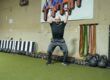
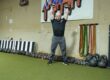
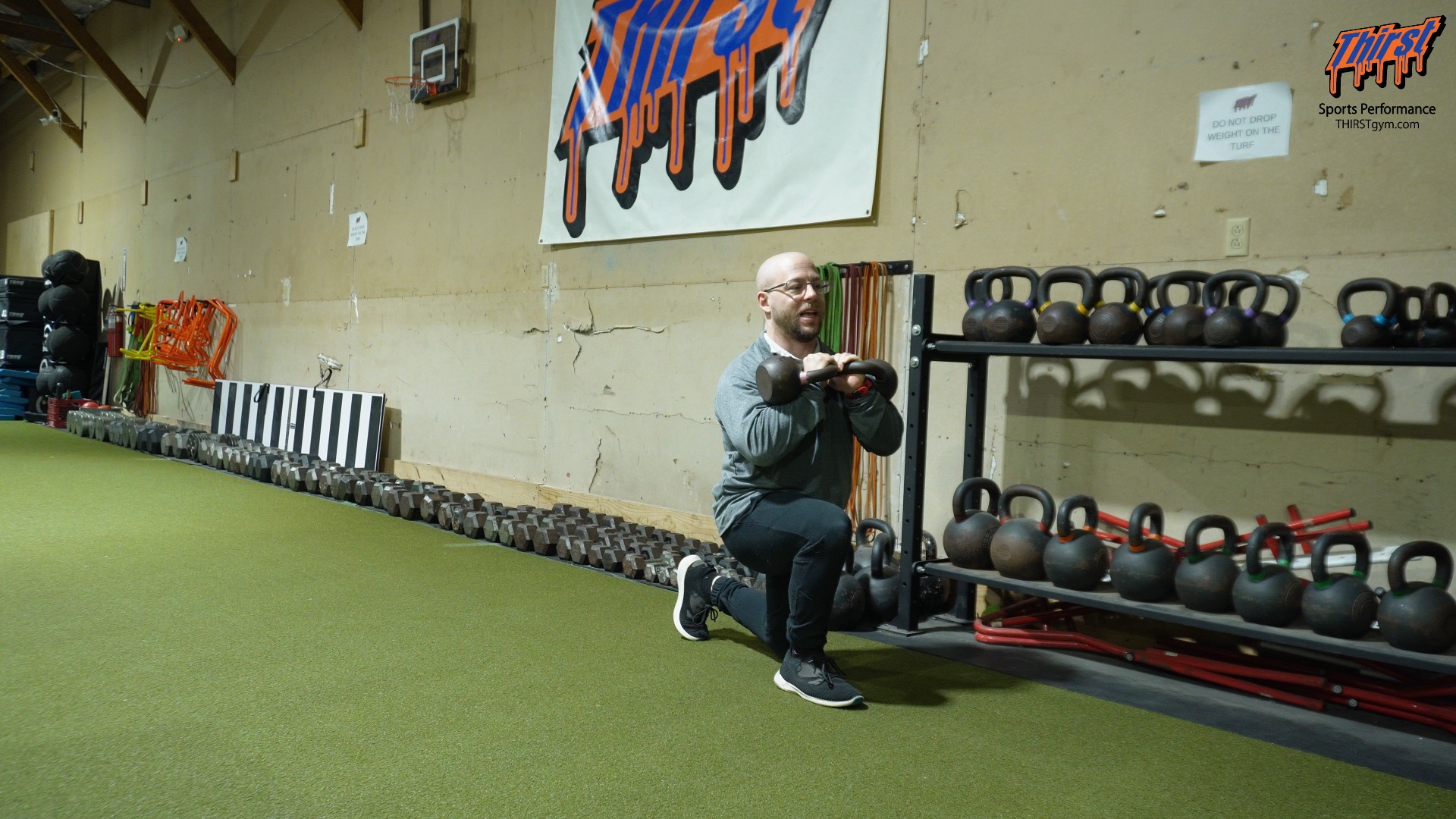
To get into position, grip each kettlebell by the horns, letting the handle settle into the meaty base of your palms. Rotate the bells up and in so they rest in front of your body, with the rounded part of each bell facing out toward the outside of your arms. Your hands end up close together near the center of your chest, almost like a prayer position, with the kettlebells framing your forearms.
From there, start with your feet together. Take a big, natural step straight back, keeping the entire front foot flat on the floor, and lower under control until your trailing knee lightly taps the ground. Drive through the front leg to return to the start, then repeat on the other side.
Step length matters more than people think. You don’t want to overstep and end up stretched out, and you don’t want to chop the step short either. A natural stride keeps your front shin in a good position so the knee isn’t jutting far out over the toes, which lets you keep that front foot flat and your weight balanced through the whole foot.
Why the Front Rack Position Matters
This is where the front rack position earns its place. Holding the kettlebells in front of your body draws the shoulder blades around the rib cage and helps open the rib cage up, which lets you stay tall and stacked through the lunge instead of folding forward. That position dramatically increases abdominal activation, because your core has to resist the load constantly trying to pull you into extension and forward flexion. At the same time, your upper back works hard to hold the bells in place, so you’re earning meaningful postural and upper-back strength on top of the lower-body work.
There’s a mobility benefit as well. Because you’re stepping backward into open space rather than forward into the load, you create more room for the hip to travel through a fuller range. Over time, that can help improve hip mobility while you’re simultaneously building strength — a rare and useful combination to get from a single movement. The end result is that you’ll feel far more abs and upper back here than in a standard reverse lunge, which is exactly what makes it a more complete exercise.
Who This Exercise Is For
This is a versatile accessory movement that fits a wide range of people. For wrestlers, grapplers, and combat sports athletes, the combination of single-leg strength, trunk control, and the demand to stay tall under an awkward anterior load maps directly onto the positions they compete from. For powerlifters and general strength athletes, it builds unilateral leg strength and reinforces the braced, upright torso that supports heavy squatting and pressing. And for everyday fitness clients, it’s an approachable way to train balance, core, and posture all at once without needing a barbell.
Programming Recommendations
I program the double kettlebell front rack reverse lunge most often as an accessory or single-leg movement after the main work of the day. A reliable starting point is two to four sets of six to ten repetitions per side. If you want to push strength and really load the position, keep the reps toward the lower end and add weight. If you’re chasing volume or using it as a conditioning piece, push the reps higher and keep your rest periods short to build some work capacity out of it.
Common Mistakes to Avoid
The most common mistakes come down to position and step mechanics. Letting the chest cave forward defeats the entire purpose of the front rack, so stay tall and keep your ribs stacked over your hips. Rushing the descent or bouncing the back knee off the floor takes tension off the working leg, so control the lowering and lightly tap rather than slam. And keep an eye on that front foot — if the heel starts lifting or the knee drives hard past the toes, your step was probably too short.
Final Thoughts
The double kettlebell front rack reverse lunge packs lower-body strength, core stability, upper-back work, and hip mobility into one efficient movement. That’s exactly why it has earned a permanent spot in the accessory rotation for so many of the athletes and clients we work with at THIRST Gym. Load it heavy for strength or run the reps up for conditioning — either way, you’re training a more complete, more resilient athlete.