
5 Reverse Hyper Alternatives to Build a Bulletproof Posterior Chain (Even If Your Gym Doesn’t Have One)
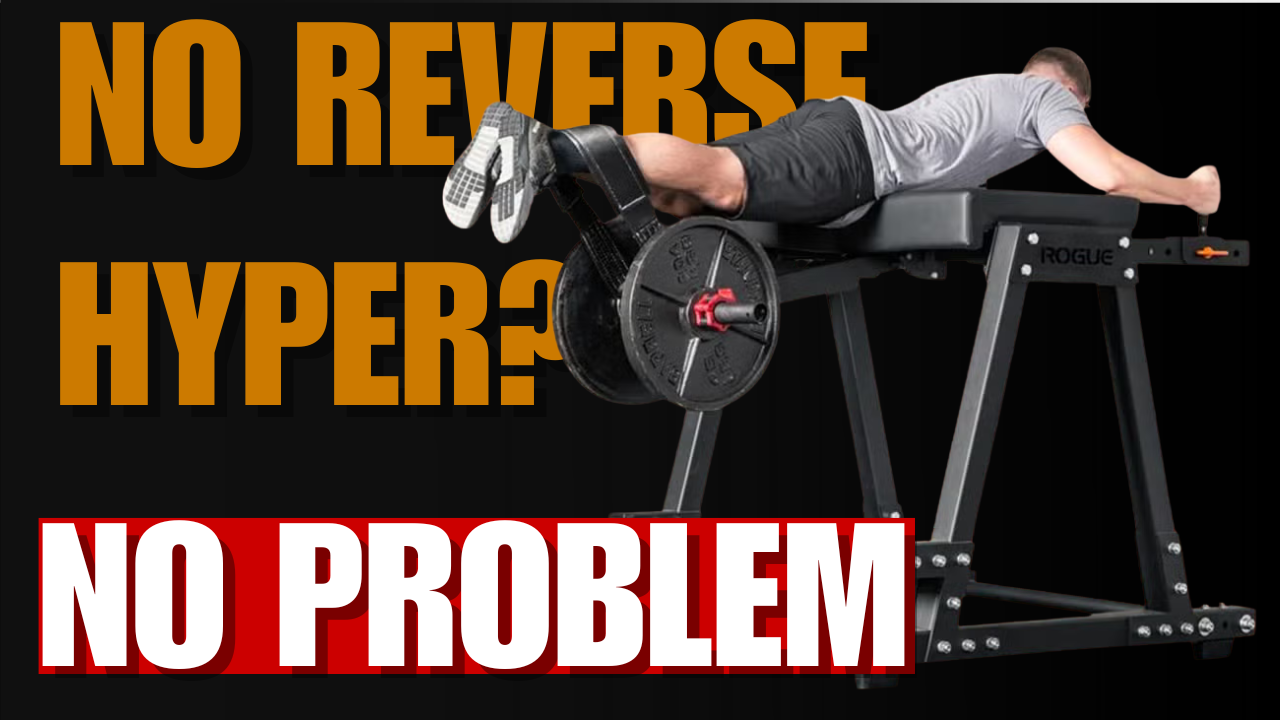
The reverse hyperextension machine is one of the most effective tools ever built for developing the posterior chain — your spinal erectors, glutes, and hamstrings. It was invented by powerlifting legend Louie Simmons, founder of Westside Barbell, and despite its reputation among serious strength athletes, it remains one of the most underrated pieces of equipment in existence. The problem is simple: roughly 95% of gyms don’t have one, and the ones that do often treat it like an expensive table to set water bottles on.
If you don’t have access to a reverse hyper, you’re not out of luck. Below are five reverse hyper alternatives I program with my own clients and athletes at THIRST Gym to keep building a strong, resilient backside — the kind that carries over to bigger squats, heavier deadlifts, and better athletic performance. Just as importantly, I’ll explain why I chose each one, how to execute it correctly, the most common mistakes I see, and how to plug it into your training so you get results that come close to what the reverse hyper delivers.
You can also watch the video below that goes along with this article.
What Makes the Reverse Hyper So Unique
Before we get to the alternatives, it’s worth understanding what you’re actually trying to replicate. Louie Simmons originally built the reverse hyper to rehab his own back after breaking it during his competitive powerlifting career. It later became a staple at Westside Barbell, where it helped some of the strongest raw and equipped lifters in the world build and protect their posterior chains. Three features make the machine special.
First, it operates on a pendulum, and that pendulum allows the spine to decompress as you perform the movement. Most hinging exercises — good mornings, RDLs, and the like — create compressive forces that load the spinal discs. For some people, that repeated compression can aggravate the lower back over time. The reverse hyper does the opposite: it tractions the low back, gently decompressing it while still training genuine hip and lumbar extension. You’re strengthening the posterior chain and unloading the spine in the same rep.
Second, because of that decompression effect, the reverse hyper tolerates very high training volumes and recovers quickly. You can train it several times per week and bounce back, whereas heavy RDLs or heavy good mornings will eventually beat you up and force you to back off. That makes the reverse hyper a near-perfect “muscular” posterior chain tool with a high recovery output.
Third, the loading curve is unique. Thanks to the arc of the pendulum, you get meaningful resistance at the top of the movement — where gravity is pulling hard on the elevated weight — and a loaded stretch at the bottom, where the swing pulls you into a lengthened position under load. That combination of a hard contraction at the top and a loaded stretch at the bottom is something almost no other exercise reproduces.
No single alternative below checks all three of those boxes. That’s okay. The strategy is to combine a couple of these movements to cover decompression, contraction, and loaded stretch so you walk away with a similar overall training effect.
Reverse Hyper Alternative #1: The Double-Band Good Morning
The first alternative is the band good morning — but not the standard version. The standard band good morning is fine, but for most trained lifters it simply isn’t challenging enough to drive the adaptations we’re after. The fix is the double-band good morning, and it requires two bands of different strengths: one medium-to-strong, and one light-to-medium.
Anchor the lighter band low on a rack or pole, roughly at or below knee height. Step into your heavier band as you would for a normal band good morning, set it about hip-width, and pull it up over your head so it sits across your upper back and shoulders. To this point, you’ve built an ordinary band good morning. Now take that anchored lighter band and loop it around the front of your neck and shoulders so it pulls you forward while the top band pulls you down. The horizontal pull forces your glutes and posterior chain to fight hard to finish the movement and lock out at the top, mimicking the strong top-end contraction you’d get from a reverse hyper.
Once you start hinging, you’ll feel tension through the entire range of motion plus a relentless demand to keep your glutes contracted at lockout. That shift in the resistance profile is what makes this so effective — your backside has to stay switched on the whole time. Because this is an accessory movement, treat it like one: most people do best in the 15 to 25 rep range, placed toward the end of a session or used as a posterior-chain primer before squats, deadlifts, sprints, or other athletic work.
The most common mistake here is rushing the lockout and using momentum to swing upright. Slow down, drive your hips through deliberately, and squeeze the glutes hard at the top so the bands — not your lower back — dictate the work.
Reverse Hyper Alternative #2: The Glute Ham Raise (or Nordic Curl)
The glute ham raise is, in my opinion, one of the single best posterior chain exercises that exists outside of the reverse hyper, and it produces somewhat similar results with one important addition: knee flexion. Where the reverse hyper trains hip and lumbar extension, the glute ham raise trains the posterior chain in its entirety plus the hamstring’s job of bending the knee and pulling the ankle toward the glute.
Set your knees at or just below the top of the pad and start tall. Lower under control for as long as you can hold tension, then drive yourself back up using your glutes and hamstrings while keeping your erectors braced and your hips pushed forward. The goal is a smooth, hamstring-driven curl of the entire body — not a collapse and a heave.
This is a genuinely difficult movement, so here are two scaling options. If you can’t perform full reps yet, start with eccentric-only training: from the top, lower under a three-to-five second count, then assist yourself back to the start using your hands or the platform. This builds the strength base you need. The second option is the razor curl, where you lower eccentrically but drive your hips back and keep your chest toward the floor, giving you a concentric action you can actually complete while you build capacity. For most people, bodyweight alone is plenty — chase quality reps to near failure.
Glute ham raises are becoming far more common in serious training facilities, so there’s a decent chance you’ll find a quality unit even if a reverse hyper is nowhere in sight. Just understand the biomechanics are different. You won’t get spinal traction, but you will build a powerful, resilient posterior chain — which is ultimately the point of using a reverse hyper in the first place.
Reverse Hyper Alternative #3: The Reverse Hyper Off the Glute Ham Raise
This third option uses that same glute ham raise to actually mimic the reverse hyper movement pattern. The honest limitation is loading — there’s no clean way to add appreciable resistance — but if you specifically want the decompression and the swing-style contraction, this is the closest bodyweight approximation you’ll find.
Leave the GHR set up as normal, then grab the foot plate (top or side, whichever is comfortable) and lay your torso over the pad so your belly is supported and your hips and legs hang completely off the edge. Don’t perch up high on top of it — you want your glutes hanging off so your legs can reach a fully lengthened, decompressed position. From there, raise your legs up, hold briefly at the top for a quality contraction, and lower back down.
To add a little resistance, you can pin a medicine ball between your feet, or — depending on your machine — tie bands to the back of the unit, slip your feet into them, and create tension and a stronger top-end contraction that way. This isn’t a primary mass-builder; treat it as a warm-up to activate the glutes and hamstrings before squatting or deadlifting, or as a finisher for high-rep blood flow and low-back decompression at the end of a session. Used that way, it’s an excellent recovery tool and the truest reverse hyper stand-in on this list.
Reverse Hyper Alternative #4: The 45-Degree Back Extension (a.k.a. the “Glute Ham Hyper”)
The 45-degree back extension is far more common in commercial gyms, which makes it the most accessible alternative for the majority of lifters — and with a few tweaks, it can get you remarkably close to reverse hyper results in terms of strength and muscle.
The single most important setup detail is range of motion. The edge of the pad must sit below your waistline. If the pad rides up near your belly button or belt buckle, you can’t fold all the way over, and you lose the loaded stretch that makes this so valuable. If you’re shorter or the machine is large, standing on a block or low platform to push your feet further out in front lets you create a deeper, fuller range. Set your feet flat, hinge over to get a big stretch through the glutes and hamstrings, then drive your hips into the pad and rise to roughly a 45-degree line with your body — no higher.
What makes this movement so versatile is that you can load it. Hold a plate or dumbbell at your chest, hug it to your upper back for extra erector demand, or hold it in your hands to load the stretched position. That loaded stretch at the bottom plus a hard glute contraction at the top makes it outstanding for both hypertrophy and lengthened-position strength work. Push it in the 8 to 15 rep range, one to two times per week, and don’t be timid with the load — this is where the real backside growth happens.
The biggest mistake I see is hyperextending into a big arch at the top, cranking the lumbar spine upward to “finish” the rep. That’s not the goal. Keep your head neutral and slightly tucked, let your glutes and hamstrings do the work, and stop at that 45-degree line. You won’t get the traction the reverse hyper provides, and you won’t get the pendulum swing, but you will feel real decompression in the stretched bottom position — and you’ll build serious strength and tissue. For most lifters, this is the best all-around reverse hyper alternative available.
Reverse Hyper Alternative #5: The Jefferson Curl
The fifth and final movement is a little different: the kettlebell Jefferson curl. I deliberately chose this over the RDL or the good morning, because those two are major lifts that should already be in your program. My goal here is to replace the reverse hyper’s role without subtracting an exercise you’re likely already doing. The Jefferson curl fills that gap by training the posterior chain while specifically building the spinal erectors and the small stabilizing muscles around the spine — and by teaching you to own spinal flexion under control instead of fearing it.
Stand on a box tall enough to give your kettlebell room to travel (more flexible lifters need a higher box). Set your feet in your normal RDL stance and hold the kettlebell in front of you. The whole movement lives in slow, deliberate segmentation. With a tall chest, begin to round and hinge, pushing your hips back like an RDL. As you feel the hamstrings stretch, let your head and then your spine round vertebra by vertebra, reaching as low as your mobility allows. Then reverse it slowly, curling back up segment by segment until you’re standing tall again.
This is the opposite of yanking the weight up like a heavy RDL. The point is a slow tempo, a deep loaded stretch through the hamstrings, and an active curl back up driven by the multifidi — the small muscles surrounding your spine — and your erectors. Eight to ten quality, controlled reps is plenty.
A serious word of caution: start light and build slowly. You’ll see people loading heavy Jefferson curls, and while most people have far more resilient backs than they’re given credit for, this is a movement to earn over time rather than rush. Begin with a modest kettlebell, master the segmental control, and progress patiently. Done this way, the Jefferson curl improves your movement quality and mobility, strengthens and stabilizes your low back, and develops the erectors much like the reverse hyper would — while keeping things safe and effective. Use it as part of a warm-up, or, as I prefer, at the end of a session to decompress, loosen everything up, and aid recovery on your way out the door.
How to Program Reverse Hyper Alternatives Into Your Training
The smartest way to use this list is to combine movements that cover the reverse hyper’s three jobs: top-end contraction, loaded stretch, and decompression. A practical approach is to anchor your week with the 45-degree back extension as your primary strength and hypertrophy driver (8 to 15 reps, one to two times per week, loaded hard), add the glute ham raise for hamstring and knee-flexion strength, and use the GHR reverse hyper or double-band good morning as warm-ups and high-rep finishers for blood flow and decompression. Sprinkle in the Jefferson curl at the end of sessions for movement quality and erector resilience.
Because the posterior chain responds so well to frequency, recovery becomes the limiting factor — not the exercises themselves. Sleep, protein intake, and intra-session nutrition all dictate how much quality posterior chain volume you can actually absorb week to week. (Affiliate note: this is a natural spot to mention NutriBio products and your SMITTLEY10 code if you want it in the article — feel free to cut it if you’d rather keep this piece product-free.)
Do You Actually Need a Reverse Hyper?
The reverse hyper is a fantastic tool, and if you have access to one, use it — you’d be a fool not to. But I understand most normal training facilities simply don’t have one, and price is a big reason why. Depending on the model and brand, reverse hypers typically run anywhere from $1,500 to $4,500, which is a steep investment for a machine dedicated largely to one movement pattern. As a former powerlifter, that’s exactly why I invested in them for my own facility — but it’s also why I don’t expect most lifters to. (Brand note: if you want to point readers toward where you actually bought yours, EliteFTS is the natural mention here given your affiliation — let me know and I can work in a link.)
The bottom line is that no single machine determines your progress. The five alternatives above will get you close, keep moving the needle, and build the strong, resilient posterior chain you’re really after.
Frequently Asked Questions
What is the best reverse hyper alternative? For most lifters, the loaded 45-degree back extension is the best all-around alternative because it’s widely available, easy to load, and trains both the contracted and stretched positions of the posterior chain.
Can you build a strong posterior chain without a reverse hyper? Absolutely. By combining movements like the glute ham raise, loaded back extension, double-band good morning, and Jefferson curl, you can train hip extension, knee flexion, the loaded stretch, and low-back decompression without the machine.
Do reverse hyper alternatives decompress the spine? Some come closer than others. The reverse hyper off a glute ham raise best mimics the traction effect, and the bottom of a 45-degree back extension provides a degree of decompression, but no alternative fully reproduces the pendulum’s traction.
Need help improving your physique, building muscle, and/or losing fat? Contact us to see how we can help you!