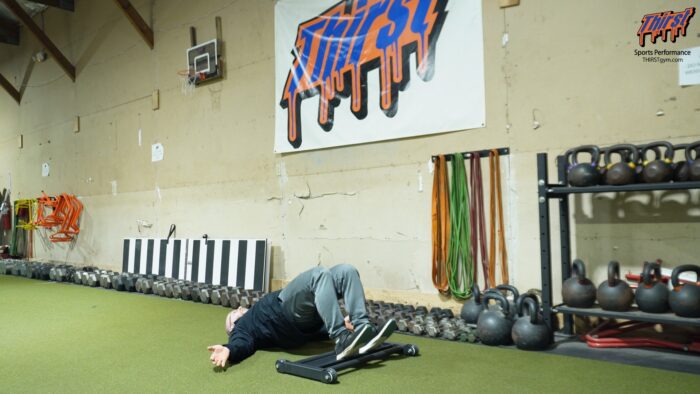

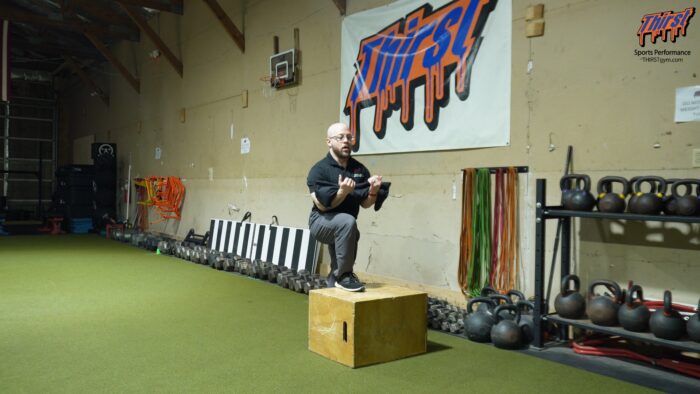
In-Place Lateral Lunge With Plate Reach

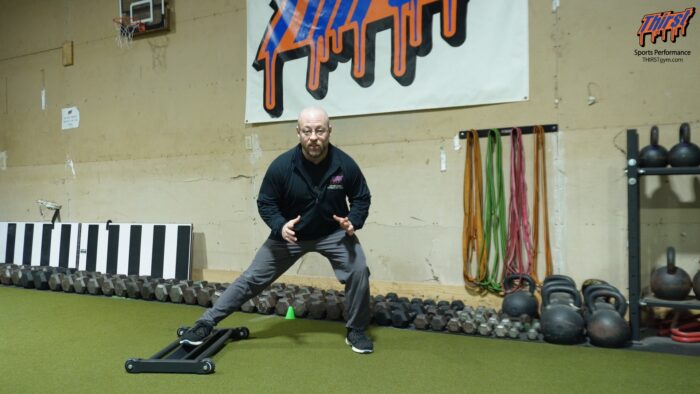
The in-place lateral lunge with plate reach is a beginner-friendly hip mobility exercise that builds frontal-plane strength, lengthens the adductors, and teaches you how to load each hip with confidence. Learn the proper stance, the plate-reach counterbalance technique, the most common mistakes to avoid, and how to program this drill as a teaching tool or pre-training warm-up. It’s a foundational lateral lunge variation for wrestlers, combat athletes, powerlifters, and anyone who wants healthier, more mobile hips.

Lateral Lunge With Plate Reach

The lateral lunge with plate reach is one of the best teaching exercises for building frontal-plane movement, hip control, and clean lateral mechanics. Learn how the plate counterbalance unlocks proper depth, why a light 5–10 lb plate beats going heavy, and how to coach foot position, knee tracking, and programming for athletes and general fitness clients alike. A simple, low-cost drill that lays the foundation for goblet and sandbag lateral lunge progressions.

Hatfield FFE Reverse Lunge

The Hatfield front foot elevated reverse lunge is one of the most effective single-leg exercises for building lower body strength and size, combining hand-assisted stability with an increased range of motion to load the glutes, quads, and hamstrings heavier than a traditional reverse lunge ever could. In this exercise index breakdown, I walk through setup, technique, programming recommendations, and exactly when to use this variation. It’s also one of my go-to single-leg movements for lifters dealing with low back issues who still want to train hard.

Hatfield Reverse Lunge

The Hatfield reverse lunge is a single-leg strength exercise that uses a safety squat bar and band pegs (or a second barbell) for stability, allowing you to load heavier than a traditional reverse lunge while training the glutes, hamstrings, and quads unilaterally. In this guide, I break down the setup, technique, biomechanics, and programming recommendations so you can use this lunge variation to build lower-body strength, size, and athletic performance. It’s also one of the best lunge variations for in-season athletes and lifters managing low back issues.

Hatfield FFE Split Squat

The Hatfield front foot elevated split squat is one of the most effective single-leg exercises you can add to your training, combining safety squat bar loading with stability support to take balance out of the equation and let you push heavier weights for strength and hypertrophy. In this exercise index breakdown, Brandon Smitley of THIRST Gym walks you through the setup, technique, programming recommendations, and the biomechanical reasons this variation builds bigger glutes, stronger legs, and better mobility. Learn how to add this powerful split squat variation to your powerlifting accessory work or athletic development program today.

Hatfield Split Squat

Learn how to perform the Hatfield split squat with a safety squat bar to load your single-leg training heavier than ever before. This powerful unilateral exercise builds quad and glute strength, fixes leg imbalances, and works as both a main lift or supplemental movement for powerlifters, athletes, and general fitness clients. Brandon Smitley of THIRST Gym breaks down setup, technique, common mistakes, and programming recommendations.

Half Kneeling Lateral Start To Sprint

The half kneeling lateral start to sprint is a powerful change of direction drill that develops explosive lateral power production and teaches athletes how to re-accelerate out of a cut. Ideal for soccer, basketball, tennis, and football athletes, this sprint variation builds the lateral propulsion and acceleration mechanics that separate elite competitors from the rest. Learn the proper setup, coaching cues, and programming guidelines from THIRST Gym owner Brandon Smitley.

Crossbody Cable Kickstand RDL

The crossbody cable kickstand RDL is one of the most effective loaded mobility exercises you can add to your training for improving posterior hip capsule mobility and glute strength at the same time. Using a low cable and a kickstand stance, this exercise uses a cross-body pull to drive hip rotation through the hinge pattern, making it ideal for athletes and lifters who struggle with hip stiffness or limited range of motion. Whether you use it as a pre-training warm-up, an accessory movement, or a recovery day drill, this variation delivers real results for your hips and your posterior chain.