
Glute Ham Roller Reverse Lunge

Learn how to perform the glute ham roller reverse lunge, a single-leg exercise that builds stronger quads and glutes while challenging hip stability. This joint-friendly reverse lunge variation uses a glute ham roller to support your back foot, making it accessible for athletes, powerlifters, and general fitness clients alike. Get step-by-step technique, common mistakes to avoid, and programming guidance from strength coach Brandon Smitley.

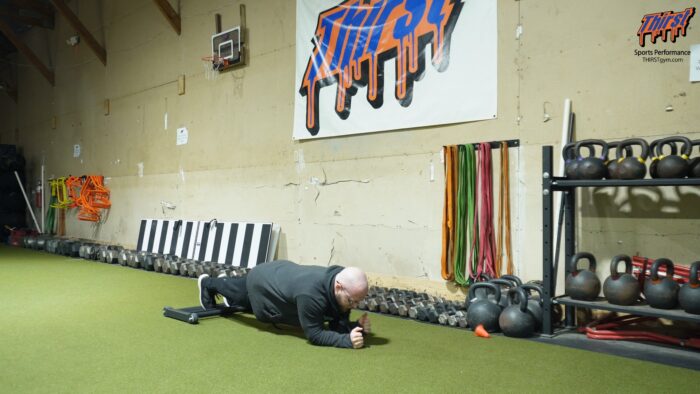
Glute Ham Roller Single Leg Leg Curl

Master the single-leg glute ham roller leg curl, a brutal unilateral hamstring exercise that builds serious posterior-chain strength using only your bodyweight. Learn proper technique, the muscles it works, common mistakes to avoid, and how to program it to fix side-to-side imbalances and protect your knees. A must-have hamstring builder for wrestlers, combat athletes, and anyone who has outgrown the standard glute ham roller leg curl.

Velocity Based Training Explained: The Science That Makes Athletes Stronger & More Explosive

Velocity based training (VBT) replaces guesswork-heavy percentages with real-time bar speed data, letting the load-velocity relationship tell you exactly how hard to train on any given day. In this complete guide, strength coach Brandon Smitley of THIRST Gym breaks down autoregulation, velocity loss thresholds, and rate of force development—and shows how athletes, powerlifters, and everyday lifters can use VBT to train smarter and get genuinely stronger.

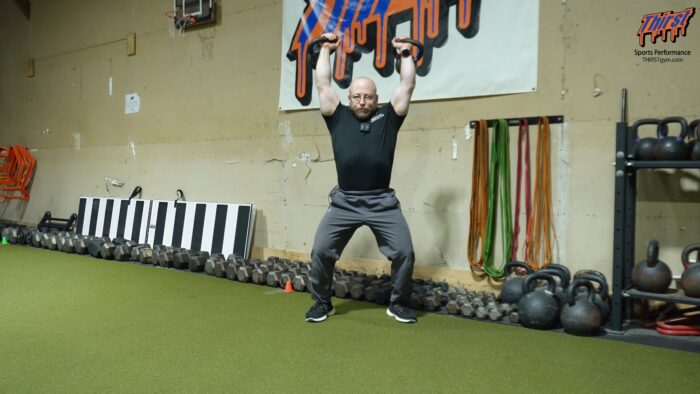
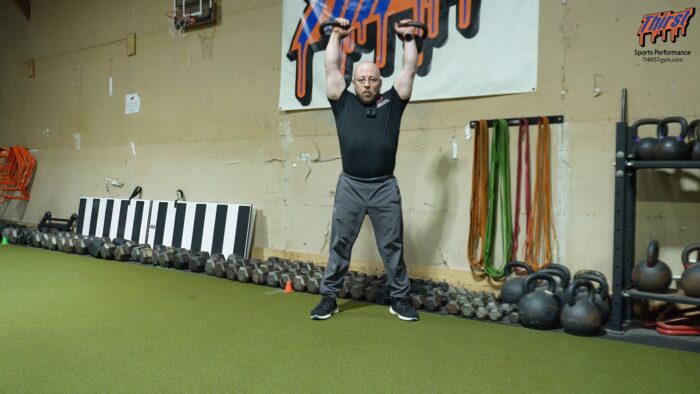
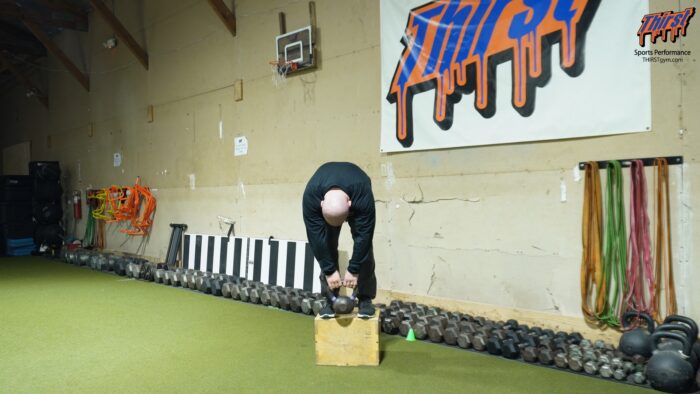
Off-Set KB Front Rack Carry With Waiter Carry

The offset kettlebell front rack carry with waiter carry is a full-body loaded carry that builds abdominal strength, shoulder stability, and hip health all at once. In this complete guide, strength coach Brandon Smitley of THIRST Gym breaks down the biomechanics, coaching cues, and programming for using this offset kettlebell carry as a finisher, conditioning tool, or warm-up. Learn how to load, position, and program it for wrestlers, powerlifters, combat athletes, and everyday lifters alike.

Seated Vertical Jump

The seated vertical jump is a simple, equipment-light plyometric exercise that builds explosive power and rate of force development by teaching athletes to produce force from a dead stop. In this guide, Brandon Smitley of THIRST Gym breaks down proper box height, jump stance, landing mechanics, and programming so you can jump higher and get off the ground faster. It’s the perfect power drill whether you’re in a fully equipped facility or training at home with just a chair.

Single Leg Lateral Box Jump

The single leg lateral box jump is one of the best drills for building frontal plane power, single-leg explosiveness, and the hip stability that protects your knees during cutting and change of direction. In this guide, Brandon Smitley of THIRST Gym breaks down how to perform the exercise in both lateral and medial directions, how to program it for in-season athletes, and why it’s a powerful tool for wrestlers and combat sport athletes. Learn the coaching cues, landing mechanics, and progressions that make this single-leg plyometric drill so effective.

Front Rack (Barbell) FFE Split Squat

The front rack barbell front foot elevated split squat is one of the most complete single leg exercises you can program — combining deficit range of motion, heavy barbell loading, and a serious trunk and upper back demand. Learn the full setup, front rack options, step-by-step technique, common mistakes, and exactly how to program it for strength or hypertrophy. Whether you’re a powerlifter, a combat sports athlete, or just want stronger legs, this is the split squat variation worth mastering.

Progressive Overload Myths: The Evidence-Based Truth Coaches Need to Know

Progressive overload is more than adding weight to the bar. This guide breaks down seven common progressive overload myths and reveals the six real overload variables — load, volume, density, range of motion, exercise variation, and technique — that drive strength, hypertrophy, conditioning, and mobility progress. Learn how to program progressive overload correctly for beginners, intermediates, advanced lifters, and aging athletes with evidence-based coaching from THIRST Gym.

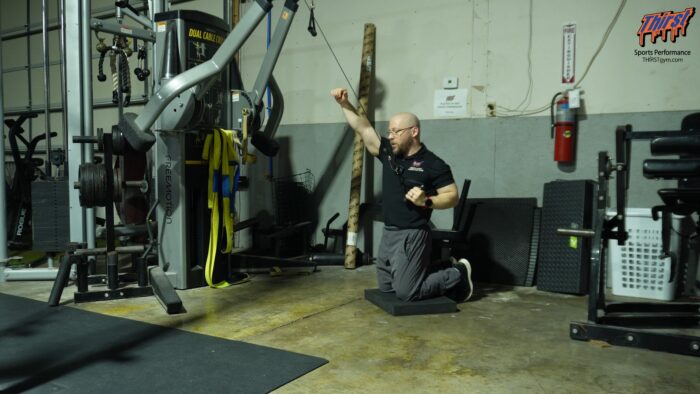
Back Elevated Band Hip Abductions

Learn how to perform the back elevated banded hip abduction, a simple glute activation drill that teaches athletes to actually feel their hips work. This step-by-step guide from Brandon Smitley of THIRST Gym covers setup, coaching cues, common mistakes, and programming for warm-ups. Discover why this bridge-position band exercise beats standard clamshells for building real hip strength before you squat, deadlift, or compete.