
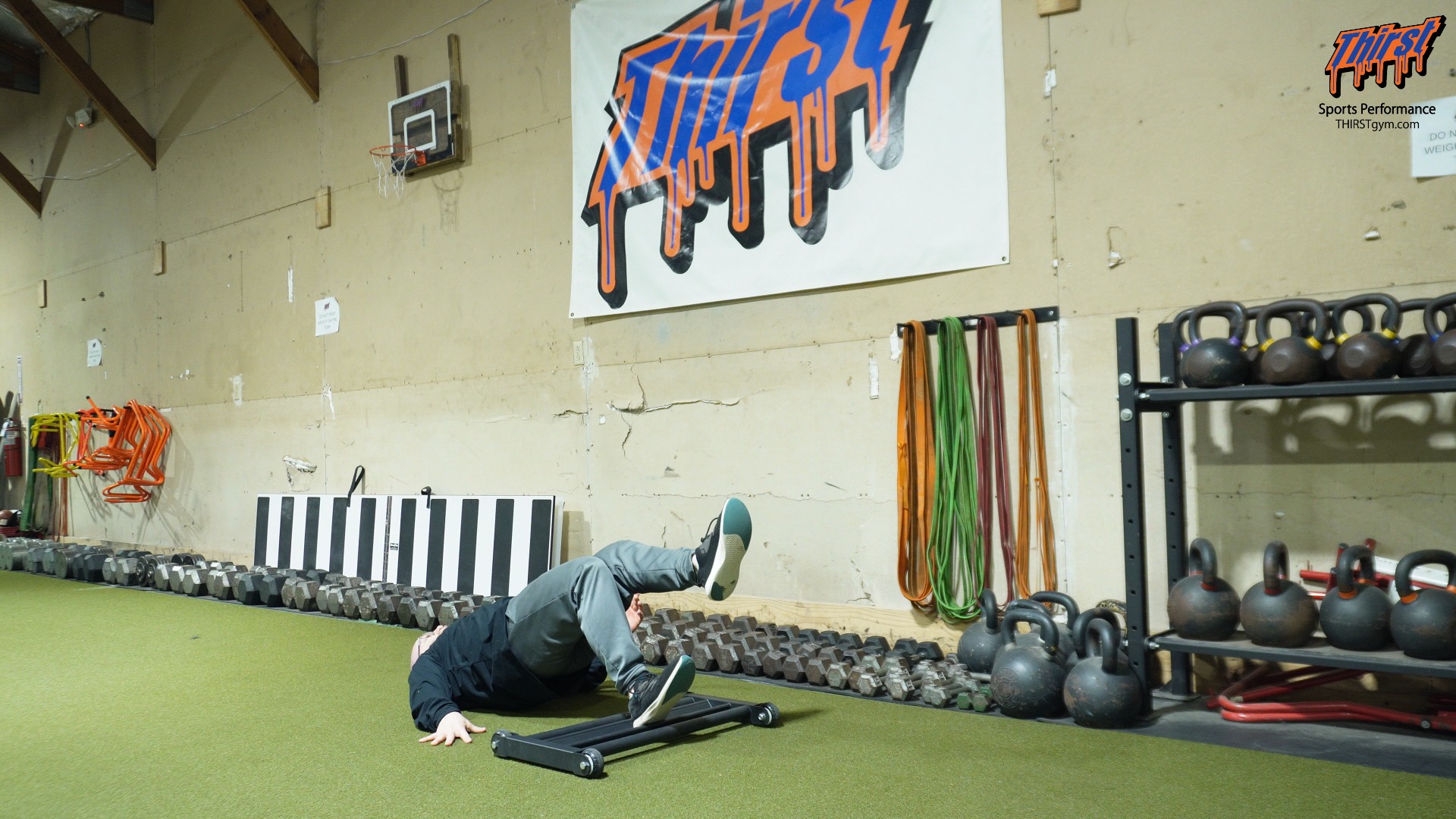
Single-Leg Glute Ham Roller Leg Curl: A Brutal Unilateral Hamstring Builder
If you have already mastered the standard two-leg glute ham roller leg curl and it no longer challenges you the way it used to, the single-leg version is your next stop. This unilateral variation isolates one hamstring at a time, exposes strength imbalances you did not know you had, and delivers a level of difficulty that will have your hamstrings begging for mercy within just a few reps. It is one of the simplest ways to take an already effective movement and dramatically raise the training stimulus without adding a single plate of external load.
Below is a complete breakdown of how to perform the single-leg glute ham roller leg curl correctly, the muscles it targets, the mistakes that quietly rob you of results, and exactly how to program it for stronger hamstrings and more resilient knees.
Watch the video below on how to maximize this exercise.
What Is the Single-Leg Glute Ham Roller Leg Curl?
The single-leg glute ham roller leg curl is a bodyweight hamstring curl performed on a glute ham roller with only one leg doing the work. The glute ham roller is a wheeled device that your feet anchor into while your body extends out in front of it. As you curl your heel toward your hips, the roller travels along the floor and your body follows, forcing the hamstrings to contract hard through a long range of motion.
In the standard version, both legs pull together. By removing one leg from the equation, you effectively double the demand on the working side. That single change transforms a moderate accessory movement into a genuinely humbling exercise. It is a slower, more deliberate curl that rewards control and punishes any attempt to rush or cheat.
Equipment You’ll Need
The only piece of equipment required is a glute ham roller. Ideally you want one with foot cradles or straps that let you secure a foot in place, because that anchor point is what allows you to load a single leg confidently. That said, if your roller only allows you to rest one leg on top of it, you can still make the movement work — you simply need to keep firm downward pressure through the heel so the working leg stays connected to the device.
If you are shopping for a durable glute ham roller for your home gym or training facility, EliteFTS carries reliable options built to hold up under heavy use.
No external load is necessary to start. Your own bodyweight on a single leg is more than enough resistance for the vast majority of lifters.
Muscles Worked
The primary movers in this exercise are the hamstrings — the biceps femoris, semitendinosus, and semimembranosus that run along the back of the thigh and cross both the hip and the knee. Because you are curling the knee while simultaneously holding a bridge position at the hip, the hamstrings work in their knee-flexion role and their hip-extension role at the same time. That dual demand is exactly what makes the movement so taxing.
The glutes act as a powerful secondary contributor. Holding the hips up in a bridge throughout the set keeps the glutes under constant tension and prevents your pelvis from sagging toward the floor. The calves assist as well, particularly through the ankle as you maintain heel pressure into the roller. Finally, the entire posterior chain and core work isometrically to keep your torso rigid and your spine in a neutral, braced position from start to finish.
How to Perform the Single-Leg Glute Ham Roller Leg Curl
Begin by setting up exactly as you would for the standard two-leg version. Place both feet into the glute ham roller, then extend your body out so that your feet are slightly ahead of the roller and your knees carry a soft, slight bend while your legs stay relatively straight. This is your starting position.
Once you are set, lift one leg completely off the roller and let the working leg take over. Dig the heel of the working leg firmly into the device — this pressure is what keeps you anchored and stable. From here, curl that heel toward your hips while simultaneously driving into a glute bridge. Your hips should rise as you pull, so the curl and the bridge happen together as one smooth, coordinated motion. Curl as high as you possibly can, feeling the hamstring shorten hard through the top of the range.
At the peak of the movement, you should feel the hamstring working intensely, sometimes right to the edge of cramping — that is a sign the muscle is under real tension. Reverse the motion under control and lower your body back down to the starting position without letting the roller run away from you. Throughout the entire rep, resist the urge to arch through your lower back. The movement should come from curling the knee and extending the hip, not from hyperextending the spine.
Complete your target reps on one side, then switch and repeat the identical process with the opposite leg. Match your effort and control on both sides so you are training each hamstring with equal intent.
Common Mistakes to Avoid
The most frequent error is arching through the lower back to generate momentum. When the hamstring starts to fatigue, lifters often compensate by cranking the spine into extension to force the roller closer. This shifts stress off the target muscle and onto the lumbar spine, reducing the training effect and inviting discomfort. Keep the core braced and let the hamstring do the pulling.
A second mistake is losing the glute bridge. If the hips drift toward the floor during the curl, the hamstring loses much of its tension and the movement becomes far easier and far less productive. Think about holding the bridge high from the very first rep and maintaining it until the set is complete.
Rushing the tempo is another common issue. Because a single leg is doing all the work, it is tempting to bounce through reps to make them feel easier. Slow, controlled repetitions — especially on the lowering phase — extract far more from every rep and better protect the knee and hamstring.
Finally, do not skip the prerequisite. If you cannot yet perform the standard two-leg glute ham roller leg curl with clean technique, master that first. The single-leg version is an advancement, not a starting point.
Why Unilateral Hamstring Training Matters
Training one leg at a time is not just a novelty or a way to make a movement harder — it serves a real purpose. Nearly everyone carries a dominant side, and bilateral exercises allow the stronger leg to quietly pick up the slack for the weaker one. Over time, that hidden compensation can widen the gap between sides, and strength imbalances in the hamstrings are strongly associated with hamstring strains and knee issues, particularly in sports that involve sprinting, cutting, and explosive change of direction.
By isolating each leg, the single-leg glute ham roller leg curl forces both sides to earn their reps independently. There is no borrowing from the strong side. This makes it a powerful tool for building symmetry, addressing weak links, and reinforcing the eccentric hamstring strength that helps protect athletes when they decelerate or absorb force. For anyone whose sport or training demands robust knees and durable hamstrings, that carryover is well worth the discomfort.
Programming the Single-Leg Glute Ham Roller Leg Curl
For most lifters, two to three sets performed for as many quality repetitions as possible on each leg is an excellent starting framework. Because this is a demanding bodyweight movement, rep totals will vary widely from person to person, and that is perfectly fine — the goal is honest effort with clean form, not a specific number.
Progressing and Adding Load
If you reach a point where you can complete somewhere in the range of fifteen to twenty controlled reps per leg, you have developed seriously strong hamstrings and it is time to make the exercise harder. You can add resistance by holding a light weight against your body or by adding load to the glute ham roller itself, nudging the difficulty back up so the movement continues to challenge you. Progression should be gradual — even a small amount of added load meaningfully increases the demand on a single leg.
Bringing Up a Weaker Side
If you already know one leg is weaker or lags behind the other, start your set with the weaker leg while you are freshest. After you complete your reps on both sides, tack on a few extra repetitions to that weaker leg to give it additional volume. Over time, this simple strategy helps the lagging side catch up to its stronger counterpart and restores balance across the two hamstrings.
Who Should Use This Exercise
The single-leg glute ham roller leg curl is a strong fit for intermediate and advanced lifters who have outgrown the two-leg version and want a greater hamstring challenge. It is especially valuable for wrestlers, grapplers, and combat sports athletes who depend on powerful, durable hamstrings for scrambling, sprawling, and driving through their opponents. Sprinters, field-sport athletes, and anyone who cuts and changes direction at high speed will appreciate the eccentric strength and single-leg symmetry it develops.
General fitness clients and older adults can benefit as well, provided they have first built a solid foundation with the bilateral version. For these populations, the exercise offers a scalable way to strengthen the posterior chain and improve knee resilience without needing heavy external loading.
Final Thoughts
The single-leg glute ham roller leg curl proves that you do not need more equipment or heavier weights to keep progressing — sometimes you just need to take a leg away. It builds serious hamstring strength, exposes and corrects side-to-side imbalances, and rewards the patient, controlled effort that carries over to performance and injury resistance on the mat, the field, and everywhere in between. Add it into your training, respect the prerequisite, and let each leg earn its own reps.