
Barbell Zercher RDL: The Front-Loaded Hip Hinge for Better Posterior Chain Development
The barbell Zercher RDL represents a powerful variation of the traditional Romanian deadlift that combines posterior chain strengthening with enhanced upper back development and core stability demands. By positioning the barbell in the crooks of your arms rather than holding it with your hands, this front-loaded variation creates unique biomechanical advantages that make it particularly valuable for athletes, desk workers struggling with postural compensation patterns, and anyone looking to maximize training efficiency with compound movements.
Watch the video below on how to maximize this exercise.
Understanding the Zercher Position and Exercise Setup
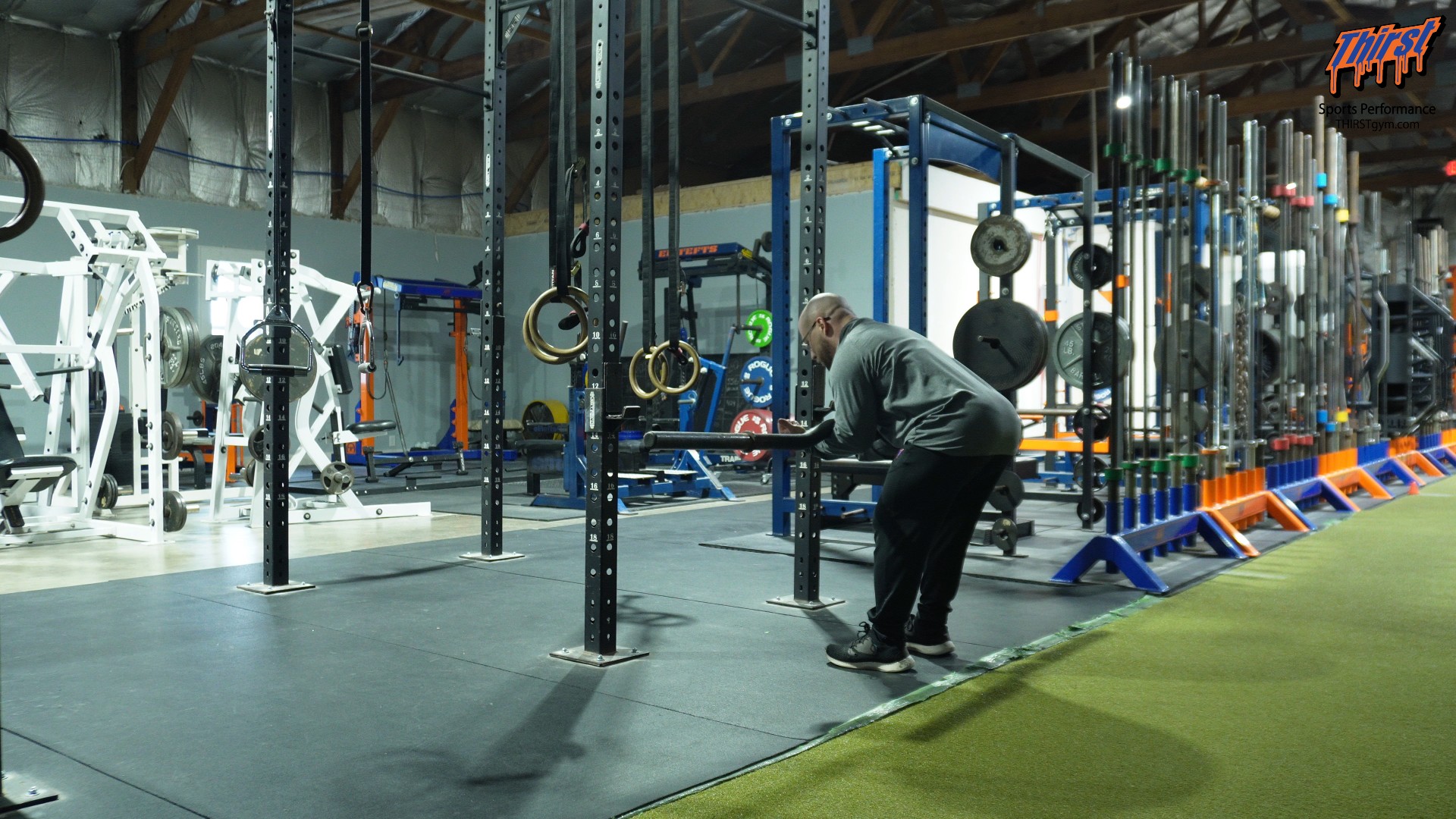
To properly execute the barbell Zercher RDL, you’ll need a barbell positioned in a rack at approximately hip height. While a standard straight barbell works perfectly fine, many lifters find that an EZ curl bar or cambered bar provides significantly more comfort in the crook of the elbows, especially as loading increases. This comfort consideration becomes increasingly important during higher-volume training sessions or when programming this movement as a primary strength exercise.
The starting position involves cradling the barbell in the crooks of your arms, creating what’s known as the Zercher position. Your palms should face toward your body, and before you even begin the hinging movement, it’s crucial to establish proper spinal positioning. Keep your ribcage down rather than flaring upward, maintain a tall chest position, and ensure your entire foot remains flat on the ground. This setup prevents the common compensation pattern of excessive lumbar extension that many lifters default to when trying to support an anterior load.
Your foot positioning should mirror your natural jump stance or your typical RDL setup, which for most people means feet roughly hip to shoulder-width apart with a slight natural toe-out. This stance allows for optimal hip hinge mechanics while providing a stable base to support the front-loaded barbell position.
The Biomechanical Advantages of Front-Loading
The Zercher RDL’s front-loaded position creates a counterbalance effect that fundamentally changes how your body accesses hip flexion range of motion. For individuals who spend significant portions of their day in seated positions or who demonstrate anteriorly compressed posture patterns, the anterior load actually facilitates better access to the posterior aspect of the pelvis. This might seem counterintuitive, but the forward weight creates space on the backside of your body, allowing you to move into that newly created space more effectively than you might with a traditional barbell positioned behind your center of mass.
This biomechanical advantage makes the Zercher RDL particularly valuable for people who struggle with traditional hip hinge patterns. When you’re chronically compressed through your anterior chain from prolonged sitting or poor postural habits, achieving proper hip flexion while maintaining a neutral spine becomes challenging. The Zercher position essentially forces better positioning while simultaneously teaching your nervous system what proper hip hinge mechanics should feel like.
Execution and Movement Pattern
Begin the movement by initiating a hip hinge, pushing your hips backward while maintaining that tall chest position and slight knee bend. The goal is to hinge back as far as your hamstring and glute flexibility allows while keeping your spine neutral. You should feel a significant stretch through your posterior chain, particularly in your hamstrings and glutes. Drive through your entire foot to return to the starting position, focusing on contracting your glutes at the top of the movement.
Throughout the entire range of motion, maintain awareness of your upper back engagement. The Zercher position demands considerable upper back strength to prevent the barbell from pulling you forward into spinal flexion. This makes the exercise particularly effective as a full-body movement, training not just your hamstrings and glutes but also your thoracic erectors, lats, and entire core musculature simultaneously.
Programming Considerations and Training Applications
The Zercher RDL functions exceptionally well as a primary strength exercise in your training program. For most lifters, programming 2-5 sets of 5-8 repetitions provides an ideal balance between building strength and hypertrophy without excessive fatigue accumulation. This moderate rep range allows you to load the movement relatively heavily while maintaining technical precision throughout each set. Going too heavy compromises form, while excessive repetitions can create unnecessary lower back fatigue without additional benefit.
While some coaches and athletes utilize the Zercher RDL as a finishing exercise or conditioning tool, particularly in combat sports and wrestling circles where it mimics the demands of grappling positions, most trainees will find greater value treating it as a main movement. The full-body demand and technical requirements make it better suited to earlier placement in your training session when you’re fresh and can maintain optimal positioning.
Who Benefits Most from This Variation
The Zercher RDL serves multiple populations effectively. For desk workers and individuals with postural issues stemming from prolonged sitting, the counterbalance effect and improved hip hinge access make this variation superior to traditional RDL variations. Combat athletes and wrestlers appreciate how the front-loaded position mimics sport-specific demands while building posterior chain strength. General fitness enthusiasts benefit from the time-efficient full-body training stimulus, making it ideal for those with limited training time who want maximum return on investment from their exercise selection.
Athletes working to improve their hip hinge pattern, powerlifters looking for variation in their posterior chain training, and anyone seeking to develop upper back strength alongside hamstring and glute development will find the Zercher RDL a valuable addition to their program. The versatility and unique biomechanical advantages make it far more than just another deadlift variation—it’s a problem-solving exercise that addresses multiple training goals simultaneously.