
Kettlebell Sumo RDL with Band Resistance: Complete Exercise Guide
The kettlebell sumo RDL with band resistance represents one of the most effective teaching progressions for developing proper hip hinge mechanics while simultaneously building strength in the posterior chain. This exercise variation combines the benefits of traditional Romanian deadlifts with accommodating resistance that creates unique training stimulus, making it valuable for everyone from complete beginners learning movement patterns to advanced powerlifters seeking targeted accessory work for their deadlift lockout.
Watch the video below on how to maximize this exercise.
Understanding the Biomechanics Behind Banded Resistance
Traditional Romanian deadlifts face a common mechanical limitation: the exercise becomes progressively easier as you approach the top position. This happens because the mechanical advantage improves as the torso becomes more upright, creating less demand on the hip extensors precisely when you want maximum glute engagement. By adding band resistance anchored behind you, this exercise introduces accommodating resistance that increases tension exactly where conventional loading decreases it. The band actively pulls your hips backward throughout the movement, forcing your glutes to work harder during the lockout phase and creating sustained tension through the complete range of motion.
This resistance curve modification serves multiple training purposes beyond simply making the exercise harder. The backward pull from the band teaches your nervous system to drive the hips forward aggressively, which translates directly to improved deadlift lockout strength. For athletes struggling with finishing their conventional or sumo deadlifts, this neurological patterning often proves more valuable than the raw strength development itself. Your body learns to recruit hip extensors more effectively in the exact position where deadlifts typically stall.
Proper Setup and Execution Technique
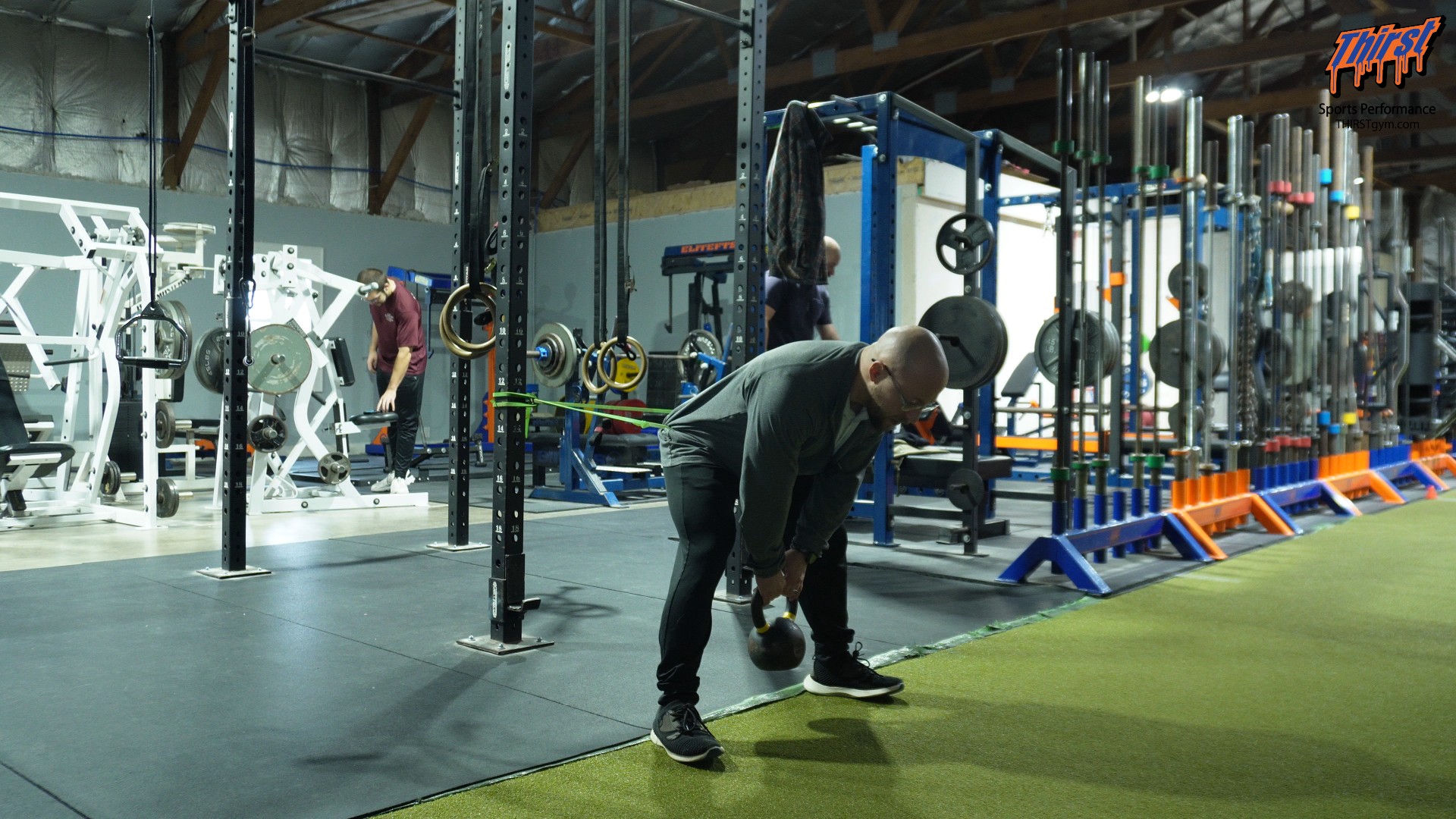
Setting up this movement requires attention to detail for maximum effectiveness. Begin by securing a moderate to strong resistance band to a rack or sturdy anchor point at floor level, choking it through itself to create a secure loop. Step into the band and position it around your waist, then step forward until you feel backward tension without having to lean excessively forward to maintain your posture. The band tension should feel noticeable but shouldn’t compromise your ability to stand tall with neutral spine alignment.
Assume a sumo stance with your feet positioned wider than shoulder width, toes pointed slightly outward. Hold a kettlebell with both hands gripping the handle in the center, allowing the weight to hang naturally between your legs. Maintain a slight bend in your knees throughout the movement—this isn’t a stiff-legged deadlift variation. From this starting position, initiate the movement by pushing your hips backward while keeping your chest tall and spine neutral. The band will assist this backward hip movement, emphasizing the eccentric loading phase.
Lower the kettlebell with control until you feel a deep stretch through your hamstrings, typically when the weight reaches approximately knee height or slightly below depending on your mobility. The sumo stance naturally engages your adductors and inner thigh muscles alongside your hamstrings and glutes, creating comprehensive posterior chain development. Drive your hips forward explosively to return to the starting position, actively squeezing your glutes hard at the top to fight against the band tension pulling you backward.
Programming Applications Across Skill Levels
For beginning athletes, this exercise serves as an exceptional teaching tool for learning proper hip hinge mechanics in the sumo position. The band provides constant feedback, making it nearly impossible to perform the movement incorrectly since any deviation from proper form becomes immediately obvious through changed tension patterns. Beginners should focus on two to four sets of six to ten repetitions, prioritizing movement quality and the feeling of proper muscle engagement over heavy loading. The kettlebell allows for manageable weight that won’t overwhelm developing movement patterns while still providing sufficient resistance for strength adaptation.
Advanced athletes and powerlifters can repurpose this same exercise as either an effective warm-up movement or a high-repetition accessory exercise. As a warm-up, the relatively light load combined with band tension activates the glutes and posterior chain without creating significant fatigue before heavy compound lifts. More commonly, advanced trainees integrate this variation as an accessory movement or training session finisher, performing two to three sets of fifteen to twenty-five repetitions to accumulate training volume and drive blood flow into the target muscles. This high-repetition approach develops muscular endurance in the hip extensors while reinforcing the lockout position that translates to improved maximal deadlift strength.
The exercise also serves combat sports athletes, desk workers addressing postural dysfunction, and general fitness enthusiasts seeking effective glute and hamstring development without requiring heavy barbell loading. The combination of accessible equipment requirements—just a kettlebell and resistance band—with effective training stimulus makes this variation practical for nearly any training environment from commercial gyms to minimalist home setups.
Key Training Benefits and Movement Cues
Beyond the obvious strength and muscle development, this exercise delivers several unique training advantages. The sumo stance variation specifically targets the adductors and inner thigh musculature more aggressively than conventional stance Romanian deadlifts, making it valuable for athletes in sports requiring strong hip adduction like hockey, soccer, or wrestling. The constant band tension throughout the movement creates a sustained glute contraction that many lifters find superior to traditional loading for developing mind-muscle connection in the hip extensors.
Focus on maintaining a tall chest position throughout the movement rather than allowing your torso to round forward. The sensation should be one of sitting back into your hips while keeping your spine rigid and neutral. At the bottom of each repetition, you should feel an intense but comfortable stretch through your hamstrings and adductors. At the top, squeeze your glutes hard enough that you feel them fighting against the backward band pull—this conscious contraction teaches proper lockout mechanics that transfer to heavier deadlift variations.
This kettlebell sumo RDL with band resistance exemplifies how thoughtful exercise variations can serve multiple training populations simultaneously, from rank beginners to elite athletes, simply through intelligent programming and execution adjustments.