
Double Kettlebell Front Rack Belt Squat March: Build Total Body Strength in One Exercise
If you are looking for a single exercise that targets your hips, core, and upper back all at once, the double kettlebell front rack belt squat march deserves a spot in your training program. This hybrid movement combines the lower body loading of a belt squat machine with the anterior trunk challenge of a double kettlebell front rack hold, creating a total body conditioning exercise that delivers serious bang for your buck. Whether you are an athlete looking to build hip strength and midline stability or a strength sport competitor searching for efficient accessory work, this exercise checks multiple boxes simultaneously.
Watch the video below on how to maximize this exercise.
What Is the Double Kettlebell Front Rack Belt Squat March?
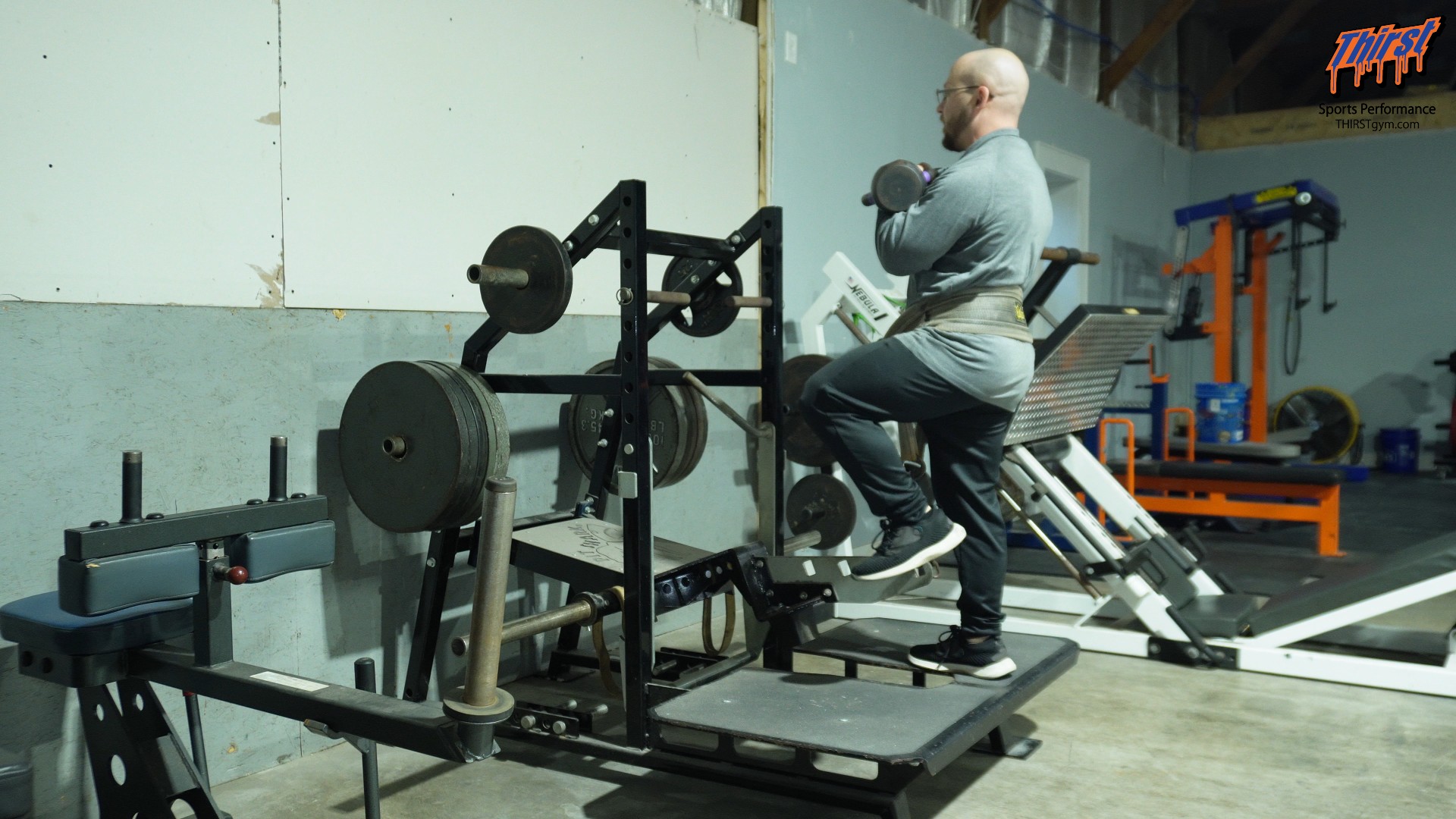
The double kettlebell front rack belt squat march is a standing marching exercise performed while attached to a belt squat machine and holding two kettlebells in a front rack position. The belt squat provides resistance against the hips and lower body as you drive your knees upward in a marching pattern, while the kettlebells load the anterior chain and demand significant engagement from the abdominals, obliques, and upper back musculature. The combination of these two loading strategies forces the entire trunk to work overtime to maintain an upright, vertical torso throughout the movement.
What makes this exercise particularly effective is that it creates a training stimulus that would otherwise require multiple separate exercises to achieve. The hip flexors and hip extensors work against the belt squat resistance during the marching action, the deep core musculature stabilizes the pelvis and spine under the anterior kettlebell load, and the upper back and thoracic extensors fight to keep the chest tall and elbows properly positioned. This multi-joint, multi-demand setup makes it an excellent choice for conditioning blocks or as a finisher at the end of a training session.
How to Perform the Double Kettlebell Front Rack Belt Squat March
To set up for this exercise, you will need a belt squat machine and two kettlebells of equal weight. Begin by selecting your kettlebells and establishing the front rack position before stepping into the belt squat apparatus. Grip the kettlebells through the horns, then bring them forward so that your elbows point forward and slightly downward. Your fists should come together in front of your upper chest, close enough that you could hypothetically punch yourself in the chin. This elbow position is critical — avoid flaring the elbows up and out to the sides, as this shifts the load away from the anterior chain and reduces the core and upper back training stimulus.
Once the kettlebells are set in the front rack, step into the belt squat machine and attach the belt around your hips. Stand up to unrack the weight, and settle into a tall, upright posture with the kettlebells held firmly in the front rack. From this position, begin marching in place by actively driving one knee upward at a time. The emphasis should be on a controlled, deliberate knee drive rather than speed. Focus on maintaining a vertical torso throughout the movement — avoid leaning or shifting side to side as you alternate legs. Each rep should feel like you are resisting lateral sway while powering the knee upward against the belt squat load.
When you have completed your set, carefully lower the kettlebells first, then rerack the belt squat machine.
Muscles Worked and Training Benefits
The double kettlebell front rack belt squat march is a true total body exercise that simultaneously trains several key areas. The hip flexors and surrounding hip musculature work against the belt squat resistance with every knee drive, making this an excellent hip strengthening exercise for athletes and lifters alike. The anterior loading from the kettlebells demands significant abdominal strength and bracing capacity from the deep core, including the obliques and transverse abdominis. Meanwhile, the upper back and thoracic extensors work continuously to maintain the front rack position and prevent the torso from rounding forward under the kettlebell load.
For athletes involved in field and court sports, this exercise builds the kind of hip strength and trunk stability that translates directly to sprinting, cutting, and change of direction. For powerlifters and strength sport athletes, it reinforces the upright torso position required in front squats and competition movements while building hip and core endurance. Coaches working with middle school and high school athletes will find this movement particularly useful as a conditioning tool that simultaneously reinforces proper posture and trunk engagement.
Programming Recommendations
This exercise works best when programmed for time rather than reps. Start with sets of 20 to 30 seconds and build toward 45 to 60 second efforts as your conditioning and positional strength improve. A highly effective programming approach is to assign a total work target — for example, accumulate two minutes of total marching time, broken up however the athlete sees fit with rest as needed between efforts. Over the course of several weeks, you can build this total volume up to three or four minutes depending on conditioning goals and where the exercise falls within the training session.
When it comes to progressing the difficulty, there are two independent variables to manipulate. Increasing the belt squat load adds more resistance to the hip musculature during the marching action, while increasing the kettlebell weight challenges the trunk and upper back to a greater degree. The key is finding a balance where both the hips and the trunk are working hard without sacrificing position. If you find yourself cranking into excessive lumbar extension to hold the kettlebells, the front rack load is too heavy relative to your current trunk strength. Dial back the kettlebell weight and prioritize maintaining a neutral spine and strong, upright posture throughout the entire set.
Final Thoughts
The double kettlebell front rack belt squat march is one of those exercises that looks deceptively simple but delivers a potent training stimulus across the entire body. By combining belt squat hip loading with the anterior challenge of a double kettlebell front rack, you create a movement that builds hip strength, abdominal bracing capacity, and upper back endurance all in one efficient package. It is an outstanding addition to any program focused on athletic development, strength sport accessory work, or general conditioning, and it fits seamlessly into the tail end of a training session where time efficiency matters most.