
Half Kneeling High Cable Row: The Perfect Alternative for Shoulder-Limited Athletes
The half kneeling high cable row represents a thoughtful solution to one of the most common challenges in strength training: how to effectively train the latissimus dorsi and upper back muscles when traditional overhead pulling exercises are contraindicated. This hybrid exercise combines the benefits of vertical pulling with the stability demands of unilateral training, making it an invaluable tool for trainers working with athletes during competitive seasons or clients with shoulder mobility limitations.
Watch the video below on how to maximize this exercise.
Understanding the Exercise Mechanics
The half kneeling high cable row functions as both a vertical pulling exercise and a rowing variation, creating what fitness professionals often call a “hybrid movement.” This dual nature allows the exercise to target the latissimus dorsi, rhomboids, and middle trapezius while simultaneously challenging core stability and hip flexor mobility. The positioning creates a unique training stimulus that differs significantly from traditional seated cable rows or standing lat pulldowns.
When we examine the biomechanics of this movement, we see that the high cable position mimics the angle of pull found in chin-ups and pull-ups, but without requiring the athlete to support their full body weight or achieve complete shoulder flexion. This makes it particularly valuable for in-season athletes who need to maintain pulling strength while minimizing stress on potentially fatigued shoulder joints.
Proper Setup and Execution Technique
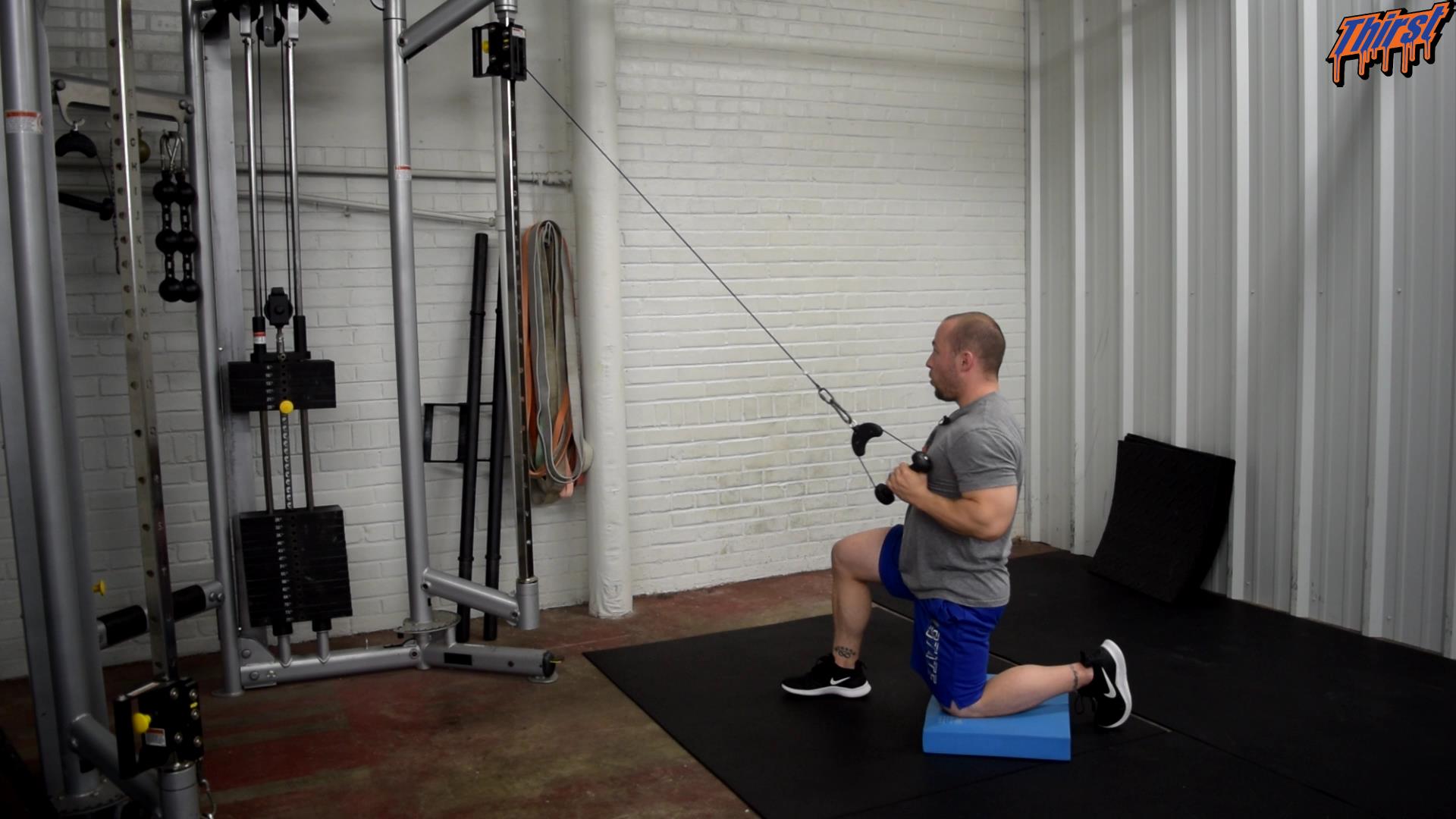
The foundation of effective half kneeling high cable row performance begins with proper cable height adjustment. The cable should be positioned at head level or slightly higher, which may present limitations for particularly tall athletes but works well for most training populations. This height ensures the optimal angle of pull to target the intended muscle groups while maintaining joint-friendly positioning.
The half kneeling position itself serves multiple purposes beyond simply providing a stable base of support. The down knee should correspond to the working arm, creating an open hip position that promotes proper hip flexor length and core activation. This positioning naturally engages the anterior core muscles while allowing the athlete to maintain an upright torso position throughout the movement.
Hand positioning requires careful attention to detail. The free hand should remain at the side rather than resting on the thigh, as this support would diminish the stability challenge that makes this exercise particularly effective. The working hand grasps the D-handle with a neutral grip, allowing for natural scapular movement throughout the range of motion.
Movement Pattern and Muscle Activation
The pulling motion begins with the scapula in a protracted position, allowing the latissimus dorsi to achieve a full stretch. As the pull initiates, the scapula retracts and depresses while the elbow drives back, creating the characteristic rowing component of the movement. This scapular motion around the ribcage is crucial for proper muscle activation and shoulder health.
The reach phase of the movement is equally important, as it allows the scapula to protract naturally while maintaining core stability. This eccentric portion of the exercise provides significant benefits for scapular control and shoulder girdle stability, qualities that transfer well to athletic performance and daily activities.
Training Applications and Programming
The half kneeling high cable row typically fits well into training programs as either a primary pulling exercise or an accessory movement, depending on the athlete’s current limitations and training goals. For athletes with shoulder restrictions or those in competitive seasons where overhead loading needs to be minimized, this exercise often serves as the primary vertical pulling movement.
Programming parameters generally fall within three to four sets of eight to twelve repetitions per side, making it suitable for both strength and hypertrophy goals. The unilateral nature of the exercise naturally increases training volume while addressing any strength imbalances between sides, a common concern in athletic populations.
Benefits for Special Populations
This exercise proves particularly valuable for personal training clients who experience shoulder pain with traditional overhead movements. Rather than avoiding pulling exercises entirely, trainers can use the half kneeling high cable row to maintain lat development and upper back strength while respecting the client’s current limitations. This approach allows for continued progress without exacerbating existing issues.
The exercise also works exceptionally well in superset combinations, as the setup is straightforward and the movement doesn’t create excessive fatigue that would interfere with subsequent exercises. This efficiency makes it practical for busy training environments where equipment availability and time constraints are considerations.
Integration with Other Training Methods
The half kneeling high cable row complements traditional rowing exercises like the half kneeling cable row, creating a comprehensive pulling program that addresses multiple movement patterns. This variety helps prevent overuse injuries while ensuring balanced development of the posterior chain muscles.
The unilateral nature of the exercise also makes it valuable for addressing asymmetries and improving core stability, qualities that enhance performance in rotational sports and activities requiring single-arm strength. These benefits extend beyond the immediate muscle-building effects to include improved movement quality and injury prevention.
Conclusion and Implementation
The half kneeling high cable row represents more than just an alternative exercise; it’s a strategic tool that allows trainers to maintain training progression while respecting individual limitations and seasonal demands. Its simplicity in setup, combined with its effectiveness in targeting key muscle groups while challenging stability, makes it a valuable addition to any training program.
Whether used as a primary pulling exercise for shoulder-limited individuals or as an accessory movement for well-rounded athletes, the half kneeling high cable row provides a safe, effective means of developing upper back strength and scapular control. Its versatility and joint-friendly nature make it an exercise that deserves consideration in any comprehensive training approach.