
Incline Cable Chest Fly: The Ultimate Guide to Superior Chest Isolation
The incline cable chest fly stands as one of the most effective chest isolation exercises available for building upper pec development while maintaining shoulder health. This cable-based variation offers distinct advantages over traditional dumbbell flies through constant tension mechanics and a more shoulder-friendly movement pattern. Whether you’re seeking an alternative to the pec deck machine or looking to maximize chest activation during your upper body training, the incline cable chest fly delivers exceptional results for lifters at every experience level.
Watch the video below on how to maximize this exercise.
Equipment Setup and Requirements
Executing the incline cable chest fly requires specific equipment configuration to optimize both safety and effectiveness. You’ll need a standard adjustable utility bench positioned at an incline angle between 15 and 45 degrees, with 30 degrees representing an ideal middle ground for most lifters. The angle selection influences the emphasis on different portions of the upper chest, with steeper angles targeting the clavicular head more aggressively.
The dual cable system setup demands careful attention to positioning. Set both cable arms to the lowest position on the machine and open them outward to create adequate working space. This bottom position ensures the resistance vector pulls upward and across the body throughout the movement, maintaining optimal tension on the chest muscles. Some facilities offer dedicated incline fly machines that streamline this setup process, though the cable variation provides greater versatility and is more commonly available in most training environments.
Before beginning your working sets, consider the spatial logistics of this exercise. The incline cable chest fly requires simultaneous use of two cable stations and an adjustable bench, making it one of the more equipment-intensive movements in your arsenal. During peak gym hours, be mindful of occupying multiple pieces of equipment and consider timing your workout to minimize disruption to other members.
Execution Technique and Movement Mechanics
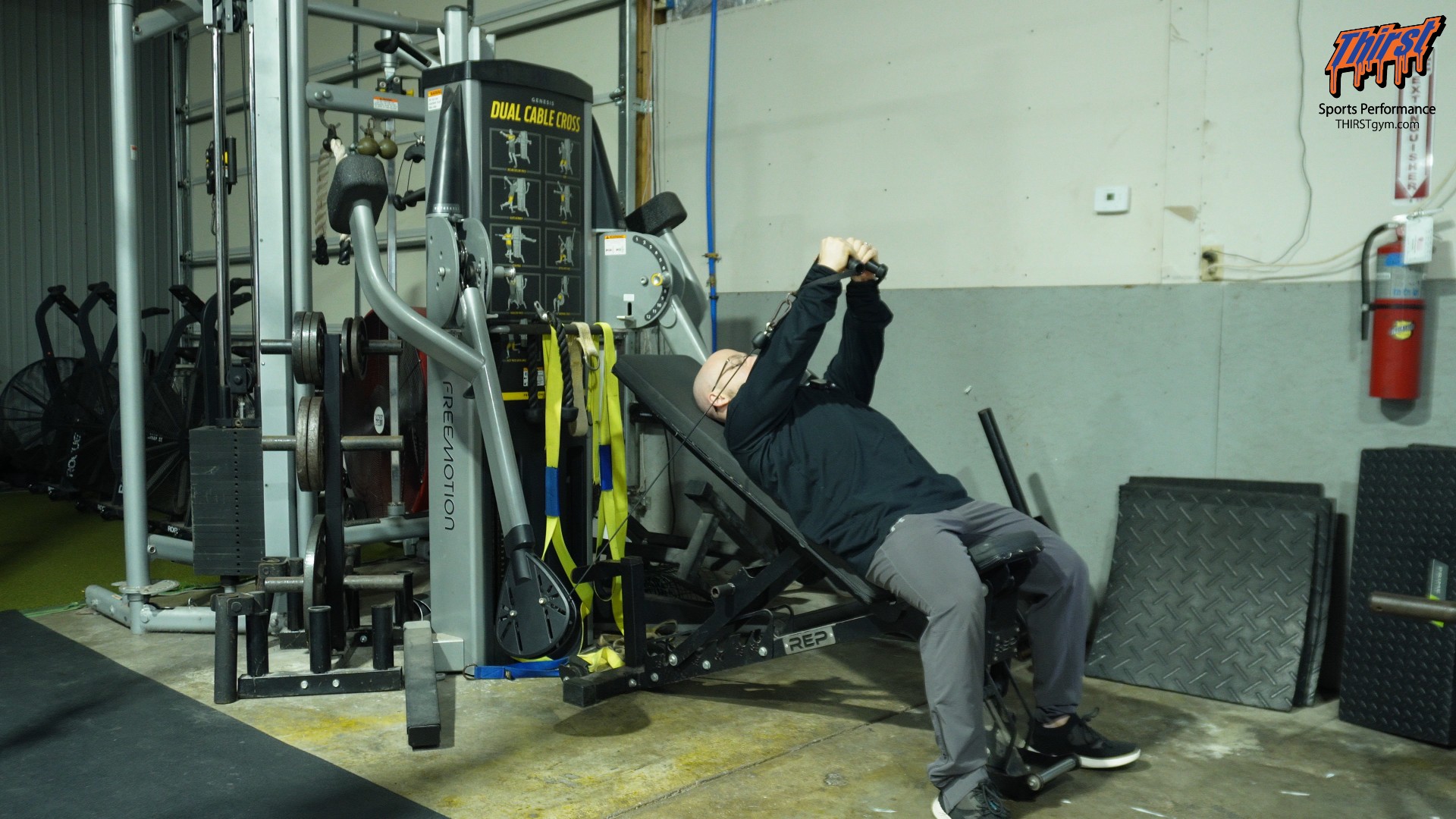
The setup sequence requires methodical attention to detail. Position your incline bench centered between the two cable stations, maintaining equal distance from each arm. Grasp the first cable handle, walk around the bench to secure the second handle, then carefully position yourself on the bench while maintaining control of both cables. This setup phase presents the primary challenge of the exercise, though the movement quality justifies the initial investment.
Once positioned on your back with both handles secured, press the cables upward toward the ceiling until your arms reach near-full extension. Maintain a slight bend in your elbows throughout the entire range of motion to protect the joint and keep tension on the target muscles. Your palms should face each other in a neutral grip position, with your chest elevated and your back maintaining firm contact with the bench pad.
From this starting position, initiate the eccentric phase by opening your arms in a wide arc, visualizing the motion of making a big hug. Control the descent as the cables pull your hands apart, feeling the progressive stretch across your chest. Descend to a depth that allows a quality stretch without compromising shoulder comfort, working within your individual range of motion capabilities. The incline angle naturally creates a more shoulder-friendly position compared to flat or decline variations.
The concentric phase involves reversing the arc and bringing your hands together at the top, focusing on powerful chest contraction. Squeeze your pecs maximally at the peak contraction point, emphasizing the quality of muscle activation over movement speed. This squeeze component differentiates effective chest flies from merely going through the motions.
Biomechanical Advantages and Training Benefits
The incline cable chest fly’s primary advantage stems from the constant tension created by the cable resistance system. Unlike dumbbell flies where resistance decreases as the weights move toward vertical alignment, cables maintain consistent loading throughout the entire range of motion. This constant tension generates superior mechanical tension and metabolic stress, two critical drivers of hypertrophic adaptation.
The strength curve of cable exercises matches the natural force production capabilities of the chest muscles more effectively than free weights. As your hands approach each other at the top of the movement, the cables continue providing resistance where dumbbells would offer minimal challenge. This complete range activation maximizes time under tension and enhances the training stimulus.
The incline positioning offers specific targeting advantages for upper chest development, an area many lifters struggle to build adequately. The upward pressing angle emphasizes the clavicular head of the pectoralis major while maintaining reduced stress on the anterior deltoid compared to flat or decline positions. This makes the movement particularly valuable for individuals managing shoulder concerns while seeking comprehensive chest development.
The fixed bench position eliminates compensatory movement patterns that commonly plague standing or unsupported fly variations. Without the ability to generate momentum through body English or core instability, the chest muscles must handle the entire workload. This forced isolation produces superior muscle activation and reduces the risk of developing movement compensations that can limit long-term progress.
Programming Recommendations and Set Parameters
The incline cable chest fly functions optimally as an accessory movement rather than a primary compound exercise. Program this variation for two to three sets of twelve to twenty repetitions, emphasizing controlled tempo and quality contractions over heavy loading. The higher repetition ranges align with the isolation nature of the movement and reduce joint stress while maximizing muscle fiber recruitment.
This exercise integrates effectively into various training splits. Include it on dedicated chest days following primary pressing movements like incline barbell press or incline dumbbell press. The cable fly serves as an excellent finishing movement that exhausts the chest after strength work depletes your pressing capacity. Alternatively, program it during upper body training sessions as a supplementary movement alongside horizontal and vertical pressing variations.
For full-body training protocols, the incline cable chest fly provides targeted upper body isolation without excessive systemic fatigue. The relatively light loads and controlled movement pattern allow meaningful work without compromising recovery or subsequent exercise performance. This makes it particularly valuable for athletes and lifters balancing multiple training priorities.
Target Applications and Population Benefits
The incline cable chest fly addresses several specific training needs across different lifter populations. For bodybuilders and physique athletes, it delivers the precise isolation necessary for developing chest detail and density. The constant tension mechanics create the pump and metabolic stress associated with hypertrophic stimulation.
Powerlifters and strength athletes benefit from using this variation as an accessory movement to build work capacity in the chest without the joint stress of additional heavy pressing. The movement pattern reinforces scapular stability and teaches proper shoulder positioning that transfers to competition lifts.
For individuals lacking access to dedicated pec deck machines, the incline cable chest fly provides an excellent functional substitute. The fixed bench position replicates the stability benefits of the pec deck while the cables deliver similar resistance characteristics. General fitness enthusiasts seeking well-rounded chest development can integrate this movement to complement their pressing work and create balanced muscle development.
The shoulder-friendly nature of the incline angle makes this variation particularly valuable for lifters managing shoulder issues or those with postural dysfunction from desk work. The exercise allows effective chest training while minimizing anterior shoulder strain, supporting long-term joint health alongside muscle development.
Common Considerations and Training Tips
Setup efficiency improves with practice and strategic planning. Prepare your bench positioning before securing the cable handles, and consider using lifting straps if grip strength becomes a limiting factor during higher repetition sets. The setup investment pays dividends through superior muscle activation and training effect.
Focus on the eccentric phase, controlling the descent rather than allowing the cables to pull your arms apart. This controlled lowering maximizes time under tension and reduces injury risk while enhancing the training stimulus. Work within your comfortable range of motion, avoiding excessive stretch that compromises shoulder positioning or creates joint discomfort.
Maintain consistent tempo throughout your sets, resisting the urge to rush through repetitions. The isolation nature of this exercise demands patience and attention to muscle contraction quality. Breathing coordination supports performance—inhale during the eccentric lowering phase and exhale during the concentric squeezing motion.
The incline cable chest fly represents a sophisticated tool in the chest development arsenal, combining the isolation benefits of fly movements with the unique advantages of cable resistance systems. Through proper setup, disciplined execution, and strategic programming, this exercise delivers exceptional results for building chest mass, improving muscle detail, and supporting overall upper body development.