
Sled Resisted Backpedal: Build Explosive Backward Speed for Athletic Performance
The sled resisted backpedal represents one of the most effective methods for developing explosive backward movement capabilities that directly transfer to competitive athletics. This loaded variation of the fundamental backpedal movement pattern addresses a critical weakness in many athletes’ training programs—the tendency to underemphasize or inadequately train backward acceleration mechanics that prove essential in game situations.
Watch the video below on how to maximize this exercise.
Understanding the Athletic Application of Resisted Backpedaling
In virtually every field and court sport, athletes encounter situations requiring rapid backward movement. Defensive backs in football must backpedal while reading offensive formations, basketball defenders maintain backward movement while staying in front of ball handlers, and soccer players transition backward when tracking attacking runs. The commonality across these scenarios involves the need for explosive, controlled backward acceleration rather than passive or half-effort backward jogging. The sled resisted backpedal forces athletes to generate maximum effort in this movement pattern, creating adaptations that translate directly to sport-specific performance situations.
The biomechanical demands of loaded backpedaling develop muscular strength and neural adaptations in the quadriceps, hip flexors, and posterior chain musculature while reinforcing proper movement sequencing and arm action coordination. This combination of strength development and technical reinforcement makes the exercise valuable for both developing young athletes learning movement fundamentals and experienced competitors seeking marginal performance gains.
Equipment Setup and Configuration for Optimal Training Effect
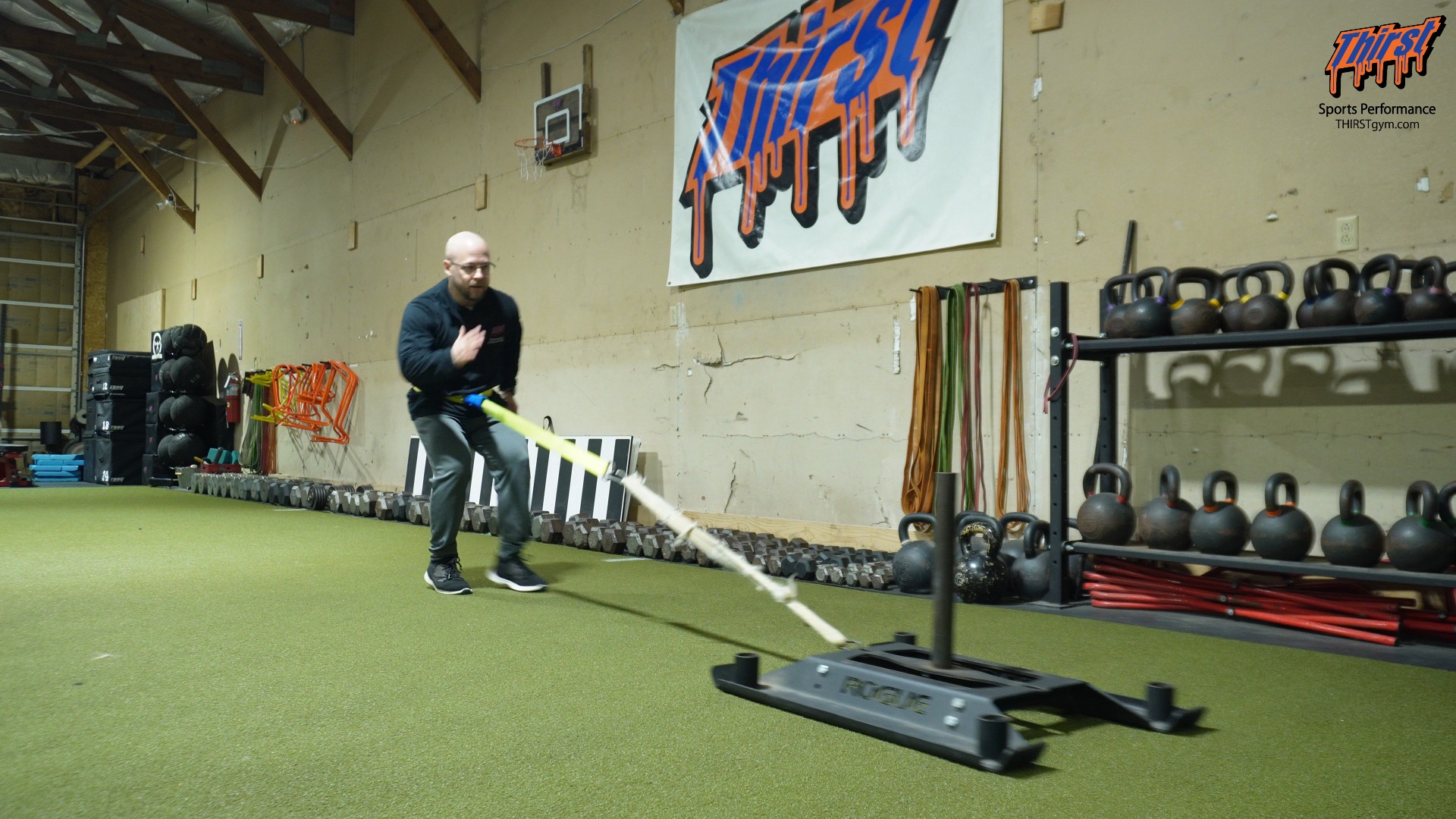
Proper equipment setup proves essential for maximizing the training stimulus while maintaining safety and movement quality. You’ll need a training sled and a waist attachment harness or belt system that secures comfortably around your hips. Various manufacturers produce different attachment styles, but the critical factor involves positioning the connection point at your center of mass rather than holding handles or using shoulder harnesses that alter your body position and movement mechanics.
The attachment should cinch securely around your waist or hips without restricting movement or causing discomfort during the exercise. Once secured, you’ll want to ensure adequate distance between your body and the sled itself—typically achieved through a longer tether strap. This extended connection distance prevents the sled from lifting off the ground during movement, which disrupts the resistance profile and creates inconsistent loading throughout the exercise. The strap should remain taut throughout the movement while providing enough separation that your backward acceleration doesn’t cause the sled to tip or bounce.
Executing Proper Backpedal Mechanics Under Load
Beginning from a standing position with tension already established in the strap, assume an athletic ready position resembling a quarter squat stance. Your chest should remain upright and tall rather than excessively forward, maintaining a neutral spine alignment that allows for efficient force production. This starting position establishes the proper hip and knee angles that enable explosive backward acceleration while protecting joint structures from excessive stress.
The actual backpedaling motion requires complete engagement of your arm drive mechanics just as you would employ during forward sprinting or unloaded backpedaling in competitive situations. Your arms should pump vigorously with opposite arm and leg coordination—when your right leg drives backward, your left arm should drive forward. This arm action isn’t merely accessory movement but contributes significantly to momentum generation, rhythm establishment, and overall movement velocity. Athletes frequently make the mistake of leaving their hands passive or held near their chest during backpedaling drills, creating a movement pattern that fails to transfer to actual sport demands.
Your leg action should emphasize powerful backward steps with active ground contact rather than reaching backward with passive leg swings. Think about driving your feet into the ground and propelling your body backward rather than simply stepping back. The loaded nature of the sled resistance reinforces this active pushing pattern and punishes passive or lazy movement mechanics immediately through reduced speed and increased difficulty.
Programming Considerations and Loading Parameters
The programming variables for sled resisted backpedals differ significantly from traditional sled pushing or dragging variations because the training objective centers on speed and explosiveness rather than maximum strength or conditioning. Distance selection should reflect actual athletic backpedaling demands—most sports situations requiring backward movement involve transitions occurring within five to ten yards. Programming backpedal work beyond this distance range rarely provides sport-specific benefit unless you’re specifically targeting muscular endurance in the quadriceps and knee extensors for injury prevention or structural development purposes.
Loading parameters should remain conservative to maintain high movement velocity and explosive characteristics. For most athletes, an empty sled or adding just five to twenty pounds provides sufficient resistance to enhance effort quality without degrading movement speed to the point where the training stimulus becomes strength-focused rather than speed-focused. The resistance should create noticeable tension and require genuine effort without reducing your backpedaling speed to a slow, grinding pace that no longer resembles athletic movement patterns.
Three to five sets of maximum effort repetitions covering five to ten yards allows for adequate training volume while maintaining the quality and explosiveness necessary for positive adaptation. This work should occur early in training sessions when neuromuscular freshness remains high—either during dedicated speed and agility training days or at the beginning of lower body training sessions before fatigue accumulates from heavy strength work.
Integration Into Comprehensive Athletic Development
The sled resisted backpedal functions most effectively as part of a complete speed and agility training program rather than as an isolated exercise. Athletes should view this drill as a teaching tool for maximum effort backpedaling and a training method for developing the specific strength qualities that support explosive backward acceleration. The loaded backpedal reinforces proper mechanics while simultaneously building the muscular capabilities required to express those mechanics at high velocity under competitive conditions.