
Cable Zercher RDL: A Beginner-Friendly Hip Hinge for Glutes and Hamstrings
If you’re looking for a fresh way to load your posterior chain — or if you’re just starting to build your hip hinge pattern from the ground up — the cable Zercher RDL deserves a spot in your program. This variation takes the classic Romanian deadlift and reimagines it using a cable machine and a tricep extension bar, making it an accessible, highly teachable movement for beginners and a useful accessory option for more experienced lifters.
Watch the video below on how to maximize this exercise.
What Equipment Do You Need?
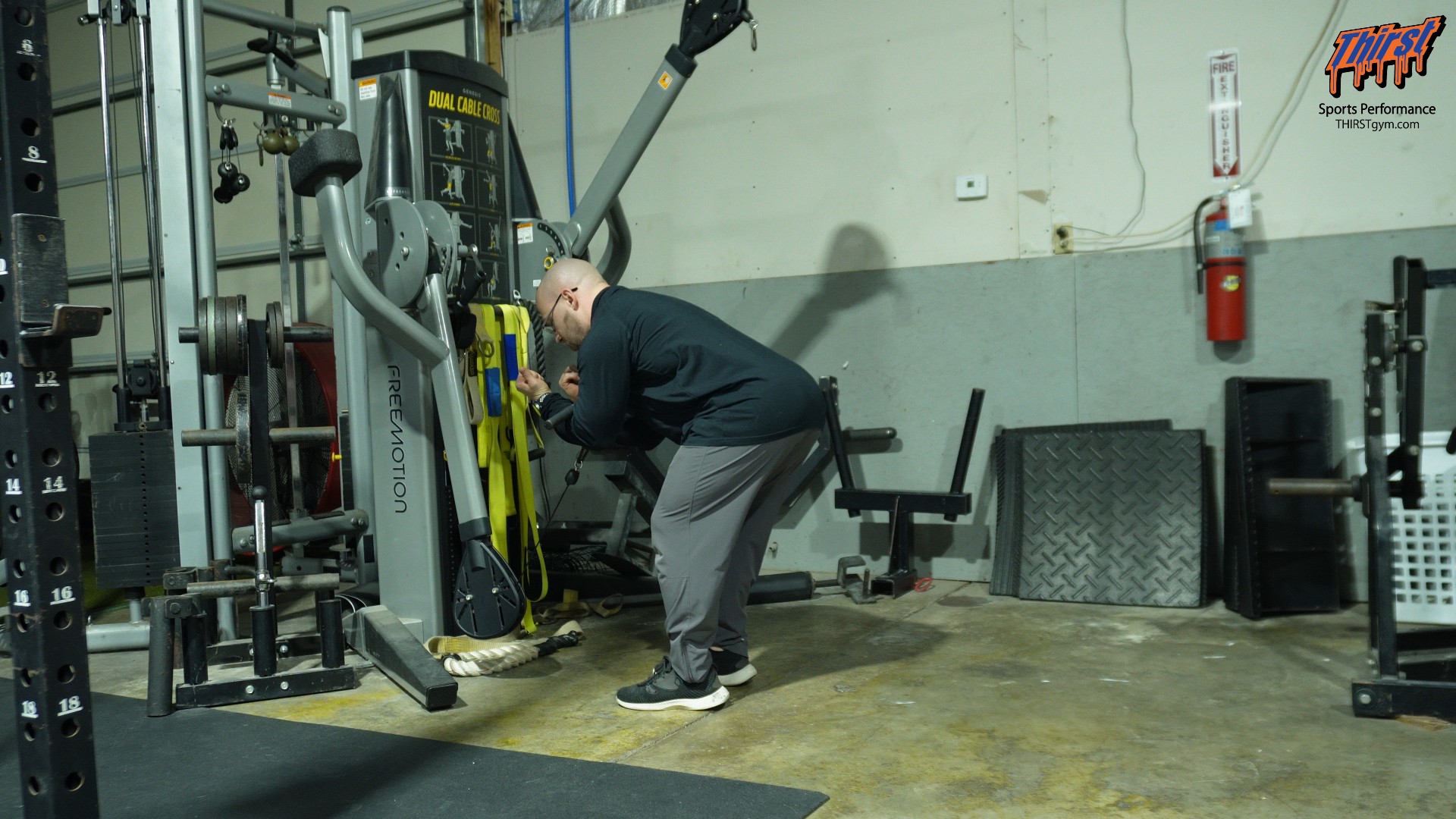
To perform the cable Zercher RDL, you’ll need a cable machine and a tricep extension bar attachment. A straight bar works fine, but a slightly curved bar is generally more comfortable in the Zercher position and is the preferred option. Set the cable pulley to the lowest position on the machine before selecting your working weight.
How to Set Up the Cable Zercher RDL
Getting into the correct starting position is everything with this exercise. Take the tricep extension bar and place it in the crooks of your elbows — this is the Zercher position, the same loading style used in Zercher squats and carries. Your palms should be facing toward your face. From there, step back from the machine just enough to keep constant tension on the cable throughout the entire set. You never want the cable to go slack at the bottom, and you also don’t want to be positioned directly over the pulley. The ideal setup has the cable pulling you slightly forward, which will naturally draw your elbows away from your body just a touch and help you find the right hinge mechanics.
How to Perform the Movement
Once you’re in position, establish your starting posture: full foot contact with the floor, knees slightly bent, and chest tall. From here, the movement is a straightforward hip hinge. Push your hips back, let the cable pull you down into the stretched position, then drive your hips forward to return to standing. That’s it.
The cue to focus on is reaching your elbows slightly forward as you hinge. This creates the space necessary for your hips to travel back fully without interference, and it also keeps the cable taut and working against you throughout the range of motion. At the bottom of the rep, you should feel a significant stretch through your glutes and hamstrings — that’s exactly where you want to be loading the posterior chain.
Why the Zercher Position Works Here
The Zercher hold changes the feel of this movement in a meaningful way. Because the load is carried in the crooks of your elbows rather than gripped in your hands, there’s no pulling through the arms or tendency to turn this into a row. Your upper body stays relatively passive, which forces the hinge to come entirely from the hips. For beginners especially, this can be a surprisingly effective way to develop the proprioceptive awareness needed to feel what a true hip hinge should look like.
It also reinforces the idea of pushing the hips back to initiate the movement rather than bending forward at the waist — a distinction that trips up a lot of new trainees early in their training career.
Who Is This Exercise For?
The cable Zercher RDL is a genuinely versatile exercise that serves a few different populations well. For beginners, it functions as an excellent teaching tool for the hip hinge pattern. The cable’s constant tension provides real-time feedback, and the Zercher arm position removes a lot of the grip and upper body interference that can complicate early RDL attempts with a barbell.
For intermediate and advanced lifters, it works well as an accessory movement on lower body or posterior chain days. It fills a similar role to cable pull-throughs — loading the hamstrings and glutes in the stretched position — but with a slightly different stimulus and loading angle. If your training has been heavy on barbell RDLs or pull-throughs and you want to introduce some variation, this is a straightforward swap.
The one honest limitation worth noting: this exercise is constrained by how much weight your cable stack can provide. For advanced lifters who need heavy loads to generate a meaningful training stimulus in the posterior chain, a barbell or trap bar variation will likely be more appropriate. But for building volume, improving movement quality, or just torching the hamstrings a bit differently, the cable Zercher RDL delivers.
Programming Recommendations
Brandon recommends two to three sets of ten to twenty repetitions. The higher rep range is intentional — given the potential weight limitations of cable machines, pushing the volume up ensures you’re still creating an adequate training stimulus. This rep and set range also makes it a clean fit for accessory blocks at the end of a lower body session, where the goal is accumulating quality work without adding excessive fatigue before the next session.