
Tall Kneeling Dumbbell Lateral Raise: A Strict Shoulder Exercise for Better Form and Control
The tall kneeling dumbbell lateral raise represents an intelligent progression of the standard lateral raise that forces stricter movement execution while simultaneously engaging your posterior chain. This bodyweight-assisted variation eliminates common compensatory patterns that plague standing lateral raises, making it an excellent choice for athletes seeking genuine shoulder development, lifters working in limited training spaces, or anyone looking to maximize shoulder isolation without momentum-based cheating.
Watch the video below on how to maximize this exercise.
Equipment Required
To perform tall kneeling dumbbell lateral raises effectively, you’ll need minimal equipment. A pair of dumbbells appropriate to your strength level is essential—typically lighter than what you’d use for standing variations due to the increased stability demands. A knee pad, yoga mat, or folded towel is strongly recommended for comfort during extended sets, though not strictly necessary if you’re working on a padded surface. The beauty of this exercise lies in its simplicity and space efficiency.
Mastering the Tall Kneeling Position
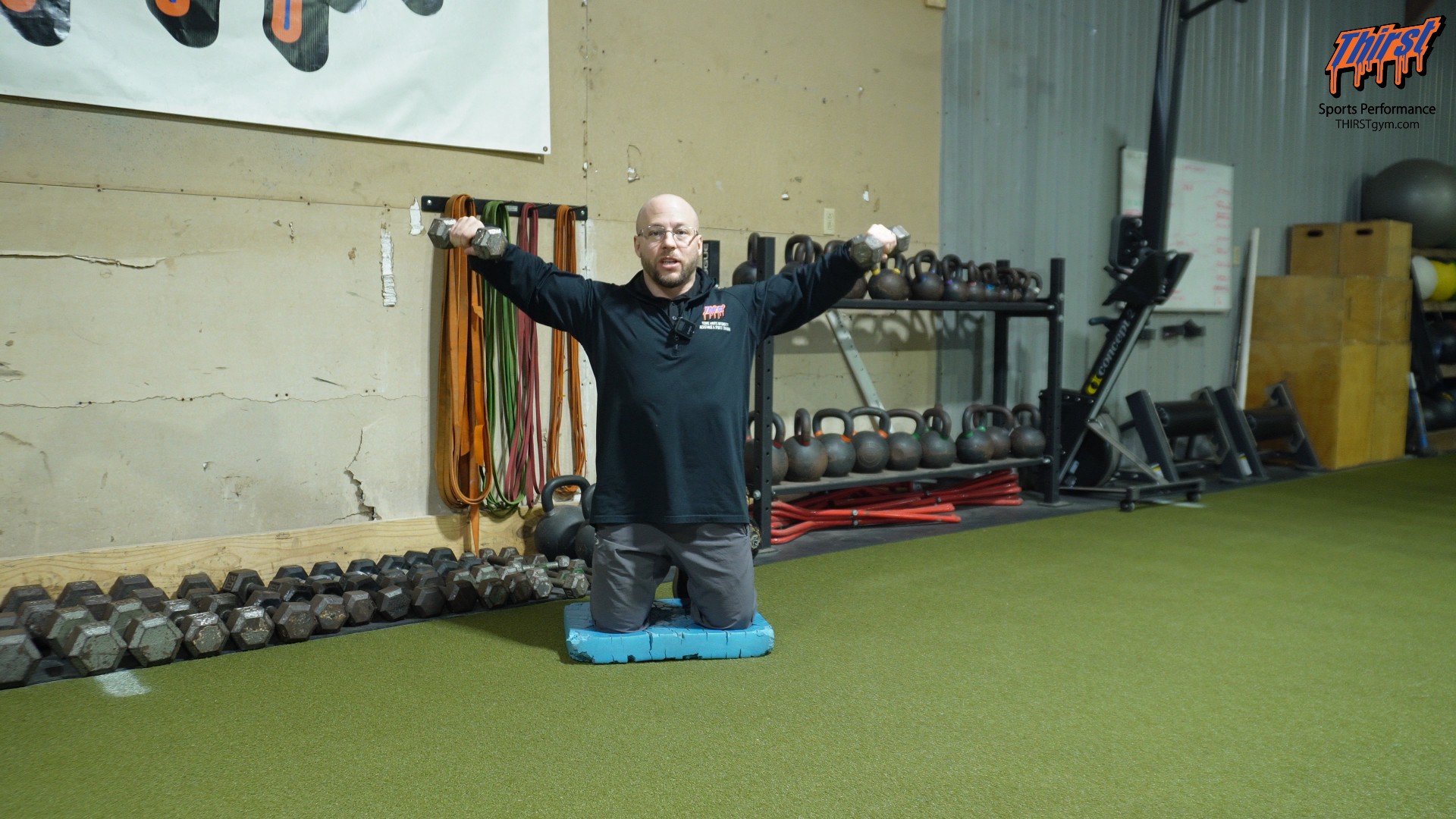
The tall kneeling position forms the foundation of this exercise and differentiates it from standard lateral raise variations. Begin by kneeling on both knees with your toes actively dug into the ground behind you. This toe position is critical—it allows you to drive your hips forward and maintain proper pelvic alignment throughout the movement. You should feel mild engagement in your glutes and hamstrings even before picking up the dumbbells.
Your torso should be completely vertical with your chest tall and shoulders stacked directly over your hips. This is not a position where your butt sags backward or where you compensate by arching through your lower back. The anterior pelvic tilt and active posterior chain engagement create a stable platform that prevents the momentum-based swinging common in standing variations. Think of this position as a modified plank done vertically—your entire body should feel braced and connected.
Exercise Execution and Technique
Once you’ve established the proper tall kneeling foundation, grip your dumbbells with palms facing down and pinkies rotated slightly upward. This internal rotation position optimizes shoulder mechanics and targets the lateral deltoid more effectively. From this ready position, raise both dumbbells out to your sides in a controlled arc until your arms reach approximately shoulder height, then lower them back down with equal control.
The key technical distinction of this variation is maintaining absolutely strict form throughout the range of motion. You cannot push your hips back to generate momentum. You cannot arch your lower back to assist the movement. You cannot rock forward or backward to swing the weights. The tall kneeling position forces honest execution—your shoulders must do all the work while your glutes and hamstrings maintain the stable base position. Every repetition should feel deliberate and controlled, never rushed or ballistic.
The Strategic Benefits of Tall Kneeling Variations
The tall kneeling dumbbell lateral raise serves multiple training purposes beyond simple shoulder development. First, it eliminates compensatory movement patterns that reduce exercise effectiveness. When lifters stand, they frequently use hip drive, lower back extension, or forward lean to assist heavy dumbbells upward. The kneeling position removes these options, forcing pure shoulder work and often requiring lighter loads than standing variations.
Second, this variation provides concurrent posterior chain activation. Maintaining the proper tall kneeling position with active toe drive requires constant glute and hamstring engagement, turning a shoulder isolation exercise into a multi-purpose movement. Athletes particularly benefit from this forced postural awareness and posterior chain activation.
Third, the exercise addresses space limitations effectively. Gym environments with limited floor space or home training setups can incorporate this variation without requiring the walking radius needed for standing lateral raises. You can perform high-quality shoulder work in a compressed footprint.
Programming Recommendations and Applications
The tall kneeling dumbbell lateral raise works exceptionally well in multiple programming contexts. For standard strength and hypertrophy work, implement two to three sets of ten to twenty repetitions using moderate loads. Focus on perfect form and controlled tempo throughout each set, treating this as a strict isolation exercise rather than a momentum-based movement.
As a shoulder finisher at the end of training sessions, this exercise excels at generating high metabolic stress and muscle pump. Use very light dumbbells and perform continuous work for one to two minutes straight, accumulating as many quality repetitions as possible. This extended time under tension floods the shoulders with blood and creates significant fatigue without requiring heavy loading that might compromise recovery.
Athletes in sports requiring overhead stability benefit from the positional demands of this variation. Combat sport athletes, wrestlers, and anyone dealing with postural dysfunction from desk work can use tall kneeling variations to reinforce proper alignment while building shoulder strength. The forced upright posture and posterior chain engagement directly address common postural compensations.
Final Considerations
The tall kneeling dumbbell lateral raise isn’t a revolutionary exercise—it’s simply a smarter positioning choice for a foundational shoulder movement. By removing compensatory options and forcing stricter execution, it ensures your lateral raises actually target your shoulders rather than becoming a full-body momentum exercise. Whether you’re working in limited space, finishing a shoulder session with high-volume work, or simply trying to keep your lateral raise form honest, this variation delivers targeted shoulder development with built-in quality control.