
Belt Squat Suitcase Marching: A Complete Guide to This Hybrid Strength Exercise
The belt squat suitcase marching exercise represents an innovative combination of unilateral loading and dynamic hip work that delivers simultaneous benefits for core stability, hip strength, and cardiovascular conditioning. This exercise merges the mechanical advantages of belt squat training with the anti-lateral flexion demands of suitcase carries, creating a unique training stimulus that addresses multiple physical qualities within a single movement pattern.
Watch the video below on how to maximize this exercise.
Equipment and Setup Requirements
To perform belt squat suitcase marching, you’ll need access to a belt squat machine such as the Pit Shark or any comparable apparatus that allows for vertical loading through a hip belt. The beauty of this setup lies in its versatility, as you can independently manipulate both the belt squat resistance and the kettlebell load to create the exact training stimulus you’re pursuing. For the unilateral component, you’ll need a kettlebell, though the weight can range from relatively light to moderately heavy depending on your training objectives and current strength levels.
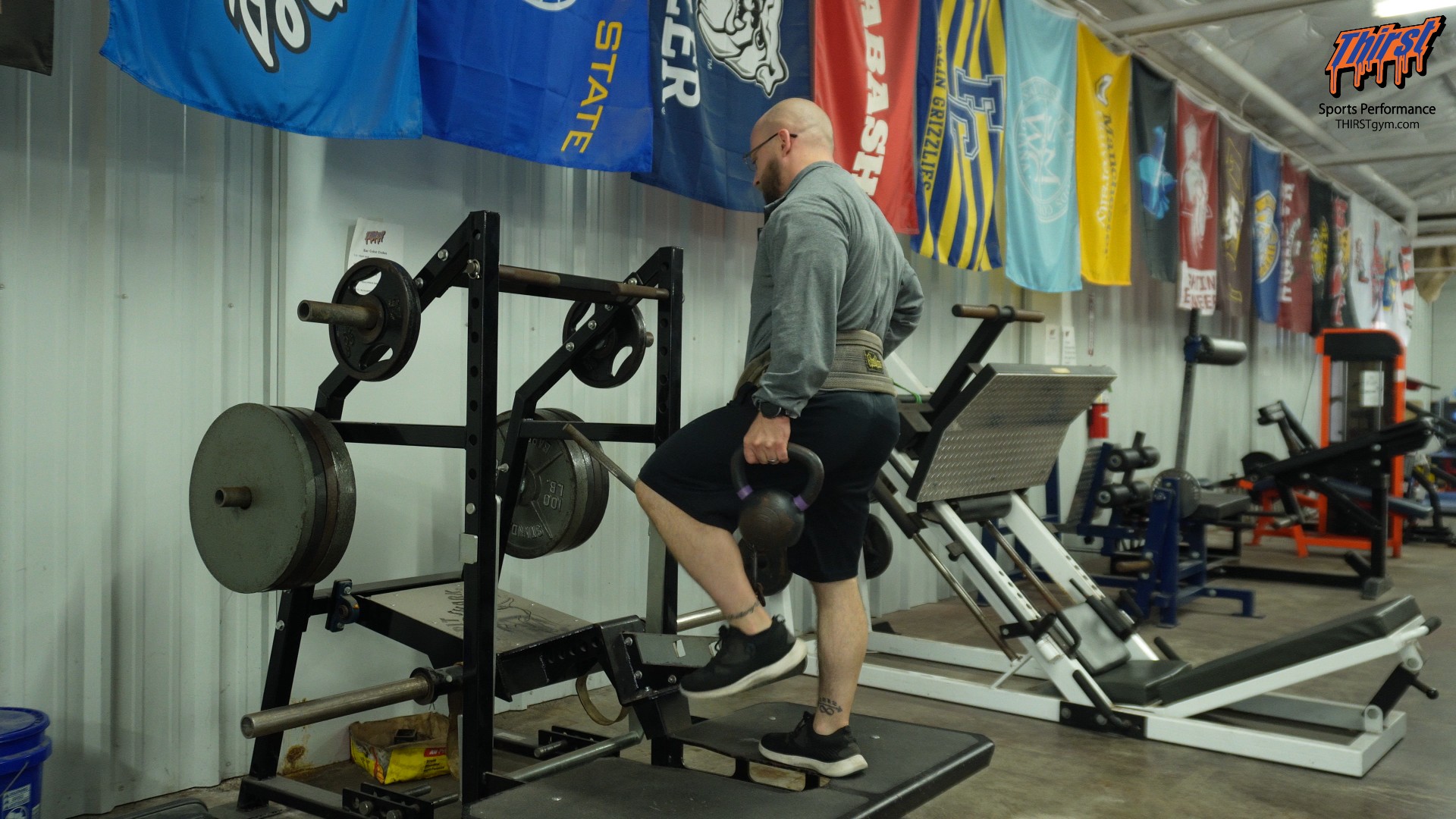
Begin by securing the belt squat apparatus around your waist exactly as you would for standard belt squat variations. Select your kettlebell and hold it in one hand, typically starting with your non-dominant side to ensure balanced development. Once positioned with the kettlebell, stand up to unrack the belt squat resistance, establishing your starting position with the load distributed through your hips via the belt while simultaneously holding the kettlebell at your side in a suitcase carry position.
Exercise Execution and Technique
From your standing position with the belt squat loaded and kettlebell secured in one hand, the movement itself involves marching in place while maintaining proper postural alignment and resisting the lateral pull created by the offset load. The marching component should emphasize driving your knees upward to hip height or slightly above, creating significant hip flexor activation while the belt squat resistance challenges your ability to overcome that load with each step.
The critical technical element involves maintaining a tall, neutral spine throughout the movement despite the unilateral loading from the kettlebell. Your body will naturally want to lean away from the weighted side or compensate through lateral flexion, but the goal is to resist these compensatory patterns by actively engaging your core musculature, particularly the obliques on the side opposite the kettlebell. This creates what’s essentially an anti-lateral flexion challenge similar to what you’d experience during a traditional suitcase carry, except now you’re adding the dynamic component of marching against resistance.
Throughout the marching sequence, focus on controlled knee drive rather than rushed stepping, ensuring you spend adequate time in single-leg stance positions as you alternate legs. This single-leg stance component, combined with the belt squat loading, develops exceptional hip stability and challenges the smaller stabilizing muscles around your hip joint that often get neglected in bilateral training patterns.
Biomechanical Benefits and Training Adaptations
The belt squat suitcase marching exercise delivers a remarkably comprehensive training effect across multiple physical qualities. From a hip strength perspective, you’re developing powerful hip flexors through the marching component while the belt squat resistance challenges your ability to generate force in an advantageous position that spares your spine from compressive loading. This makes the exercise particularly valuable for athletes recovering from back issues or anyone seeking to develop hip strength without the axial loading demands of traditional squatting variations.
The unilateral kettlebell creates significant anti-lateral flexion demands on your core, particularly targeting the obliques and quadratus lumborum on the side opposite the load. This diagonal stabilization pattern translates exceptionally well to athletic movements and real-world strength demands where you frequently must maintain postural control against asymmetric forces. The extended time under tension during marching intervals also builds muscular endurance in these stabilizing structures, improving your ability to maintain proper positioning during extended efforts.
Additionally, the single-leg stance requirements inherent to marching develop crucial hip stabilization through the gluteus medius and other lateral hip stabilizers. These muscles play essential roles in preventing knee valgus collapse and maintaining proper lower body alignment during running, jumping, and change of direction tasks. By loading this stabilization requirement through both the belt squat and the offset kettlebell, you create an incredibly robust training stimulus for improving movement quality and reducing injury risk.
Programming Recommendations and Applications
For strength and stability development, working intervals of twenty to thirty seconds per side provides an excellent starting point, accumulating forty to sixty total seconds of work per set when you combine both sides. This duration challenges both your muscular endurance and your ability to maintain proper technique under fatigue without extending so long that form deterioration becomes inevitable. Beginning with two to five sets of this protocol at the end of your primary training session allows you to develop these qualities without interfering with your main strength work.
From a conditioning perspective, the belt squat suitcase march offers tremendous versatility. You can structure it as a high-intensity interval protocol by performing fifteen to twenty seconds on each side followed by equal rest periods, creating one-minute work-rest cycles. Extending this pattern across ten to twenty rounds generates substantial cardiovascular and metabolic demands while simultaneously reinforcing movement quality and core stability under fatigue. This approach works particularly well on off-days from your primary strength training or as a finisher to general physical preparedness focused sessions.
The independent loading mechanisms allow for creative programming variations as well. You might emphasize the core stability component by using a heavier kettlebell with moderate belt squat resistance, or you could flip that ratio to prioritize hip strength by loading the belt squat more aggressively while keeping the kettlebell relatively light. This flexibility makes the exercise adaptable to different training phases and individual needs.
Common Mistakes and Coaching Considerations
The most frequent technical error involves excessive lateral lean toward or away from the kettlebell side. Monitor your torso position carefully, ensuring you maintain a relatively vertical spine rather than compensating through side-bending. If you find yourself unable to control this lean, reduce either the kettlebell weight or belt squat resistance until you can maintain proper alignment. The second common issue involves rushing through the marching pattern with insufficient knee drive, which diminishes both the hip flexor training stimulus and the stability demands of the single-leg stance phases. Focus on deliberate, controlled knee drive to maximize the exercise’s effectiveness.