
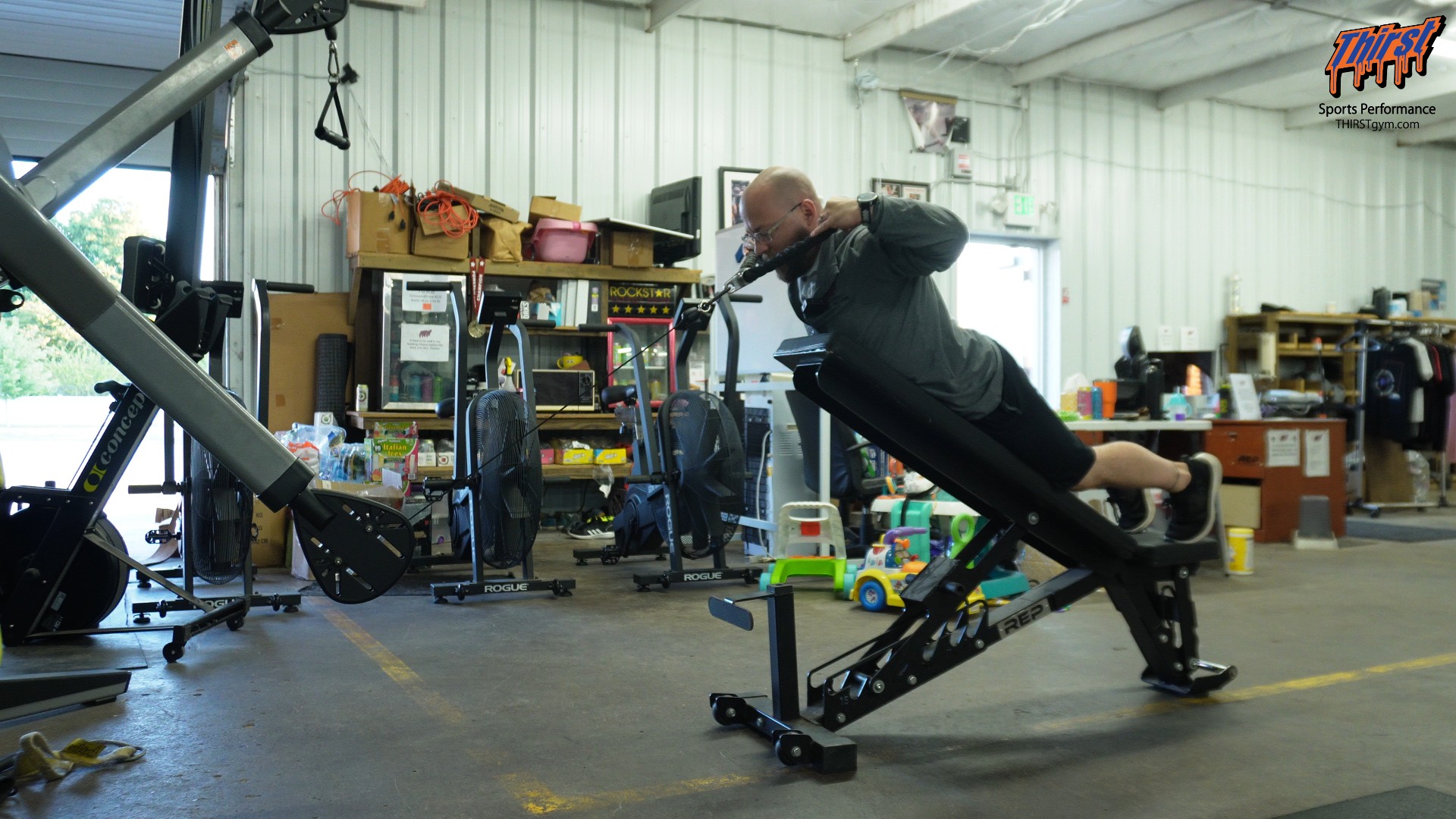
Chest Supported Cable Face Pull: A Superior Variation for Upper Back Development
The chest supported cable face pull represents one of the most effective modifications to the traditional cable face pull exercise, offering enhanced isolation of the posterior deltoids, rhomboids, and middle trapezius muscles while minimizing compensatory movement patterns that commonly plague standing variations. This exercise variation addresses a fundamental challenge that many lifters face when performing face pulls: the tendency to use momentum, excessive spinal extension, or improper positioning to move heavier loads rather than truly targeting the intended musculature.
Watch the video below on how to maximize this exercise.
Equipment Setup and Positioning
To perform the chest supported cable face pull, you will need an adjustable incline bench set to a moderate angle, along with a cable machine equipped with a rope attachment. The rope should be positioned relatively low on the cable stack, approximately at knee height when you are standing. This low cable position is critical because it creates the appropriate angle of pull once you are positioned on the bench. Position the incline bench roughly two to two and a half feet away from the cable machine, though this distance can be adjusted based on your individual arm length and the specific dimensions of your equipment.
The setup process involves grasping the rope attachment with both hands using a neutral grip, then walking backward toward the incline bench while maintaining control of the cable. Position yourself so that your chest rests against the pad with your shoulders actually hanging off the top edge of the bench. This detail is important because you want to avoid placing your head or neck against the bench, which would restrict your movement and potentially create unnecessary strain. Your torso should be supported from roughly the sternum down to the hips, allowing your shoulder girdle complete freedom of movement.
Proper Execution Technique
Once positioned correctly on the bench, begin the movement with your thumbs pointing toward the ceiling and your arms extended forward. Initiate the pull by driving your elbows up and back, bringing the rope toward your face at approximately mouth or nose level. As you pull, focus on actively squeezing your shoulder blades together, really emphasizing that retraction and bringing the middle portion of the rope toward the center of your face. You should feel significant activation through your rear deltoids and the muscles between your shoulder blades throughout the movement.
The eccentric or lowering portion of the exercise deserves equal attention. Control the rope back to the starting position rather than allowing the weight to pull your arms forward rapidly. This controlled negative phase contributes significantly to muscle development and helps reinforce proper scapular mechanics. When your set is complete, you can simply release the rope and step away from the cable machine.
Why This Variation Excels
The chest supported cable face pull offers several distinct advantages over traditional standing face pull variations. The primary benefit stems from the mechanical constraint provided by the bench itself. When performing face pulls from a standing position, many lifters unconsciously compensate for insufficient upper back strength or mobility by hyperextending through their lumbar spine, shifting their body weight backward, or using momentum generated from the lower body. These compensation patterns not only reduce the effectiveness of the exercise but can also reinforce problematic movement habits that contribute to postural dysfunction.
By supporting your torso against the incline bench, you receive immediate proprioceptive feedback if you attempt to deviate from proper form. The bench essentially serves as a tactile reference point that keeps you honest throughout each repetition. This setup forces you to maintain better rib position, preventing the excessive spinal extension that often accompanies heavy face pull attempts. The result is more genuine isolation of the target musculature, particularly the posterior deltoids, rhomboids, and middle trapezius fibers that are crucial for shoulder health and optimal posture.
This variation proves especially valuable for individuals who struggle with the mind-muscle connection during traditional face pulls or those who find themselves using too much body English to complete their sets. Athletes dealing with anterior shoulder tightness or forward head posture can benefit tremendously from the enforced positioning that this variation provides, as it makes cheating virtually impossible while still allowing progressive overload of the posterior chain muscles.
Programming Recommendations
For most training applications, the chest supported cable face pull works best as a moderate to higher repetition exercise performed for multiple sets. A typical programming approach involves two to four sets of ten to twenty repetitions, though you can extend the repetition range up to twenty-five reps when emphasizing muscular endurance and postural endurance capacity. This rep range makes sense given the exercise’s primary purpose: building work capacity and structural integrity in the upper back musculature rather than developing maximum strength.
The exercise integrates well into upper body training sessions, functioning effectively as either a primary horizontal pulling movement or as accessory work following your main compound lifts. It pairs particularly well with pressing movements, helping to maintain balance across the shoulder girdle and prevent the anterior dominant positioning that excessive pressing work can create. Athletes involved in overhead sports, powerlifters looking to strengthen their bench press lockout position, and general fitness enthusiasts seeking better posture will all find value in regularly programming this movement.
While the initial setup requires more effort than simply standing at a cable station—you do need to move an incline bench over to the cable machine—the enhanced quality of muscle contraction and reduced injury risk make this extra preparation worthwhile. If you have been searching for a face pull variation that truly forces you to feel the working muscles rather than just moving weight from point A to point B, the chest supported cable face pull deserves a place in your training program.