
Side Plank with Top Leg March (Resistance Band): A Dynamic Core and Hip Flexor Exercise
The side plank with top leg march using a resistance band represents an excellent progression from traditional static side plank variations, combining anti-rotation core stability with dynamic hip flexion training. This exercise efficiently targets the obliques, hip flexors, and hip abductors simultaneously while requiring minimal equipment—making it an ideal choice for athletes, fitness enthusiasts, and anyone looking to develop functional core strength and hip mobility.
Watch the video below on how to maximize this exercise.
Equipment and Setup
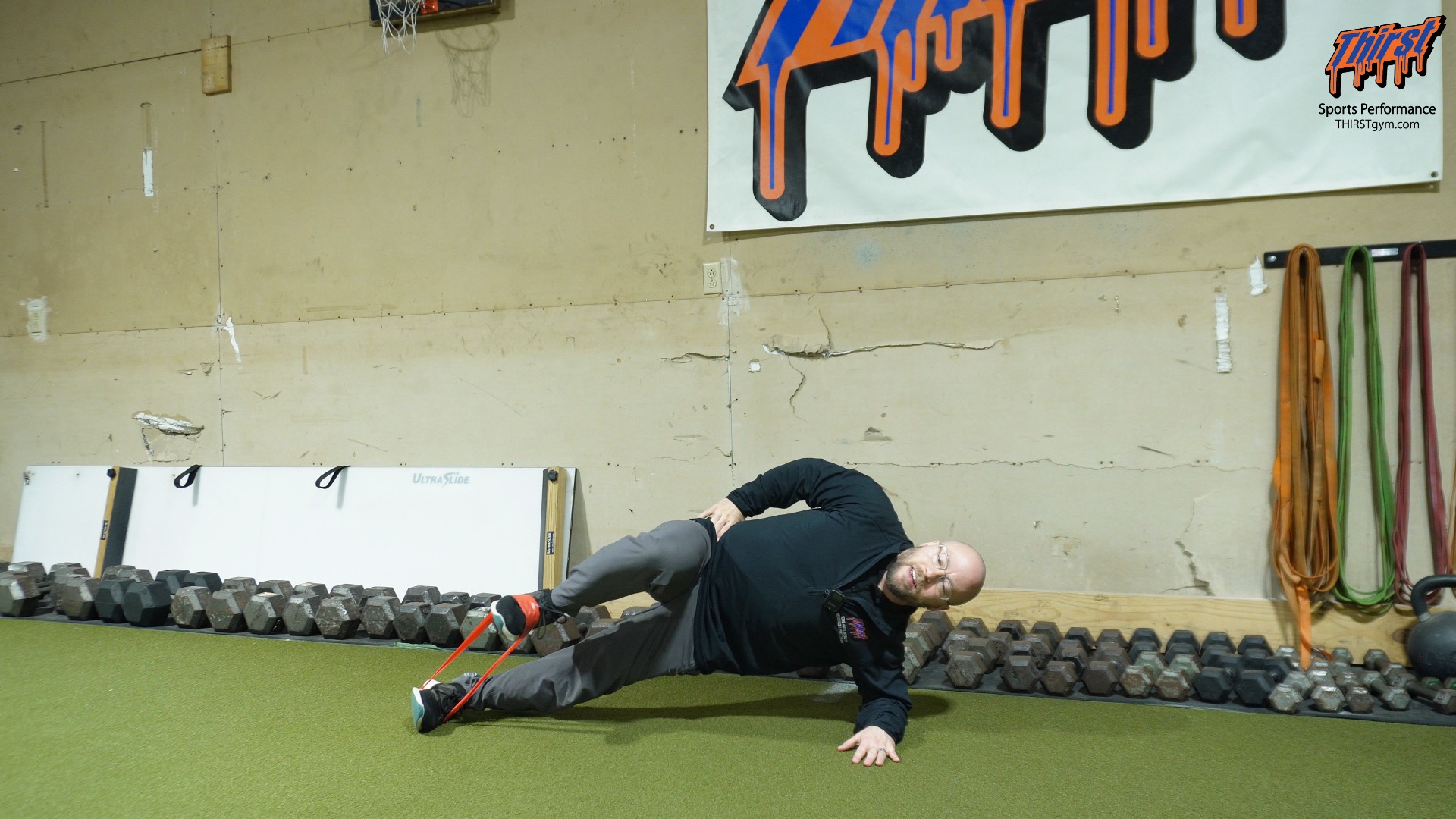
This exercise requires only two pieces of equipment: a small mini resistance band and enough floor space to comfortably hold a side plank position. The band should be light to moderate resistance depending on your current strength level—too heavy a band will compromise form and shift focus away from core stability. Place the band around your feet just above the ankle or around the shoe area to ensure it stays in position throughout the movement.
Begin by positioning yourself in a proper side plank stance. Lie on your side with your forearm flat on the ground, elbow positioned directly beneath your shoulder. Your feet can be stacked together or staggered for additional stability, especially if you’re newer to side plank variations. Engage your core and lift your hips off the ground, creating a straight line from your head through your feet. This starting position establishes the isometric hold that will challenge your obliques and deeper core stabilizers throughout the exercise.
Exercise Execution and Movement Pattern
Once you’ve established a solid side plank position with the resistance band around your feet, the dynamic component begins. While maintaining tension through your core and keeping your hips elevated, drive the knee of your top leg up toward your chest, performing hip flexion against the resistance of the band. Hold this contracted position briefly—approximately one second—before returning your leg to the starting position with control. This constitutes one repetition.
The key technical consideration during execution is maintaining core stability throughout the marching movement. Your hips should remain elevated and stable without rotating or dropping toward the ground as you perform the hip flexion. This requires constant engagement of your bottom-side obliques and hip abductors, which work isometrically to resist rotation and maintain proper alignment. The challenge comes from simultaneously holding an anti-rotation position while creating dynamic movement in the upper leg.
Muscles Worked and Biomechanical Benefits
This exercise delivers comprehensive training across multiple muscle groups and movement patterns. The obliques on the down side work isometrically to resist rotation and lateral flexion, developing anti-rotation strength that translates directly to athletic performance and functional movement. The hip abductors of the down leg—primarily the gluteus medius—contract isometrically to maintain hip elevation and prevent collapse, strengthening lateral hip stability crucial for single-leg activities and gait patterns.
The dynamic marching component specifically targets the hip flexors, including the iliopsoas and rectus femoris, developing both strength and control through hip flexion. This hip flexor training proves particularly valuable for athletes, as it directly supports running mechanics, kicking movements, and any activity requiring rapid hip flexion. The resistance band adds accommodating resistance throughout the movement pattern, increasing difficulty at peak contraction where hip flexors are strongest.
Programming Recommendations and Progression Strategies
For most individuals in the beginner to intermediate fitness range, performing two to three sets of eight to twelve repetitions per side provides sufficient training stimulus for both strength and muscular endurance development. Complete all repetitions on one side before switching to maintain continuous time under tension for the stabilizing muscles.
As you advance and this variation becomes less challenging, several progression options exist. First, increase band resistance to make the hip flexion component more difficult. Second, add external load by holding a dumbbell or weight plate against your rib cage with your top arm, increasing the anti-rotation demand on your core. Third, elevate your feet on a bench or step to increase the leverage and stability demands of the side plank position itself. Advanced practitioners may combine multiple progressions—using a heavier band while holding additional weight—to continue challenging these movement patterns.
Application for Athletes and General Fitness
This exercise holds particular value for athletes involved in running-based sports, as the combination of core stability and hip flexion strength directly supports efficient gait mechanics. The ability to generate powerful hip flexion while maintaining trunk stability translates to improved running economy and reduced energy leakage during locomotion. Additionally, the isometric hip abduction component strengthens lateral hip stability, helping prevent common running injuries associated with weak hip abductors.
For general fitness enthusiasts, this movement offers exceptional training economy—developing multiple fitness qualities simultaneously with minimal equipment. The exercise can be performed virtually anywhere with floor space and a single resistance band, making it ideal for home workouts, hotel gym sessions, or outdoor training environments.
Conclusion
The side plank with top leg march using a resistance band exemplifies intelligent exercise selection, combining isometric core stability with dynamic hip training in a single movement pattern. By challenging the obliques, hip flexors, and hip abductors simultaneously, this exercise delivers comprehensive lower trunk and hip training while requiring only basic equipment. Whether you’re an athlete seeking sport-specific core development or someone looking to progress beyond basic plank variations, this exercise deserves consideration in your training program.