
Single Leg Two Hop Rotational Medicine Ball Shot Put: Build Explosive Lateral Power
The single leg two hop rotational medicine ball shot put represents a sophisticated power development exercise that addresses multiple training objectives within a single movement pattern. This dynamic throwing exercise combines unilateral stability, plyometric conditioning, and rotational force production into one comprehensive athletic training tool. For athletes and coaches seeking efficient programming solutions that develop lateral power while addressing upper body explosiveness, this exercise delivers significant training value in a time-efficient format.
Watch the video below on how to maximize this exercise.
Understanding the Movement Mechanics
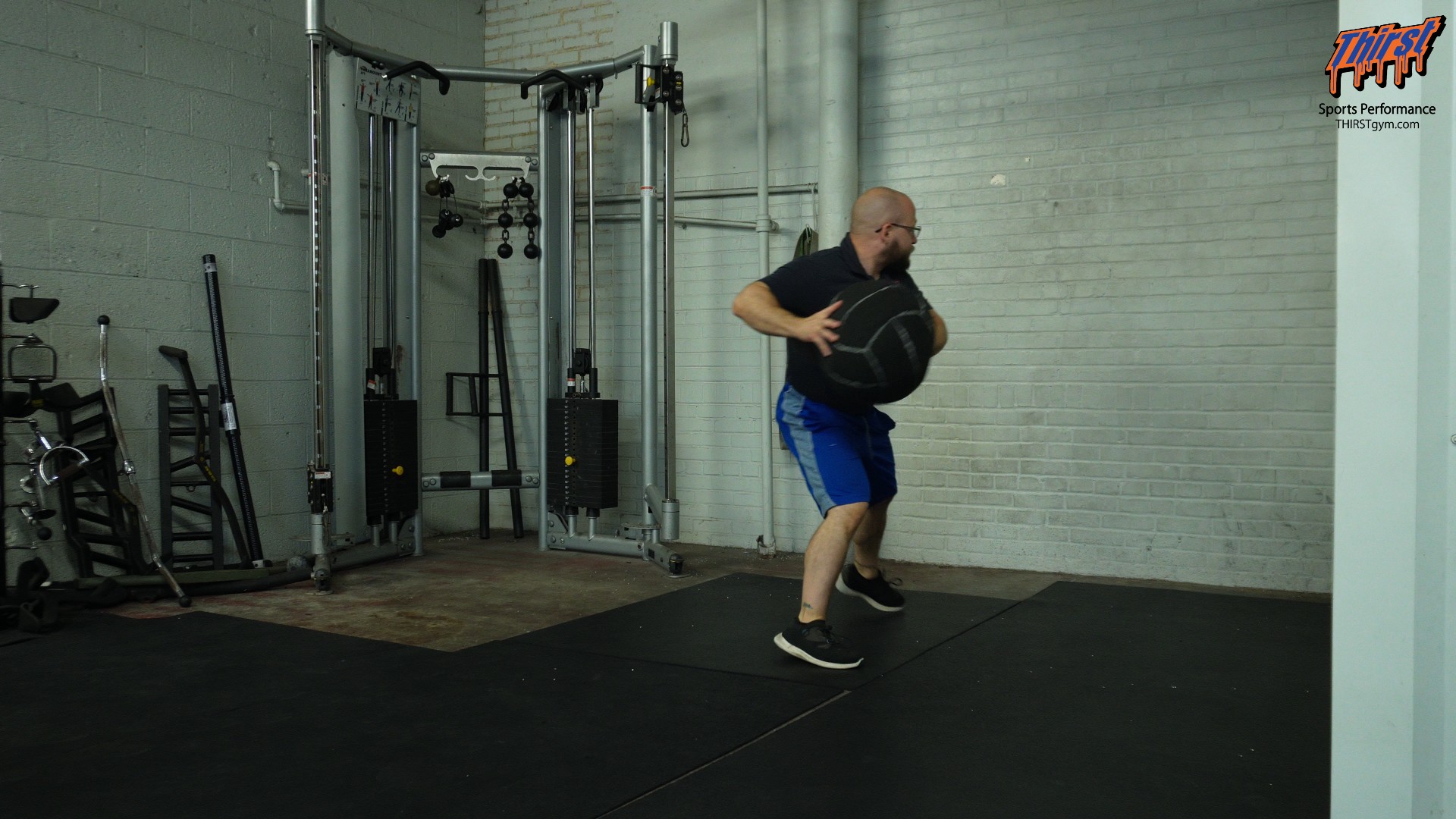
The single leg two hop rotational medicine ball shot put breaks down into distinct phases that work synergistically to produce maximal power output. You begin in a single leg stance with the medicine ball held in the shot put position near your head, which immediately creates a stability demand on your supporting leg. From this foundation, you execute two controlled hops toward your target, whether that’s a wall or a training partner, building momentum progressively with each ground contact. The exercise culminates in an explosive rotational throw that transfers the accumulated force from your lower body through your core and into the medicine ball release.
This progressive momentum-building approach distinguishes the exercise from static rotational throws. Rather than generating power from a planted position, you’re creating kinetic energy through lateral displacement and then channeling that movement into your throwing mechanics. The result is a more complete power development stimulus that mimics real athletic situations where rotational force production occurs during dynamic movement rather than from stationary positions.
Equipment Setup and Load Selection
The exercise requires minimal equipment but thoughtful selection of training variables. You need a medicine ball, adequate space for lateral movement, and ideally a wall sturdy enough to absorb repeated impacts. If training outdoors or in facilities without appropriate walls, a training partner can receive throws instead, though this requires more careful load management to ensure safety.
Medicine ball weight becomes a critical programming decision that directly impacts training outcomes. For rotational power development, lighter loads allow for maximum velocity and proper mechanics. Most athletes will achieve optimal results using medicine balls between four and six pounds. This lighter loading enables the explosive movement speeds necessary for true power adaptation rather than strength-endurance training. Advanced throwing athletes, particularly baseball pitchers throwing in the high eighties to nineties mile-per-hour range, might progress to eight-pound medicine balls after establishing excellent movement quality with lighter implements. Heavier loads compromise movement speed and typically shift the training stimulus away from power development toward strength work, which defeats the primary purpose of this exercise.
Biomechanical Benefits and Training Adaptations
The single leg two hop rotational medicine ball shot put develops several crucial athletic qualities simultaneously. The unilateral stance component challenges hip stability and ankle proprioception while creating a demanding balance requirement throughout the movement sequence. This single leg loading pattern addresses the reality that most athletic movements occur from positions where force production happens through one leg at a time, making this exercise highly transferable to sport performance.
The plyometric hopping phase activates the stretch-shortening cycle in your lower body musculature while training reactive strength qualities. These repeated ground contacts teach your nervous system to efficiently transition from eccentric loading to concentric force production, a fundamental skill for athletic power development. The lateral direction of the hops specifically targets frontal plane power, an often-neglected training quality despite its importance in change-of-direction movements and lateral acceleration patterns common in most sports.
The rotational throwing component develops torso power through your obliques and transverse abdominis while training the kinetic chain sequencing essential for throwing mechanics. Your body learns to generate force from the ground up, transferring energy from your legs through your core and ultimately into your upper body. This sequential coordination pattern directly applies to throwing athletes including baseball and softball players, but also benefits athletes in racquet sports, golf, and any sport requiring rotational power production.
Programming Recommendations and Volume Guidelines
As a power-based exercise, the single leg two hop rotational medicine ball shot put demands strategic placement within your training sessions and careful attention to volume parameters. Power training requires fresh nervous system function, so this exercise belongs early in your workout after your warm-up but before accumulating significant fatigue from strength training or conditioning work.
Begin with three to five sets of three to five repetitions per side as you develop movement proficiency and establish proper mechanics. This conservative volume allows adequate practice while preventing the technical breakdown that occurs when fatigue compromises power output. As your coordination improves and the movement becomes more automatic, you can progress to five to six repetitions per set while maintaining the three to five set range. Remember that quality always supersedes quantity in power training—once your movement speed decreases or technique deteriorates, additional repetitions provide diminishing returns and potentially train slower movement patterns rather than explosive power.
Addressing Bilateral Asymmetries in Throwing Athletes
Throwing athletes face a unique challenge with rotational power exercises due to the extreme lateralization of their sport demands. Your non-throwing side will feel significantly more awkward and uncoordinated when first performing this exercise, which is precisely why training both sides holds particular value. The neurological unfamiliarity of rotating and throwing from your non-dominant side creates initial discomfort, but this practice helps maintain more balanced rotational capacity and potentially reduces injury risk from chronic asymmetrical loading patterns.
Consider performing an additional set or extra repetitions on your non-dominant side during the learning phase. This supplementary volume accelerates motor learning and helps establish more symmetrical movement competency. While you’ll likely never achieve perfect bilateral equality given your sport-specific demands, reducing the coordination gap between sides creates a more resilient athletic foundation and ensures your training addresses potential structural imbalances before they become problematic.
The single leg two hop rotational medicine ball shot put exemplifies efficient exercise design that addresses multiple training objectives through one movement pattern. For athletes working with limited training time or coaches seeking to maximize programming efficiency, this exercise delivers comprehensive power development across multiple planes of motion while building the unilateral stability essential for athletic performance.