
Thread the Needle: The Essential Thoracic Spine Mobility Drill for Better Pressing and Shoulder Health
Thread the Needle stands as one of the most effective and accessible mobility drills for improving thoracic spine rotation and shoulder mobility. This bodyweight exercise requires nothing more than a small patch of floor space, making it an ideal movement for athletes, lifters, and fitness enthusiasts looking to enhance their upper body movement quality. Whether you’re preparing for heavy bench press sessions, training for overhead sports, or simply working to counteract the effects of desk-bound postures, Thread the Needle deserves a place in your movement preparation toolkit.
Watch the video below on how to maximize this exercise.
Understanding the Value of Thoracic Mobility
The thoracic spine—the middle and upper portion of your back—plays a critical role in shoulder function and overall upper body mechanics. When your thoracic spine lacks rotational mobility, your body compensates by creating excessive movement at less suitable joints, particularly the lower back and shoulders. This compensation pattern can limit your pressing strength, reduce your ability to get into optimal positions for overhead work, and contribute to shoulder discomfort over time. Thread the Needle directly addresses these limitations by encouraging segmental rotation through the thoracic region while the lower body remains stable.
For anyone who regularly performs bench pressing or overhead pressing movements, thoracic mobility becomes especially important. A mobile thoracic spine allows you to achieve better scapular positioning, create a more effective pressing platform, and maintain healthier shoulder mechanics throughout the movement. Similarly, athletes involved in overhead sports—from volleyball to swimming to tennis—benefit tremendously from improved thoracic rotation, as it enables more efficient force transfer and reduces compensatory stress on the shoulder joint itself.
Setting Up for Success
The starting position for Thread the Needle establishes the foundation for effective execution. Begin by positioning yourself on your hands and knees in a modified quadruped stance. Rather than maintaining a perfectly neutral tabletop position or sitting all the way back toward your ankles, you’ll want to create a slight hip hinge by shifting your hips back just a bit. This subtle positioning adjustment—somewhere between a standard quadruped and a child’s pose—creates the optimal alignment for thoracic rotation to occur without excessive compensation from the lumbar spine.
Your hands should be positioned directly beneath your shoulders, and your knees should align under your hips. This base of support remains stable throughout the movement, serving as the anchor point from which your thoracic rotation will occur. The slight posterior weight shift helps pre-load the position in a way that encourages true thoracic movement rather than allowing the motion to come primarily from the shoulder or lower back.
Executing the Movement Pattern
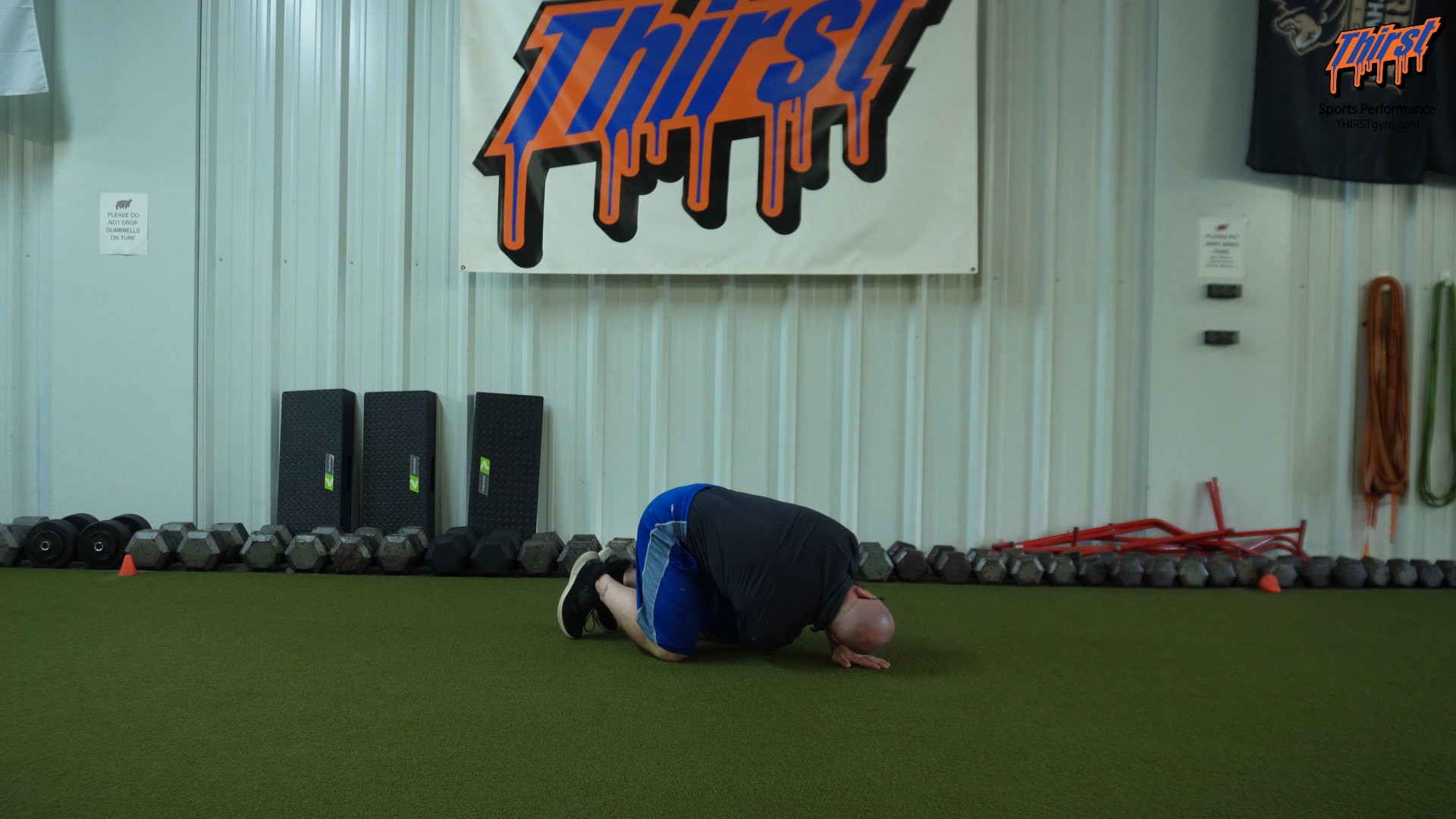
The actual movement sequence of Thread the Needle combines reaching, rotation, and extension in a flowing pattern that progressively opens up the thoracic spine. Start by taking one hand—let’s say your right hand for this example—and rotate the palm so the back of your hand faces forward. From this position, reach that hand underneath your body toward the opposite knee, threading it through the space between your planted hand and knee. As you reach, follow the movement with your head and eyes, trying to keep visual contact with your reaching hand. This coordination between eye movement and physical rotation helps facilitate deeper thoracic rotation through a neurological principle known as the vestibulo-ocular reflex.
Continue reaching until you feel a stretch through your upper back and shoulder, working to bring the reaching shoulder closer to the ground. At the bottom of this reaching phase, you’ve created significant rotation in one direction. From here, you’ll reverse the movement by pulling that same hand back out from underneath your body and then continuing the motion by driving your elbow back and up toward the ceiling. This opening phase emphasizes thoracic extension and rotation in the opposite direction, creating a chest-opening position that counterbalances the initial reaching motion.
The key to maximizing the effectiveness of Thread the Needle lies in the transition between these two positions. Rather than rushing through repetitions, focus on reaching as far as comfortable on each rep, then opening up fully on the extension phase. Try to push the ground away slightly with your planted hand during the opening phase, which helps activate the serratus anterior and enhances scapular positioning. With each subsequent repetition, aim to reach a bit further underneath and open up a bit more on the return, gradually expanding your available range of motion.
Programming and Implementation Strategies
For optimal results, perform eight to twelve repetitions on each side, completing one to three total sets depending on your needs and time availability. The exercise works particularly well as part of a dynamic warm-up sequence before upper body training sessions. If you’re about to perform bench press, overhead press, or any pushing-based work, running through a few sets of Thread the Needle helps prime your thoracic spine and shoulders for the demands ahead. The improved thoracic mobility and scapular awareness you develop from this drill directly translates into better pressing mechanics and positioning.
Beyond its application as a warm-up tool, Thread the Needle serves multiple other functions in a comprehensive training program. On active recovery days when you’re not lifting heavy but want to maintain movement quality, this drill provides gentle mobilization without creating significant fatigue. You can perform it at home with no equipment, making it an excellent choice for off-day mobility work or morning movement routines. Additionally, Thread the Needle works exceptionally well as a filler exercise between sets of pressing movements. During the rest periods between bench press or overhead press sets, performing Thread the Needle helps maintain your mobility and movement quality while also maximizing your time efficiency in the gym.
The beauty of this exercise lies in its versatility and accessibility. Whether you’re a powerlifter looking to improve your bench press setup, an overhead athlete seeking better shoulder mechanics, or simply someone working to counteract postural dysfunction from prolonged sitting, Thread the Needle offers tangible benefits. By consistently incorporating this drill into your training routine, you’ll develop the thoracic spine mobility and shoulder function necessary for long-term upper body health and performance. The combination of rotation and extension in a controlled, repeatable pattern makes Thread the Needle an essential tool for anyone serious about building and maintaining quality movement patterns.