
Alternating Hammer High Row Machine: Advanced Unilateral Back Training for Time Under Tension
The alternating hammer high row machine represents a sophisticated variation on traditional high row exercises that addresses several key training variables often overlooked in conventional back programming. This unilateral rowing approach creates extended time under tension while maintaining optimal lat stretch positioning throughout each set, making it particularly valuable for athletes seeking to develop both strength and movement quality in their upper back musculature.
Watch the video below on how to maximize this exercise.
Understanding the Equipment Requirements
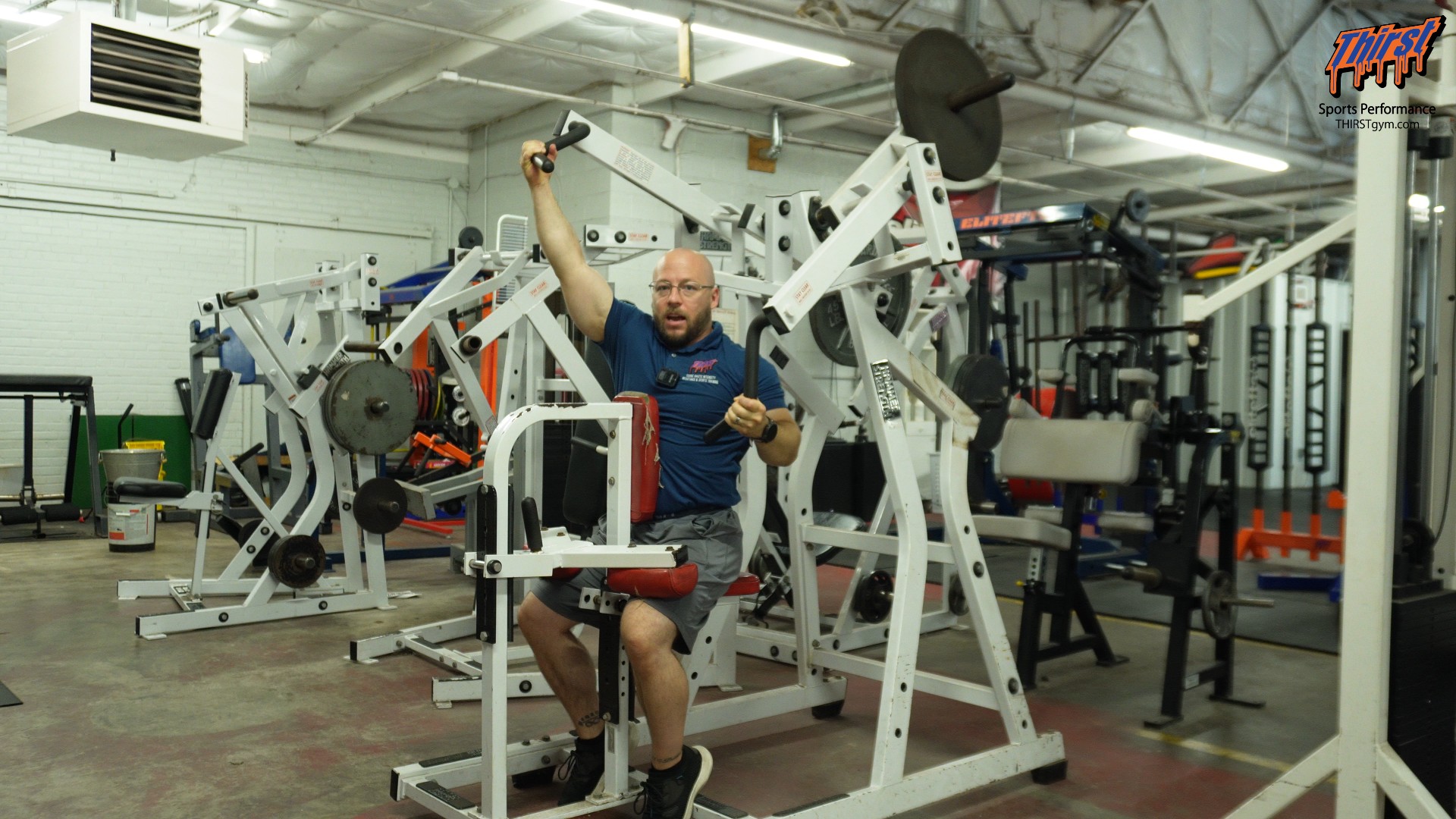
To perform this exercise effectively, you’ll need access to a high row machine with independently functioning arms. The Hammer Strength high row machine is an excellent choice, though any comparable high row or lat pulldown apparatus with independent handles will work provided each side can move without affecting the other. This independence is crucial to the exercise’s effectiveness, as it allows for true unilateral training while maintaining constant tension on the non-working side.
The machine functions similarly to traditional lat pulldown equipment but positions you in a more horizontal pulling plane, which better mimics functional rowing patterns and creates different loading angles on the latissimus dorsi and surrounding back musculature. This positioning becomes especially important when we introduce the alternating component, as it allows for torso rotation and ribcage movement that wouldn’t be possible in a fixed bilateral setup.
Grip Selection and Setup Considerations
The beauty of this exercise lies partly in its grip versatility. You can approach the movement with either a neutral grip, where your palms face each other, or a supinated grip, where your palms face toward you. While both options effectively target the lats and upper back, the supinated position tends to increase bicep involvement and may allow for a slightly stronger contraction at the bottom of the movement due to the natural mechanics of elbow flexion in that hand position.
Regardless of which grip you choose, the setup remains consistent. Grasp both handles firmly while standing, then sit down into the machine while maintaining control of both arms. Your starting position should feature a tall, upright chest with your shoulders pulled back slightly. This postural foundation ensures that you’re initiating the movement from a position of stability rather than allowing your torso to collapse forward, which would compromise the exercise’s effectiveness and potentially create unwanted stress on the lower back.
The Alternating Technique and Movement Pattern
The alternating nature of this exercise distinguishes it from standard high row variations and provides several unique training benefits. As you pull one arm down, driving the elbow toward your hip in a smooth rowing motion, the opposite arm remains extended in a stretched position. This creates a continuous tension scenario where one lat is actively contracting while the other maintains tension in a lengthened state, effectively doubling the time under tension compared to bilateral rowing where both arms rest simultaneously between repetitions.
The key to maximizing this exercise’s effectiveness lies in the coordination between arms. As you complete the rowing motion on one side, you should simultaneously allow the opposite arm to extend completely, resisting the weight as it pulls that arm back to the starting position. This eccentric control on the extending arm is just as important as the concentric pull on the working arm. Many lifters make the mistake of simply letting the non-working arm snap back to the top position, missing out on valuable eccentric training stimulus.
Throughout the alternating pattern, incorporate a slight torso rotation toward the working side. This rotation isn’t excessive or forced, but rather a natural consequence of pulling hard with one arm while keeping the other extended. This rotational component serves multiple purposes: it allows for a fuller range of motion in the working lat, keeps the ribcage mobile and fluid rather than locked in a rigid position, and better mimics the rotational demands present in athletic movements and real-world pulling tasks.
Why This Exercise Works for Athletic Development
From an athletic training perspective, the alternating hammer high row offers distinct advantages over traditional bilateral rowing variations. The independent arm action more closely replicates the unilateral demands of sports, where athletes rarely pull with both arms simultaneously in perfect coordination. Whether you’re thinking about a wrestler controlling an opponent, a football player shedding a block, or a climber reaching for the next hold, athletic pulling almost always involves some degree of asymmetry and rotation.
The constant tension created by the alternating pattern also addresses a common limitation in standard rowing exercises. In traditional bilateral rows, there’s typically a brief moment of rest at the top of each repetition where both arms are extended and tension on the back musculature decreases. By alternating, you eliminate this rest period, keeping at least one lat under significant load throughout the entire set. This extended time under tension can enhance muscular endurance and may contribute to greater hypertrophic stimulus, particularly in the often-neglected stretched position of the lat.
Additionally, the unilateral nature of this exercise helps identify and address strength imbalances between sides. If you notice one arm struggling to complete the same number of quality repetitions as the other, you’ve identified an asymmetry that deserves attention. Over time, this awareness and the exercise’s inherent demand for balanced strength can help create more symmetrical back development.
Programming Recommendations and Loading Strategy
For optimal results with the alternating hammer high row machine, consider implementing three to four sets of six to ten repetitions per arm. This rep range strikes an effective balance between building strength and maintaining enough volume to drive muscle growth. The alternating nature of the exercise means you’ll actually be performing twelve to twenty total rowing repetitions per set when counting both arms, which provides substantial training volume while allowing you to focus on quality movement throughout.
When it comes to loading, start conservatively as you adapt to the unique demands of the alternating pattern. Many lifters find that their grip strength becomes the limiting factor before their back musculature fatigues, particularly in the early stages of incorporating this exercise. If grip fatigue is preventing you from completing quality sets, don’t hesitate to use lifting straps. While developing grip strength is valuable, it shouldn’t come at the expense of adequately training your back.
The most important loading consideration is ensuring you can maintain that crucial long position on the non-working arm while still achieving a full, complete contraction on the working side. You should be able to drive your elbow down and back completely, feeling a strong squeeze in your lat at the bottom of each rep, without the extended arm collapsing or losing its stretch position. If the weight is so heavy that you can’t maintain this quality on both ends of the movement, reduce the load until you can perform the exercise with proper form.
Integrating This Exercise Into Your Training
The alternating hammer high row functions exceptionally well as a primary horizontal pulling movement in your back training or as a supplementary exercise following heavier bilateral rowing work. Its unique tension profile and movement demands make it particularly valuable for athletes looking to maintain upper back strength while improving rotational capacity and movement fluidity. Whether you’re a strength athlete seeking to address weak points in your pulling pattern or a general fitness enthusiast wanting to build a more complete, functional back, this rowing variation deserves consideration in your programming arsenal.