
Bent Over Single Arm Band Rear Delt Raise
The bent over single arm band rear delt raise offers a highly effective unilateral approach to developing the posterior deltoids and upper back musculature without requiring expensive gym equipment. This resistance band exercise allows athletes and fitness enthusiasts to target the often-underdeveloped rear deltoids while maintaining the postural benefits of a bent-over position that maximizes gravitational resistance throughout the movement.
Watch the video below on how to maximize this exercise.
Equipment Setup and Band Selection
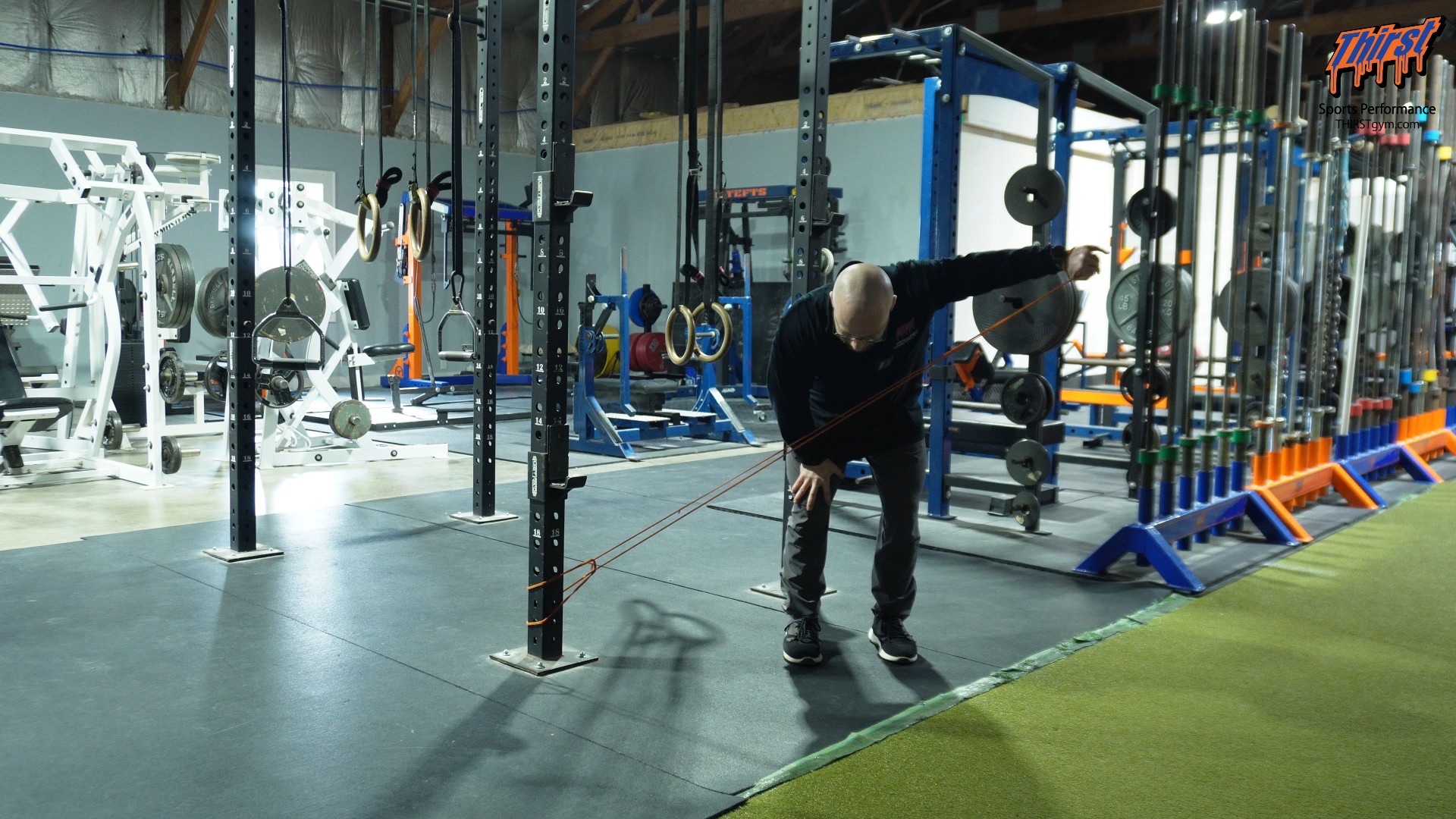
Proper equipment selection proves critical for executing this exercise effectively. You’ll need a light resistance band – ideally a micro mini band from manufacturers like Elite FTS – as excessive resistance will compromise form and shift tension away from the target musculature. The band should be anchored to a sturdy object such as a squat rack, pole, or similar stable structure at a position below knee level. This low anchor point ensures optimal resistance angles throughout the movement pattern.
To secure the band, create a chokehold by looping it through itself and pulling tight around your chosen anchor point. Allow the working end to hang freely toward the ground. You can grip the band in two ways: either grasp it with a standard double overhand grip, or insert your hand through the loop and wrap it around for a more secure hold that doesn’t require constant grip tension. Both methods work equally well, so choose based on personal preference.
Technique Breakdown and Execution
Position yourself approximately one full step away from the anchor point to establish baseline tension on the band before initiating any movement. This pre-tension ensures consistent resistance throughout the entire range of motion. From this standing position, perform a high-quality hip hinge by pushing your hips backward while maintaining a tall, proud chest position. This bent-over posture is fundamental to the exercise’s effectiveness, as it leverages gravity to increase the difficulty at the top of each repetition.
With your thumb oriented toward the anchor point and your working arm held relatively straight – maintaining just a soft bend at the elbow rather than a rigid lockout or 90-degree flexion – initiate the movement by pulling your hand away from your body. Focus on elevating your elbow as high as possible while driving your hand upward and slightly back toward the midline of your body. This biomechanical action pattern closely mimics the rear delt fly movement found on dedicated machines, making it an excellent substitution when equipment access is limited.
Throughout the exercise, you’ll likely experience muscular engagement beyond just the rear deltoids. The isometric hold required to maintain the bent-over position activates the glutes and hamstrings significantly. With sufficient band resistance, your abdominal muscles may also fire to stabilize your torso against the pulling force. This additional muscular recruitment is completely normal and actually enhances the overall training effect by developing postural strength alongside shoulder development.
Training Applications and Programming Recommendations
The bent over single arm band rear delt raise functions exceptionally well as a standalone accessory movement for upper back and posterior shoulder development. Its unilateral nature makes it particularly valuable for strength athletes including powerlifters, weightlifters, and functional fitness competitors who need to address muscular imbalances or provide targeted prehabilitation and rehabilitation work for the shoulder complex. The exercise serves as an excellent alternative to traditional bilateral movements like band pull-aparts and face pulls, offering variety within your rear delt training rotation.
For programming purposes, target two to four sets of 15 to 25 repetitions per arm. The rear deltoids respond favorably to higher volume training with elevated repetition ranges, making this rep scheme ideal for maximizing hypertrophic and strength-endurance adaptations. The bent-over position provides superior gravitational resistance compared to standing variations, ensuring the top portion of each repetition remains challenging and fully engages the target musculature.
This exercise also works exceptionally well as an upper body training session finisher. Program two to three sets performed in alternating fashion between arms, maintaining the 15-25 rep range while working to muscular fatigue. This burnout approach delivers significant training volume to the rear delts and upper back while serving as an effective cool-down from heavier compound movements earlier in your workout.
Benefits for Shoulder Health and Performance
Beyond pure muscle development, the bent over single arm band rear delt raise contributes significantly to overall shoulder health and longevity. The rear deltoids play a crucial role in shoulder stability and proper scapular mechanics, yet they often receive insufficient training volume compared to the anterior and medial deltoid heads. This exercise addresses that imbalance while requiring minimal equipment investment, making it accessible for home training environments, travel situations, or supplementary work outside your primary training facility.
The unilateral execution pattern allows for focused attention on each side independently, helping identify and correct strength discrepancies between shoulders. This asymmetrical approach proves particularly valuable for athletes returning from injury or dealing with chronic shoulder discomfort, as it permits individualized loading and progressive overload strategies tailored to each shoulder’s capabilities.