
Upper Body Training for Wrestlers: The Complete Guide to Dominant Mat Performance
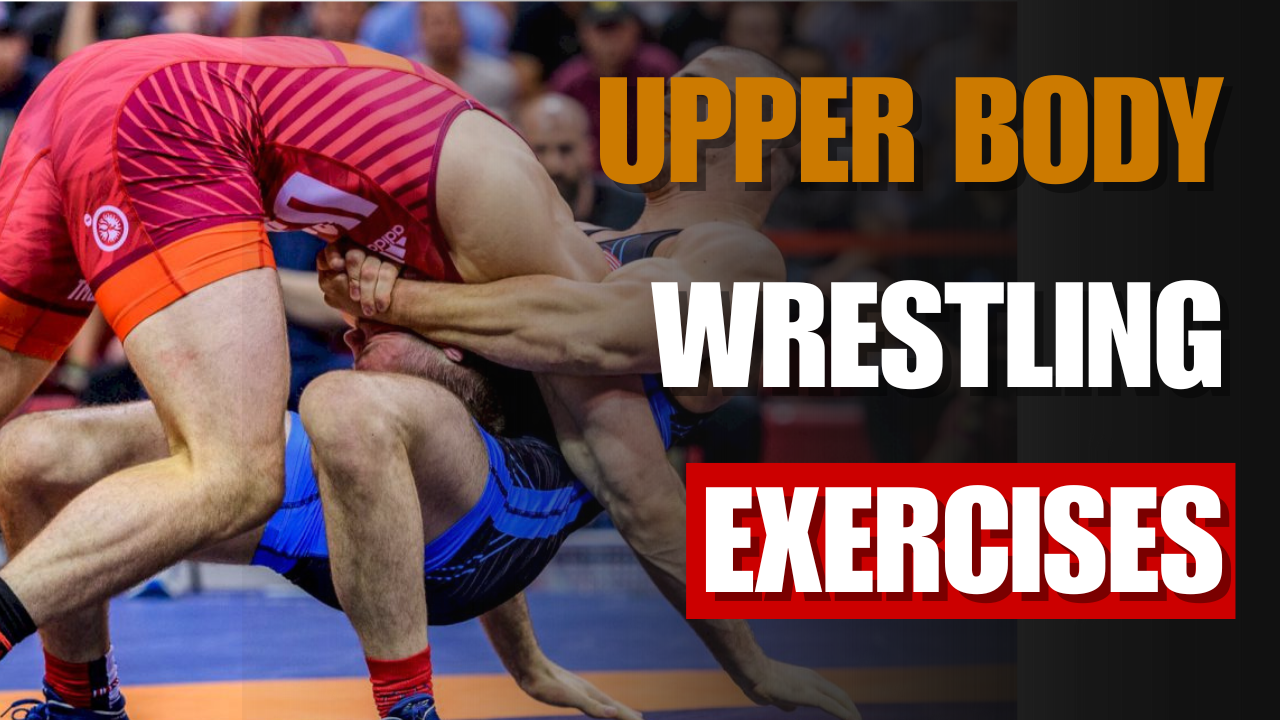
If you’re training your upper body for wrestling the same way bodybuilders or powerlifters train theirs, you’re making a critical mistake that’s costing you matches. Over fifteen years of coaching wrestlers from youth programs through collegiate competition, I’ve identified the exact upper body training approach that translates to dominant performance on the mat. This comprehensive guide will show you the complete upper body training system that develops the three critical movement patterns you need to take on the biggest matches of your career.
You can also watch the video below that goes along with this article.
Why Wrestlers Need Different Upper Body Training
Wrestling demands a unique combination of physical attributes that distinguish it from nearly every other strength sport. Unlike powerlifting, where you’re moving a barbell in a predictable path, or bodybuilding, where isolation and muscle development are primary goals, wrestling requires you to generate force against an actively resisting opponent who’s trying to impose their will on you simultaneously.
Wrestling demands three things at once that most training programs fail to address. First, you need pulling strength in every direction imaginable. You’re not just doing a clean pull or a bent-over row in a controlled gym environment. You’re fighting for underhooks, controlling wrists, breaking grips, and pulling opponents into vulnerable positions from angles that change second by second. Second, you must generate force from compromised positions that would be considered “bad form” in traditional strength training. When you’re off-balance, partially twisted, or fighting out of bottom position, your body still needs to produce maximum force. Third, all of this must last throughout a match that can extend beyond six minutes of continuous, high-intensity combat.
The traditional bodybuilding approach of chest day, back day, and shoulder day completely misses the integrated, full-body nature of wrestling. The powerlifting focus on maximal strength in three specific lifts provides a foundation but doesn’t address the rotational power, positional strength, and grip endurance that determine who controls the match. Wrestlers need a training approach that mirrors the chaotic, multidirectional, and sustained nature of combat on the mat.
The Three Critical Movement Patterns for Wrestling
After working with hundreds of wrestlers across all competitive levels, I’ve identified three specific movement categories that form the foundation of effective upper body training for grapplers. These aren’t arbitrary categories based on muscle groups or traditional gym exercises. They’re derived directly from the biomechanical demands of wrestling itself.
Multidirectional Pulling Strength
Pulling strength might be the single most important upper body quality for wrestlers. Every tie-up, every shot defense, every scramble, and every pin attempt involves some form of pulling. But here’s where most wrestlers get it wrong: they train pulling in only one or two directions, typically with exercises like pull-ups and rows. While these exercises have value, they don’t prepare you for the reality of pulling an opponent’s head down while simultaneously controlling their wrist, or fighting out of a locked hands position, or breaking someone’s grip on your ankle.
Multidirectional pulling means developing strength across horizontal rows, vertical pulls, diagonal angles, and rotational pulling patterns. It means using different implements beyond just barbells and dumbbells. Battle ropes, thick grip attachments, odd objects, and landmines all challenge your grip and pulling musculature in ways that transfer directly to hand fighting and control positions. Your upper back, lats, rear delts, and grip need to be strong from every conceivable angle because your opponent isn’t going to politely position themselves for your strongest pulling position.
Rotational Power Development
Wrestling involves constant rotation through your trunk and hips. Every throw, every hip toss, every single-leg finish, and every reversal requires you to generate rotational force that moves your opponent’s entire body weight. This isn’t about doing endless oblique crunches or side bends. Rotational power means explosively transferring force from your lower body through your core and into your upper body to create movement.
When you execute a headlock throw or a hip toss, you’re not isolating your obliques. You’re using ground reaction force from your feet, driving through your hips, transmitting that power through a stable but dynamic core, and finishing with your arms, shoulders, and upper back. The whole kinetic chain must work as an integrated system. Training rotational power with exercises like landmine row-to-press variations or medicine ball rotational throws teaches your body to generate and control force through these spiral patterns that define explosive wrestling movements.
Positional Pressing Strength
While the bench press and overhead press are excellent foundational exercises that build raw pressing strength, they don’t replicate the positions where wrestlers actually need to press. You’re rarely lying flat on your back in an ideal pressing position during a match. More commonly, you’re bridging while pressing someone away from you, you’re in a compromised position trying to create space, or you’re pressing from a half-kneeling or asymmetrical stance.
Positional pressing exercises put you in the positions you’ll actually encounter during competition. Glute bridge floor presses teach you to press while maintaining a bridge, a critical skill for avoiding pins. Half-kneeling landmine presses develop unilateral pressing strength while your core fights to maintain stability. Floor-based pressing variations with dumbbells allow you to train alternating patterns that mirror the asymmetrical nature of wrestling. These exercises don’t just build pressing strength; they build pressing strength that’s accessible and applicable when you’re in the positions that matter most.
Power-Based Exercises for Explosive Wrestling Strength
The first category of exercises focuses on developing explosive power. Wrestling is an explosive sport. Shots happen in a fraction of a second. Scrambles require instantaneous changes in force production. These power-based movements train your nervous system to recruit muscle fibers rapidly and generate maximum force in minimum time.
Medicine Ball Slam Variations
Medicine ball slams are one of the most wrestling-specific power exercises you can do. When you’re working from your feet, constantly pressuring your opponent’s head, and trying to move them out of position, you’re using a very similar motor pattern to an overhead medicine ball slam. The explosive hip extension, the lat engagement, and the ability to be heavy on someone’s head while maintaining your own balance all get trained with medicine ball work.
The beauty of medicine ball slams is their versatility. You can perform straight overhead slams that emphasize vertical force production and lat engagement. Rotational scoop tosses train explosive rotation similar to outside single-leg finishes or headlock variations. Side slams develop lateral power that transfers to lateral drops and throws. The key is performing these explosively with maximal intent on every repetition. Four to five sets of five to eight reps depending on the specific variation provides enough volume to develop power without creating excessive fatigue that would compromise the quality of subsequent training.
Landmine Row to Press
The landmine row-to-press is a full-body explosive exercise that’s heavily biased toward upper body power development. This movement pattern trains the exact sequence you use when you need to push an opponent out of the way, reach down explosively to attack a leg, or shuck someone past you. You’re pulling the landmine toward you with a rowing motion, generating rotation through your trunk, and explosively pressing it across your body to the opposite side.
This exercise teaches force transfer. You’re not just rowing and then pressing as two separate movements. You’re using the momentum from the row to amplify the power of the press through efficient kinetic chain sequencing. The rotational component engages your obliques and teaches your trunk to both generate and control rotational force simultaneously. The unilateral loading pattern means each side of your body must work independently, which directly mirrors the asymmetrical nature of wrestling positions.
The most common mistake with this exercise is loading it too heavily. This isn’t a maximum strength exercise. It’s a power development tool. If you feel like you’re grinding through molasses, you’ve got too much weight on the bar. The movement should be explosive and fluid. Three to five sets of two to five reps per side allows you to maintain quality while accumulating enough volume to drive adaptation.
Band Hinge to Row
The band hinge-to-row is one of the most unique exercises in a wrestler’s training arsenal, but once you understand the movement pattern, you’ll immediately see its application. This exercise combines explosive hip extension from your posterior chain with a maximum-effort rowing motion. You’re hinged over at the hips, holding a moderately strong resistance band, and as you explosively extend your hips, you simultaneously pull the band in toward your torso as hard as you possibly can.
If you’ve ever executed a blast double, a high crotch, or any explosive leg attack, you’ll recognize this exact pattern. You’re driving through your hips to close distance while your arms are violently snatching the target toward you. The band provides accommodating resistance that increases as you pull, which teaches you to accelerate through the entire range of motion rather than decelerating at the end as you would with free weights.
You can program this exercise two ways depending on your training focus. For maximum power development, perform three to five sets of five to eight explosive reps with full recovery between sets. For a more conditioning-focused approach, work for time intervals of ten to fifteen seconds, trying to accumulate as many quality reps as possible. Regardless of the approach, the band must have enough resistance to provide challenge, but not so much that you lose the explosive quality of the movement.
Strength-Based Exercises for Maximum Force Production
While power exercises teach you to move quickly, strength exercises build the foundation of force production that makes everything else possible. These movements should be performed with heavier loads for lower repetitions, focusing on maximum tension and progressive overload over time.
Loaded Chin-Ups and Pull-Ups
Wrestlers are known for cranking out pull-ups and chin-ups in high volume, and there’s nothing wrong with bodyweight pulling for conditioning and muscular endurance. However, if you can already perform ten or more quality pull-ups, it’s time to start loading them with external resistance. Weighted chin-ups and pull-ups build the kind of vertical pulling strength that allows you to physically pull opponents into your body, pull down on arms to break posture, or keep grips locked in when someone’s trying to break them.
Invest in a quality dip belt that can hold weight plates. For twenty to thirty dollars, you’ll have a tool you’ll use throughout your entire training career. Progressive overload on weighted chin-ups builds lat, upper back, and bicep strength that directly translates to controlling your opponent’s upper body. It also develops grip strength in a way that extended sets of bodyweight pull-ups cannot because the heavier load creates greater demand on your grip.
Push hard sets of three to five repetitions with as much external load as you can handle while maintaining quality form. Perform three to five total sets depending on where you are in your training season. In the off-season with more recovery capacity, you can push toward five sets. During the competitive season when you need to manage fatigue, three quality sets may be more appropriate.
Glute Bridge Dumbbell Floor Press
While the traditional bench press is a fantastic exercise for building pressing strength, the glute bridge dumbbell floor press is more directly applicable to wrestling. This variation accomplishes several goals simultaneously. First, it trains your ability to maintain a strong bridge position, which is critical for avoiding pins when you end up on your back. Second, the floor limits the range of motion, which keeps stress off your shoulders and allows you to focus on maximum force production. Third, using dumbbells allows for alternating patterns that create anti-rotation demands on your core.
When you’re fighting off your back, you’re simultaneously bridging while trying to press your opponent away to create the space you need to escape. This exercise trains exactly that scenario. The decline angle created by the elevated hips shifts some emphasis toward your lower pecs and anterior shoulders, which are heavily involved in creating space and hand fighting from bottom positions.
To maximize the wrestling-specific transfer, perform this exercise with an alternating pattern. Press one dumbbell while the other is held at chest level. This creates significant anti-rotation demand on your trunk because one side is producing force while the other side must stabilize to prevent rotation. This perfectly mirrors the asymmetrical loading patterns you encounter during scrambles and position battles.
Program this as a main strength movement with five to eight reps per side or five to eight total reps if performing with both arms simultaneously. You’ll likely need a training partner to hand you heavy dumbbells once you’re in the bridged position. The setup is worth the effort because this exercise builds pressing strength that’s immediately applicable on the mat.
Inverted Rows with Battle Ropes or Fat Grips
Building a strong back is critical for wrestlers, but that strength is worthless if your grip fails before your back does. The inverted row performed with battle ropes or fat grip attachments solves this problem by integrating grip development with horizontal pulling strength. Standard inverted rows with a barbell or TRX handles are excellent exercises, but they don’t challenge your grip the way hand fighting does.
When you’re fighting for wrist control, controlling an overhook, or gripping an ankle during a scramble, you’re not holding onto a convenient one-inch diameter handle. You’re gripping irregular shapes with varying diameters while simultaneously producing maximum pulling force. Battle ropes force your hands into a wide, open grip position that’s similar to controlling an opponent’s wrist or upper arm. Fat grips increase the diameter of whatever you’re holding, which dramatically increases the demand on your grip strength and forearm musculature.
This exercise teaches you that a strong back is only useful if you can actually hold onto what you’re trying to pull. The grip fatigue will limit your rep count compared to standard inverted rows, and that’s exactly the point. Wrestling-specific strength means having the grip endurance to maintain control throughout extended scrambles and tie-up battles.
Program inverted battle rope rows with slightly higher reps than your other main strength exercises, typically eight to fifteen reps per set. Perform two to three sets to failure or near-failure, really challenging both your back and your grip. The muscular endurance component becomes important here because grip fatigue in the third period of a match can determine who scores the winning takedown.
Half-Kneeling Landmine Overhead Press
The half-kneeling landmine press is one of the most versatile pressing exercises for wrestlers. It develops overhead pressing strength while simultaneously building core stability and teaching your body to resist unwanted movement. The half-kneeling position creates a longer lever arm through your trunk, which means your core must work harder to prevent lateral flexion, rotation, and extension.
From a wrestling perspective, you’re constantly pressing from unilateral and asymmetrical positions. You’re rarely in a perfectly balanced bilateral stance when you need to push someone away or create space. The half-kneeling landmine press trains exactly these scenarios. The landmine path travels at a slight arc rather than straight vertical, which is more joint-friendly for your shoulders and allows you to handle heavier loads safely.
This exercise also serves as excellent shoulder health maintenance. The angled pressing path and ability to self-limit range of motion make this a great option for keeping your shoulders feeling good throughout a long competitive season. Strong, healthy shoulders are essential for wrestlers because shoulder injuries can derail an entire season.
Program this for three to four sets of six to eight reps per side year-round. This exercise works equally well in off-season strength phases and in-season maintenance phases. The moderate rep range builds strength without creating excessive fatigue, and the unilateral loading ensures you’re addressing any left-right imbalances that commonly develop in wrestlers.
Accessory Exercises for Complete Development
The final category includes exercises that provide important benefits but aren’t the primary foundation of your program. These movements address specific weaknesses, build muscular endurance, and ensure complete development of your upper body musculature.
Battle Rope Kettlebell Upright Row
Direct neck and trap development is non-negotiable for wrestlers. Your neck and traps take tremendous abuse from opponents constantly pressuring your head, attempting cradles and half-nelsons, and trying to break your posture. The battle rope kettlebell upright row combines grip development, shoulder and trap strengthening, and neck stability all in one movement.
Using the battle rope instead of a standard barbell or dumbbells significantly increases the grip demand. Your hands must work harder to maintain control of the irregular surface, which builds the kind of grip endurance you need for extended hand fighting exchanges. The upright row pattern itself builds your traps, rear delts, and upper back while also engaging your neck musculature to maintain proper head position.
Stronger traps and a thicker neck provide both performance benefits and injury protection. When someone’s driving into your head or trying to snap you down, a strong neck and trap complex helps you maintain posture and avoid getting broken down. The muscular development also provides some cushioning that can reduce the impact of head contact.
Program this exercise for two to four sets of ten to twenty reps depending on your training phase. During the off-season, push toward the higher rep ranges to build muscle mass and create maximum training stimulus. During the competitive season, drop down to ten to twelve reps to maintain the strength and size you’ve built without creating excessive fatigue that would impact your on-mat performance.
Slider Wheelbarrow Walks
The slider wheelbarrow is primarily a core exercise, but you’ll feel significant work in your lats, shoulders, and serratus anterior as well. This movement requires a pair of furniture sliders from any hardware store and a carpeted or mat surface. Get into a plank position with your feet on the sliders, keep your toes dug in, and walk forward on your hands while dragging your lower body behind you.
This exercise builds core stability in a plank position while developing shoulder mobility and lat engagement. The constant tension through your abs and obliques mirrors the core stability demands of maintaining position during scrambles. Your shoulders must work through a large range of motion in a loaded position, which builds both strength and mobility simultaneously. The lat and serratus engagement helps develop the “heavy hands” quality that makes you difficult to clear out of tie-ups.
The slider wheelbarrow also provides a conditioning element without the joint stress of running or traditional cardio. You can perform this for time or distance, working until technical failure when you can no longer maintain the plank position. To increase difficulty, place a twenty-five or forty-five pound plate on your back, which dramatically increases the core stability demand.
Program slider wheelbarrows for two to three sets of maximum distance or time. Place them toward the end of your training session where they serve as a finishing movement that builds work capacity without interfering with your heavier strength work.
Weighted Dips
Dips are the advanced progression of the push-up and represent one of the best upper body pressing exercises for wrestlers. While push-ups are fantastic and have a place in every training program, dips allow you to add significant external load while moving through a greater range of motion. This exercise builds your chest, shoulders, and triceps in an integrated pattern that transfers directly to any pressing movement you’ll encounter during a match.
The beauty of dips is their scalability and accessibility. If you’re a beginner or recovering from an injury, you can use band assistance to reduce the loading. If you’re advanced, you can strap a dip belt loaded with plates to make the exercise brutally difficult. As long as you have access to parallel bars, whether in a gym, at a park, or in your garage, you can perform this exercise and continue building pressing strength.
Dips build the kind of pressing strength that carries over to everything else. When your pecs, shoulders, and triceps are strong from dipping heavy, every other pressing variation you perform benefits. You also build tremendous shoulder stability and control through a large range of motion, which helps keep your shoulders healthy throughout a demanding wrestling season.
Program weighted dips for two to three hard sets of six to ten reps if you’re focused on strength development. If equipment is limited, perform two to three sets of as many reps as possible with bodyweight. The push yourself toward failure on these sets builds both strength and muscular endurance that benefits your overall pressing capacity.
Programming Your Upper Body Training
While all ten exercises covered in this guide are highly effective for wrestlers, you should absolutely not attempt to do all ten in a single training session. That would create excessive fatigue, extend your training sessions to impractical lengths, and compromise your ability to train with the intensity each exercise deserves.
Instead, select one to two power-based exercises, one to two main strength exercises with at least one push and one pull, and one to two accessory exercises for each upper body training session. Add any other movements you particularly enjoy or that address individual weaknesses you’ve identified in your training. This approach provides a well-rounded stimulus without creating unsustainable fatigue.
For most wrestlers, two to three full-body training sessions per week provide the optimal balance of stimulus and recovery. Each session should integrate both upper and lower body exercises because wrestling is a full-body sport that demands integrated strength. Even though this guide focuses on upper body development, notice how many of these exercises involve your hips, core, and lower body. That integration is intentional and essential.
During the off-season when you have more recovery capacity and time to dedicate to training, you can potentially organize your training into push-pull-lower body splits if you’re training four to five times per week. However, for most wrestlers, particularly during the competitive season, two to three full-body sessions work better for managing fatigue while maintaining the strength you’ve built.
Common Mistakes to Avoid
Three major mistakes can derail your upper body training progress and potentially increase injury risk. First, avoid training to absolute failure on every set of every exercise. Wrestling already beats up your body tremendously. Your training should build you up, not break you down further. Leave one to two reps in the tank on most of your working sets, particularly during the competitive season when you need to manage cumulative fatigue carefully.
Second, don’t neglect your shoulder health work. While face pulls, band pull-aparts, and external rotation exercises didn’t make the main exercise list because they’re not primary strength builders, they’re still essential for maintaining shoulder health throughout a long season. Many of the exercises in this guide provide some shoulder health benefits, but dedicated shoulder maintenance work should still be part of your regular training routine.
Third, avoid copying bodybuilding-style training splits that isolate muscle groups into separate training days. Chest day, back day, and shoulder day programs don’t work for wrestlers because they fail to develop the integrated, full-body strength that wrestling demands. Every training session should involve full-body integration because that’s how you’ll use your strength during competition.
Implementation and Next Steps
The upper body training system outlined in this guide provides a comprehensive framework for developing the pulling strength, rotational power, and positional pressing capacity that separates good wrestlers from great ones. By prioritizing multidirectional pulling variations, explosive power development, and wrestling-specific pressing patterns, you’ll build upper body strength that directly translates to improved performance on the mat.
Remember that upper body development is only one component of complete wrestling preparation. You still need a solid lower body training program, technical skill work, conditioning development, and proper recovery practices. However, by implementing the exercises and principles covered here, you’ll develop the upper body strength foundation that allows you to physically dominate opponents and execute your technique with maximum effectiveness.
Start by selecting exercises from each category that match your current equipment availability and training experience. Focus on progressive overload over time, adding weight, reps, or sets as you adapt to the training stimulus. Listen to your body, manage fatigue appropriately, and adjust your training volume based on your competitive schedule. With consistent application of these principles, you’ll develop the kind of upper body strength that gives you a decisive advantage when matches are on the line.
Need help improving your performance for wrestling? Contact us to see how we can help you!