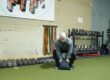


Front Foot Elevated Kettlebell Hamburger Split Squat: A Complete Exercise Guide
The front foot elevated kettlebell hamburger split squat represents an intelligent progression in lower body training that addresses one of the most common complaints in strength training: knee discomfort during split stance exercises. By combining strategic anterior loading with controlled elevation of the working leg, this variation creates the mechanical advantage needed to develop proper movement patterns while simultaneously building significant lower body strength and improving hip mobility. This exercise serves as an exceptional bridge between basic bodyweight lunges and more advanced loaded split squat variations, making it invaluable for athletes, fitness enthusiasts, and anyone experiencing limitations with traditional split squat mechanics.
The beauty of this movement lies in its corrective nature combined with genuine strength-building potential. Unlike many corrective exercises that sacrifice loading capacity for technique refinement, the front foot elevated kettlebell hamburger split squat allows lifters to work with meaningful resistance while maintaining the positional advantages that create proper movement patterns. This makes it particularly valuable for individuals transitioning from rehabilitation to performance training, athletes looking to address movement asymmetries, and general fitness enthusiasts seeking to improve their single-leg strength foundation.
Watch the video below on how to maximize this exercise.
Equipment Setup and Exercise Preparation
Executing this exercise effectively begins with proper equipment selection and positioning. You’ll need an elevation platform for your front foot, ideally ranging from two to four inches in height. A standard DC block works exceptionally well for this purpose, though a 45-pound weight plate, aerobic step, or even a sturdy stair can serve as effective alternatives. The key consideration is stability—your platform must remain secure throughout the movement to prevent unwanted shifting that could compromise your technique or create injury risk.
For the loading component, select a kettlebell appropriate to your strength level and the corrective nature of this exercise. The unique aspect of this movement involves what’s known as the “hamburger grip,” where you hold the bell portion of the kettlebell with the handle positioned away from your body. Your hands grasp the handles as if you were holding a large hamburger, creating an anterior load position that fundamentally changes the movement’s demands compared to traditional goblet or rack positions. This forward weight placement serves a specific biomechanical purpose that we’ll explore in depth, but it also means you won’t be able to use as heavy a load as you might with other kettlebell split squat variations.
Movement Execution and Technical Considerations
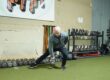
Begin by positioning one foot completely flat on your elevated platform, ensuring your entire foot makes contact with the surface rather than just your forefoot or heel. Your rear leg extends behind you in a traditional split stance position, with your back foot resting on the ball of the foot and heel elevated. A critical technical point involves avoiding an overly stretched position—many lifters make the mistake of stepping too far back, which creates excessive strain on the hip flexors and limits your ability to control the descent. Your split stance should feel athletic and manageable, not like you’re performing an extreme stretch.
With your kettlebell held in the hamburger position, actively reach the bell forward away from your body, driving your elbows forward and maintaining a tall, upright chest position. This forward reach is not passive—you’re creating intentional counterbalance that allows your hips to move backward and downward through a fuller range of motion. Your front knee should start in a slightly unlocked position rather than being rigidly straight, which allows for smoother movement initiation and reduces unnecessary joint stress.
As you descend into the bottom position, think about sitting your hips back and down rather than simply dropping straight down. The goal is to achieve the deepest range of motion you can control, ideally lowering until the kettlebell nearly touches the ground or your mobility limits are reached. Throughout this descent, maintain heel pressure on your front foot—a common error involves shifting forward onto the toes, which increases knee stress and reduces glute and hamstring engagement. The ascent reverses this pattern, driving through the heel of your elevated front foot to return to the starting position while maintaining that forward kettlebell position and upright torso angle.
Biomechanics and Why This Variation Works
The genius of the front foot elevated kettlebell hamburger split squat lies in how it manipulates your center of mass and creates space for optimal movement mechanics. By holding the kettlebell in front of your body rather than in a goblet position at your chest or in a rack position at your shoulders, you create a counterbalance effect that allows your hips and torso to shift backward more easily. This anterior loading position essentially gives you “permission” to sit back into the movement, creating space in the hip socket for deeper flexion without the sensation of being pulled forward or losing balance.
The front foot elevation adds another layer of biomechanical advantage by increasing the range of motion demands on your working leg while simultaneously reducing some of the mobility requirements at the ankle joint. Many people struggle with split squats because they lack adequate ankle dorsiflexion—the ability for the shin to travel forward over the foot. By elevating the front foot, you effectively reduce how much ankle mobility is required while increasing the depth of hip and knee flexion on your working leg. This creates a more hip-dominant movement pattern that better targets the glutes and hamstrings while taking pressure off the knee joint.
Benefits and Training Applications
This exercise delivers multiple training benefits that extend beyond simple strength development. The primary targets include the glutes, hamstrings, and quadriceps of your working leg, with the unique loading position creating particularly strong activation of the posterior chain musculature. The forward kettlebell position also engages your core musculature, as your abdominals must work to maintain spinal positioning and prevent excessive forward lean. This creates an integrated lower body and core training effect that translates well to athletic movements and daily activities.
Perhaps more importantly, this variation serves as an excellent corrective tool for individuals who experience knee discomfort during traditional split squats and lunges. The combination of anterior loading and front foot elevation allows most lifters to find a position where their knees feel comfortable throughout the full range of motion. This isn’t about avoiding knee stress entirely—your knees are still working hard—but rather about distributing forces more effectively across the joint and ensuring proper tracking throughout the movement.
The hip mobility benefits deserve special attention. By creating space for your hips to move into deep flexion while maintaining a relatively upright torso, this exercise actively improves hip flexibility and control through functional ranges of motion. This differs from passive stretching by developing mobility alongside strength and motor control, creating improvements that transfer more effectively to other movements and activities.
Programming Recommendations and Practical Implementation
For most training applications, program this exercise for two to four sets of six to twelve repetitions per leg. The moderate-to-higher rep range reflects the corrective and mobility-enhancing nature of this movement, as well as the practical limitation that the hamburger grip position places on how much load you can effectively handle. As long as you maintain control and deliberate movement quality, progress the load as heavy as your grip and positioning will allow, but recognize that you’ll eventually reach a point where the anterior loading position limits you before your legs are fully challenged.
This makes the front foot elevated kettlebell hamburger split squat ideal as an introductory movement for individuals new to split stance training, as a corrective exercise within a comprehensive program, or as an accessory movement following heavier bilateral exercises. It’s less suited for maximum strength development or as a primary exercise for advanced lifters, though it can still serve valuable purposes in warm-ups, deload weeks, or when addressing specific movement limitations.
When you can comfortably handle the heaviest kettlebell available in your training environment for the prescribed rep ranges, consider this a sign to progress to more challenging split squat variations. Options include traditional split squats with dumbbells or barbells, rear foot elevated split squats, or other advanced single-leg movements. The skills and movement patterns you’ve developed with this variation will transfer directly to these more demanding exercises.
Conclusion
The front foot elevated kettlebell hamburger split squat exemplifies intelligent exercise selection—a movement that simultaneously addresses common training limitations while delivering genuine strength and mobility benefits. By understanding and implementing the specific technical details that make this variation effective, you can develop stronger, more mobile hips and create a solid foundation for more advanced lower body training. Whether you’re working around knee discomfort, building your introduction to split stance work, or simply adding variety to your training program, this exercise deserves consideration in your lower body training rotation.