
Heels Elevated Safety Squat Bar Squat Versus Bands: Complete Exercise Guide
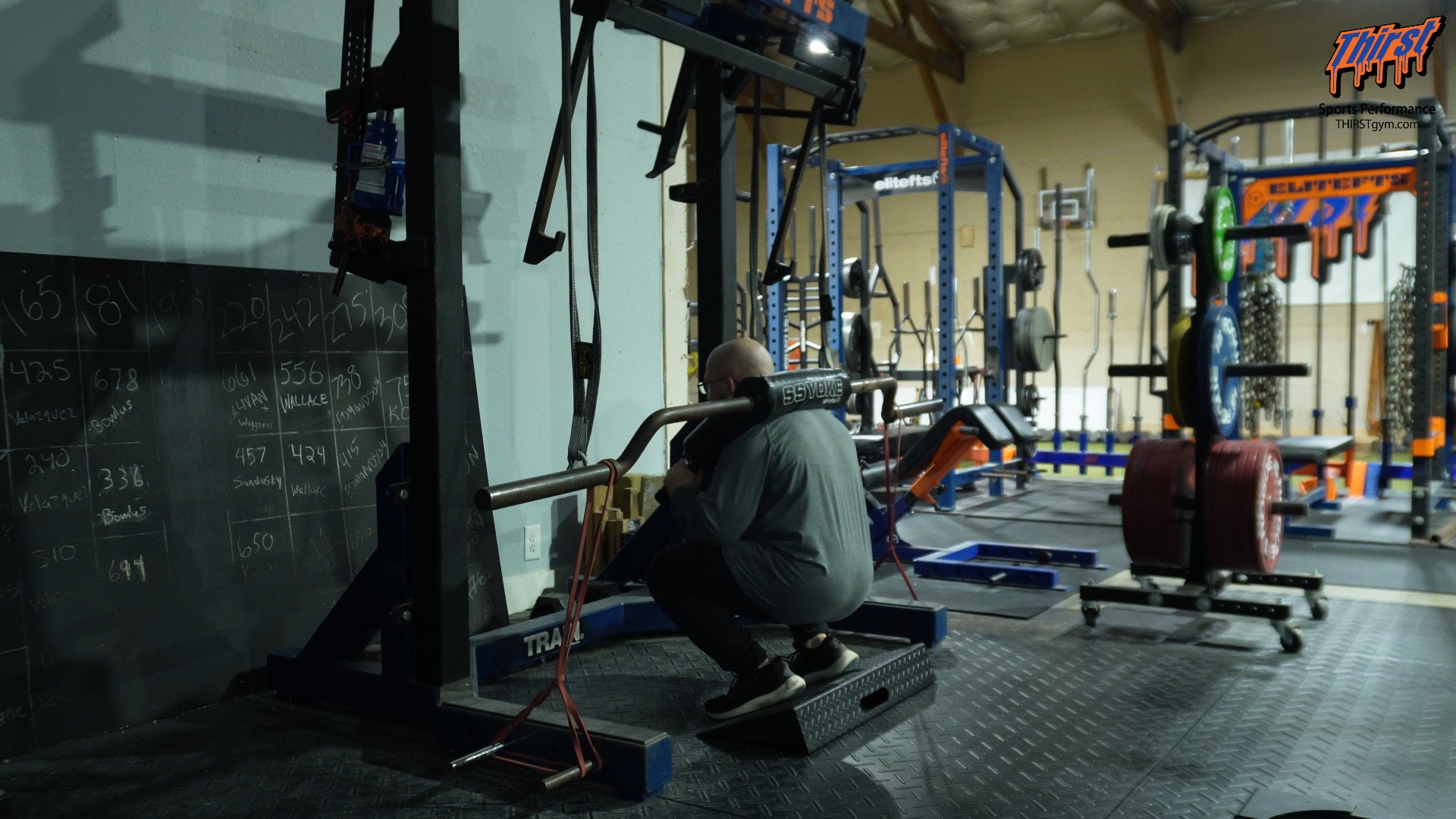
The heels elevated safety squat bar squat versus bands represents one of the most comprehensive lower body training variations available for developing explosive quad strength while maintaining an upright torso position. This advanced squat variation combines three distinct training elements—heel elevation for increased knee flexion range of motion, the safety squat bar’s unique loading position that promotes thorso uprightness, and accommodating resistance through band tension that creates overspeed eccentrics and teaches aggressive concentric drive. Whether you’re an athlete looking to improve your explosive power out of the bottom position, a powerlifter strengthening quad development for competition squats, or a coach programming for vertical jump improvement, this exercise delivers targeted training effects that address multiple performance qualities simultaneously.
Watch the video below on how to maximize this exercise.
Understanding the Biomechanics and Training Benefits
The synergistic combination of heel elevation, specialty barbell loading, and band resistance creates a unique training stimulus that targets the quadriceps with exceptional intensity while teaching proper squat mechanics. When you elevate your heels using a slant board, weight plates, weightlifting shoes, or wooden blocks, you’re allowing increased ankle dorsiflexion throughout the squat pattern. This enhanced ankle mobility shifts your center of mass forward slightly, which permits greater knee translation over the toes and correspondingly increases the knee flexion angle you can achieve. The result is dramatically increased quadriceps activation throughout the movement, particularly emphasizing the vastus medialis and rectus femoris portions of the quadriceps group.
The safety squat bar further reinforces this quad-dominant pattern through its distinctive design. Unlike a traditional straight barbell that sits across the upper traps and requires significant shoulder mobility and upper back engagement to maintain bar position, the safety squat bar features padded yokes that rest on your shoulders with handles positioned in front of your body. This forward handle position creates a slight anterior load that naturally encourages thoracic extension and an upright torso angle. For athletes and lifters who struggle with forward lean during traditional back squats—often due to limited ankle mobility, long femurs relative to torso length, or insufficient upper back strength—the safety squat bar provides built-in mechanical advantages that promote more vertical positioning throughout the descent and ascent.
The addition of band tension introduces the concept of accommodating resistance, where the load progressively increases as you move through the range of motion. When you attach resistance bands from the bottom of a power rack or monolith to the barbell sleeves, the bands create constant downward tension that accelerates your descent, producing what’s known as overspeed eccentrics. This forced acceleration during the lowering phase teaches your nervous system to absorb force more efficiently while maintaining muscular tension and control. As you transition from the eccentric to concentric phase at the bottom of the squat, you must overcome not only the barbell weight but also the accumulated elastic tension in the stretched bands, which teaches you to attack the hole with maximal intent and explosive drive. This accommodating resistance pattern better matches your natural strength curve—you’re strongest in the lockout position where the bands provide maximum resistance, and the resistance decreases as you descend into mechanically weaker positions.
Equipment Setup and Technical Execution
Proper setup ensures you receive the full training benefit while maintaining safety throughout the movement. Begin by selecting appropriate band tension that provides approximately twenty to twenty-five percent of your estimated one-rep maximum at the top of the squat. This percentage creates enough downward pull to produce the overspeed eccentric effect without compromising your ability to maintain control or complete your target repetitions. When attaching the bands, choke them tightly around both the band pegs on your rack and around the barbell sleeves—at no point during the movement should the bands become slack or lose tension, as this eliminates the accommodating resistance training effect you’re seeking.
For heel elevation, you have multiple equipment options depending on what’s available in your training facility. A slant board or incline ramp provides the most stable and consistent platform, allowing you to position the majority of your foot on the elevated surface. Alternatively, weightlifting shoes with raised heels, five or ten-pound weight plates, wooden blocks, or even forty-five pound plates can all effectively elevate your heels and shift your center of mass appropriately. The key consideration is stability—whatever elevation method you choose should provide a secure, non-slipping surface that allows you to generate maximal force without concern for your footing.
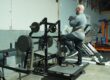
Position yourself under the safety squat bar with the padded yokes resting comfortably across your upper traps and shoulders. Grip the front handles firmly, which will help you maintain thoracic extension and upper back tightness throughout the movement. If using a monolith, you can perform the exercise from the starting position, though you can also walk the bar out from a traditional power rack if necessary. Take a substantial breath into your belly to create intra-abdominal pressure, actively pull your chest up tall, and maintain this braced, upright position as you initiate the descent. Attack the bottom position with controlled aggression—you want to descend with enough speed to utilize the band’s overspeed effect, but maintain sufficient control to reverse direction powerfully. Drive up through the entire range of motion, continuing to push aggressively into the barbell even as you approach lockout where band tension peaks.
Programming Applications and Training Recommendations
This exercise offers remarkable versatility in how you can program it within your training cycle. As a main strength movement, you can work up to challenging sets of one, two, three, or even five repetitions, allowing you to build substantial absolute strength in your quad-dominant squat pattern. This approach particularly benefits powerlifters during off-season training blocks when you can focus on addressing weaknesses and building muscle mass without the specificity demands of competition preparation. The combination of increased range of motion from heel elevation and the constant tension from bands creates significant time under tension and mechanical stress that drives hypertrophy and strength adaptation in the quadriceps, glutes, and erector spinae.
Alternatively, this variation excels as a dynamic effort exercise focused on developing explosive power and rate of force development. When programmed for speed work, perform doubles or triples as explosively as possible using forty to sixty percent of your one-rep maximum for this specific variation. This percentage range, combined with the band tension, creates optimal conditions for teaching your nervous system to recruit high-threshold motor units rapidly and generate maximal force in minimal time. This application proves particularly valuable for athletes in jumping sports, sprinting disciplines, or any activity requiring explosive lower body power production. The overspeed eccentrics from the bands teach you to rapidly decelerate, stabilize, and immediately reverse direction—movement qualities that directly transfer to jumping, cutting, and acceleration patterns.
The heels elevated safety squat bar squat versus bands addresses multiple training limitations simultaneously. Athletes who struggle to maintain an upright torso angle during traditional squats receive mechanical assistance from both the heel elevation and safety bar design. Those with limited quad development relative to their posterior chain strength can emphasize quadriceps recruitment without excessive forward lean that might stress the lower back. Lifters recovering from shoulder mobility restrictions can train their squat pattern without requiring the shoulder external rotation and thoracic extension demanded by straight bar positioning. This makes the variation an exceptional choice for comprehensive leg development that builds both strength and explosive qualities while accommodating various individual limitations and training goals.