
The In-Place Kettlebell Lateral Lunge: Building Hip Mobility and Frontal Plane Strength
The in-place kettlebell lateral lunge represents one of the most underutilized exercises for developing functional hip mobility and frontal plane strength. While many lifters focus exclusively on forward-and-backward movement patterns like squats and traditional lunges, this lateral variation addresses the often-neglected side-to-side strength that proves critical for athletic performance, injury prevention, and everyday movement quality. By adding a contralateral kettlebell load to this lateral lunge pattern, we create a dynamic exercise that simultaneously challenges hip mobility, trunk stability, and lower body strength in the frontal plane.
Watch the video below on how to maximize this exercise.
Equipment Setup and Starting Position
This exercise requires minimal equipment, making it accessible for both home gyms and commercial training facilities. You’ll need just one kettlebell of appropriate weight for your current strength level. The key to proper execution begins with establishing the correct stance width, which differs significantly from what most people naturally assume when first attempting lateral movements.
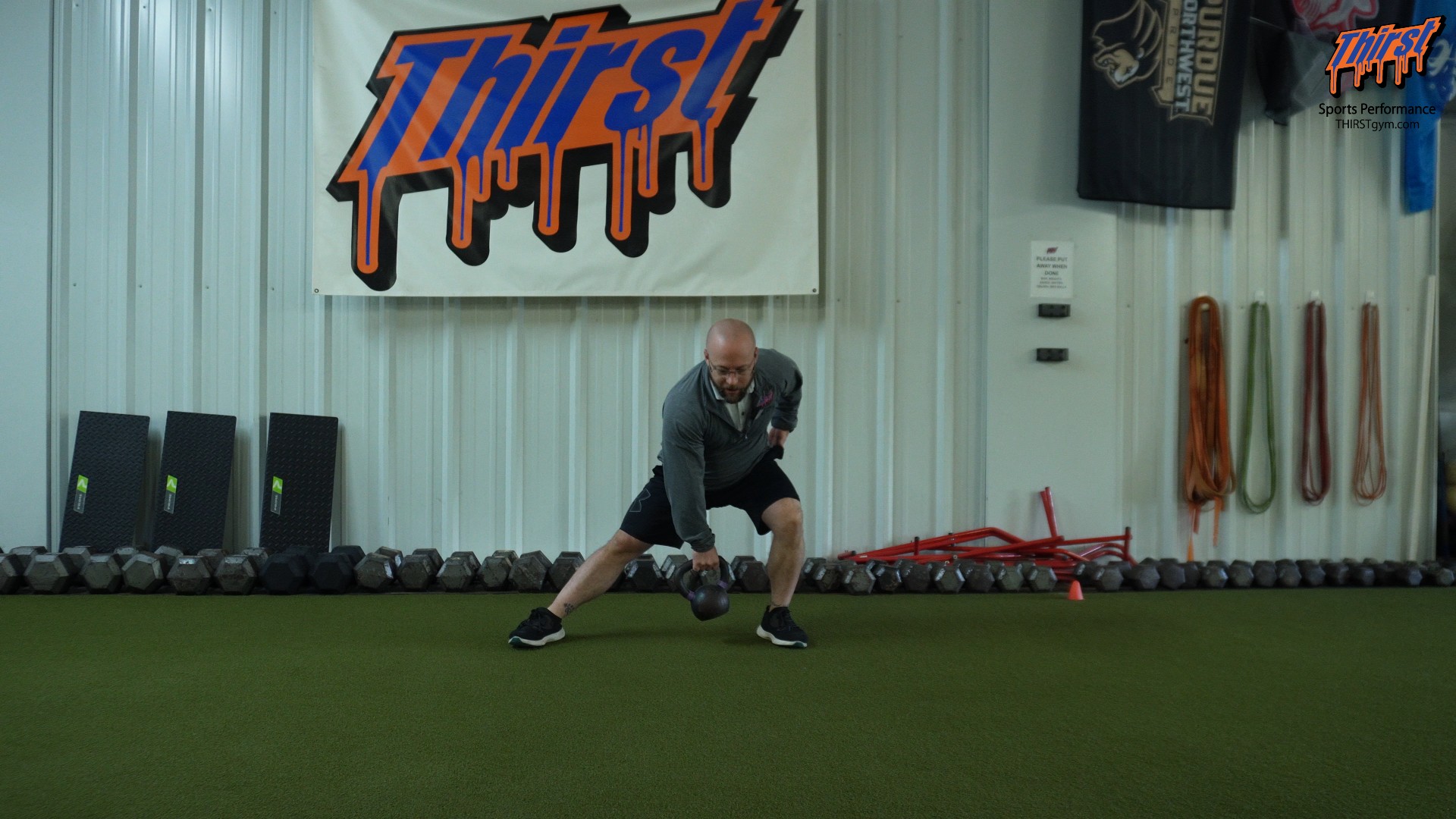
Start by positioning your feet in a wide athletic stance with both feet completely flat on the ground. This stance should be noticeably wider than your typical hip-width position used in squats or conventional lunges. Think of it as a defensive basketball stance or the ready position an athlete might assume when preparing to move quickly in any direction. Your feet should remain flat throughout the movement, maintaining full contact with the floor rather than allowing the inside edges to lift or the arches to collapse.
Hold the kettlebell in one hand, allowing it to hang naturally down toward your hip. The hand selection doesn’t matter initially, but understanding the loading pattern will help you maximize the exercise benefits. Whatever hand holds the weight determines your movement direction because you’ll be lunging away from the weighted side. If the kettlebell sits in your right hand, you’ll lunge toward your left side, and vice versa.
Proper Exercise Execution and Movement Pattern
The movement itself involves shifting your bodyweight laterally into one hip while maintaining an upright torso position. As you lunge away from the kettlebell, the weight naturally crosses your body’s midline and tracks toward the foot on the lunging side. This creates what exercise professionals call a contralateral load, meaning the weight opposes the direction of movement.
During the descent phase, focus on sitting back into the hip on the lunging side while keeping your chest tall and proud. This isn’t simply a side bend or a lateral weight shift. You’re actively loading the hip joint, creating depth in the lunge position as your mobility allows. The non-lunging leg remains relatively straight but not locked, with your weight transferring progressively onto the bent leg as you descend deeper into the movement.
The kettlebell’s path deserves special attention because it provides valuable feedback about your movement quality. As you lunge, the weight should travel diagonally across your body toward the foot on the lunging side. This cross-body weight distribution challenges your trunk stability and oblique muscles while simultaneously encouraging proper hip positioning. Your chest stays upright throughout the movement rather than collapsing forward or rotating excessively.
After reaching your comfortable depth in the lunge position, push forcefully through the bent leg to return to the starting position. This push-back phase engages your glutes, adductors, and quadriceps to decelerate the movement and return your body to center. Complete all repetitions on one side before switching the kettlebell to the opposite hand and repeating the movement pattern in the other direction.
Understanding the Contralateral Loading Strategy
The contralateral loading pattern used in this exercise creates several distinct training benefits that make it superior to unloaded lateral lunges or same-side loaded variations. When the weight sits opposite to your lunging direction, it creates what biomechanists call a “long lever arm” that increases the challenge to your trunk stabilizers and oblique muscles. Your core must work harder to maintain proper spinal alignment and prevent excessive rotation or lateral flexing during the movement.
This opposite-side loading also influences thoracic positioning and rib cage orientation in ways that can benefit overall movement quality and breathing mechanics. While you could technically hold the kettlebell on the same side as your lunge direction, this tends to feel more awkward and doesn’t provide the same stability challenges. If same-side loading feels more natural to you, you’d likely benefit more from simply holding the kettlebell in a goblet position at chest height, which centralizes the load and creates different movement demands.
Primary Applications for Hip Mobility Development
While this exercise certainly builds frontal plane strength, its greatest value for most training populations lies in its ability to improve hip mobility and movement capacity. Many people struggle with hip mobility limitations that manifest as difficulty sitting deeply into lateral positions, restricted adductor flexibility, or asymmetrical movement patterns when shifting weight side to side. These limitations stem from our modern sedentary lifestyles where we rarely load our hips in lateral positions or challenge our bodies to move beyond the sagittal plane.
The in-place kettlebell lateral lunge addresses these deficiencies by creating a controlled, loaded stretch in the adductors and hip capsule while simultaneously strengthening the muscles responsible for lateral stability. As your hip mobility improves through consistent practice, you’ll notice your ability to descend deeper into the lunge position increases naturally. This progressive depth represents genuine improvements in hip function rather than just increased flexibility without control.
For athletes, this mobility component translates directly to improved performance in sports requiring lateral movement capabilities. Basketball players, soccer athletes, tennis competitors, and any sport involving cutting, shuffling, or rapid directional changes benefits from enhanced hip mobility in the frontal plane. When your hips can move more freely and controllably in lateral positions, you can generate force more efficiently during side-to-side movements and reduce your injury risk during rapid directional changes.
Programming Recommendations and Loading Strategies
For most training populations, this exercise works best when programmed for moderate repetition ranges that allow you to focus on movement quality and progressive depth. Two to three sets of eight to twelve repetitions per side provides sufficient volume to stimulate both strength adaptations and mobility improvements without creating excessive fatigue that degrades technique.
The loading for this exercise typically remains moderate rather than extremely heavy. The movement’s primary value comes from the pattern itself and the mobility work it provides, not from moving maximal loads. Select a kettlebell weight that allows you to maintain proper form throughout all repetitions while still creating a meaningful challenge. If you find yourself struggling to maintain an upright chest position or your movement becomes choppy and uncontrolled, the weight is likely too heavy for your current capabilities.
This exercise fits naturally into warm-up sequences, lower body training days, or dedicated mobility work sessions. When used as part of a warm-up, lighter loads help prepare your hips and nervous system for more intensive training. During lower body sessions, it serves as an excellent accessory movement following your primary strength work. For athletes prioritizing lateral movement quality, incorporating this exercise two to three times weekly can create significant improvements in side-to-side capabilities over time.