
Inverted Row Reverse Plank Iso Hold: Complete Exercise Guide
The inverted row reverse plank iso hold represents an often-overlooked approach to posterior chain development that challenges your body from the exact opposite position of traditional plank variations. While standard planks target the anterior core musculature through anti-extension work, this inverted variation shifts the training emphasis to your glutes, hamstrings, and spinal erectors through an isometric hold that demands sustained muscular tension throughout your entire posterior chain. This makes it an exceptionally valuable exercise for athletes looking to develop postural strength, improve lower body stability, and build time under tension capacity in the muscles responsible for hip extension and spinal positioning.
Watch the video below on how to maximize this exercise.
Understanding the Movement and Setup
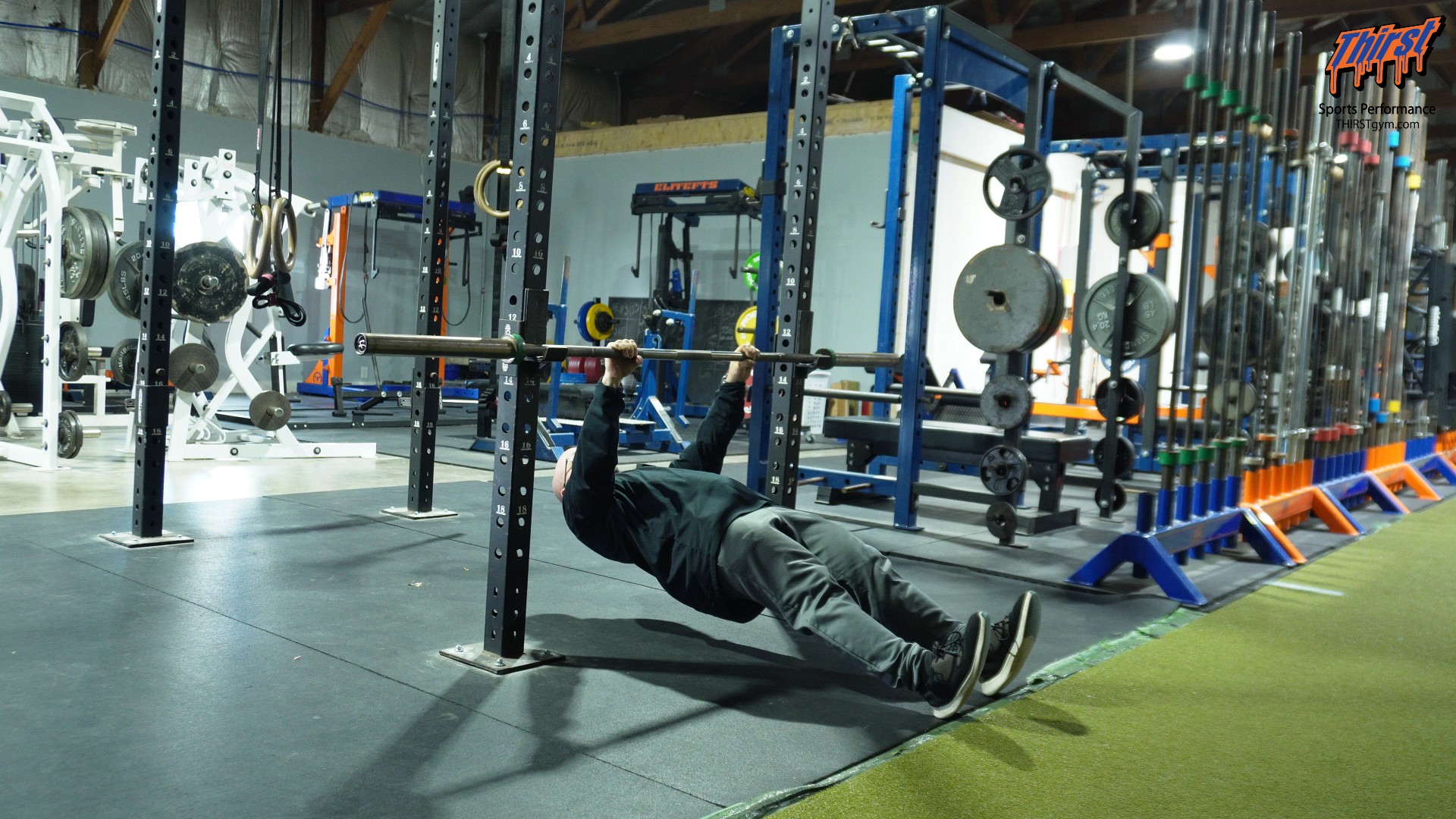
Setting up for the inverted row reverse plank requires a barbell positioned in a power rack or squat stand, similar to what you would use for standard inverted rows or bodyweight rows. The key difference lies in your positioning and intent during the exercise. Rather than performing rowing repetitions, you’re establishing and maintaining a rigid plank position with your body facing upward. Start by setting the barbell at approximately hip height, which provides a moderate challenge for most trainees while allowing proper form development. You’ll grip the bar with a double overhand grip, extend your legs fully with your heels planted firmly on the ground, and create a completely straight line from your heels through your hips to your shoulders.
The positioning mirrors an inverted row starting position, but instead of pulling yourself toward the bar repeatedly, you’re holding that extended position for time. Your arms remain straight throughout the hold, your core stays braced, and the real work happens in your posterior chain as your glutes and hamstrings fire isometrically to prevent your hips from sagging toward the floor. This sustained contraction creates significant time under tension for the often-undertrained posterior muscles while simultaneously challenging your grip strength and total body tension.
The Biomechanics Behind Posterior Chain Isometrics
When you hold the inverted plank position, your glutes and hamstrings must work continuously to maintain hip extension against gravity’s constant pull. Unlike dynamic exercises where muscles alternate between contraction and relaxation, isometric holds require sustained neural drive to the working muscles, creating unique adaptations in muscular endurance and positional strength. Your spinal erectors also contribute significantly to this exercise, working to maintain proper spinal alignment while your body attempts to fight the gravitational forces trying to pull your midsection toward the ground.
This type of training addresses a common weakness in many training programs: the ability to maintain proper posterior chain engagement under fatigue. Many athletes can perform explosive hip extensions through exercises like deadlifts or kettlebell swings, but struggle to maintain that same muscular engagement when required to hold positions for extended periods. The inverted row reverse plank directly targets this capacity, building the muscular endurance necessary for maintaining proper posture during long athletic events, resisting postural collapse during fatiguing work sets, and developing the foundational strength that transfers to more dynamic posterior chain exercises.
Progression and Regression Strategies
The beauty of the inverted row reverse plank lies in its scalability across fitness levels. If you’re just beginning to explore posterior chain isometric work, elevating the barbell higher in the rack reduces the challenge by decreasing the angle of your body relative to the floor. The more upright your torso position, the less load your posterior chain must support, making this an excellent entry point for beginners or those recovering from injury. Conversely, advanced athletes can increase difficulty by lowering the bar height, bringing their body closer to parallel with the floor and dramatically increasing the demand on their glutes, hamstrings, and erectors.
Beyond adjusting bar height, elevating your feet on a plyo box or bench creates an even greater challenge by forcing your body into a more horizontal position while increasing the stability demands on your posterior chain. For truly advanced variations, consider adding external loading through weight plates, chains, or weighted vests positioned across your hips or torso. These additional resistance methods transform an already challenging bodyweight exercise into a serious strength-building tool that can humble even well-conditioned athletes.
Programming Recommendations and Training Applications
The inverted row reverse plank fits effectively into multiple positions within your training session depending on your specific goals. As a finishing exercise placed toward the end of your workout, it provides exceptional posterior chain fatigue and muscular endurance development when your neuromuscular system is already taxed from earlier compound movements. This approach maximizes time under tension and builds the kind of muscular resilience that translates to improved performance in sports and daily activities requiring sustained postural control.
Alternatively, incorporating this exercise as part of your warm-up or movement preparation sequence can effectively activate your glutes and hamstrings before heavy lower body training. This pre-activation strategy ensures these crucial muscles are firing properly before you load them through squats, deadlifts, or Olympic lifting variations. Target hold times between thirty and sixty seconds for most applications, adjusting the difficulty through the progression methods discussed earlier to keep the challenge appropriate as your capacity improves. The key indicator of proper intensity is maintaining perfect form throughout the entire hold while feeling significant muscular fatigue by the final ten to fifteen seconds of your target duration.
This exercise serves as more than just another posterior chain movement—it represents a different training stimulus that complements traditional dynamic exercises while addressing the often-neglected isometric strength qualities that contribute to injury resistance, postural integrity, and athletic performance across virtually every sport and physical pursuit.