
Kickstand Goblet Squat: How to Do It, Why It Works, and When to Use It
The kickstand goblet squat is one of those underrated accessory exercises that quietly delivers serious results — especially if you’re training with limited equipment or looking for a smarter way to load a single leg without fully committing to a split squat. If you’ve been searching for a way to add more quad-focused, quasi-unilateral work to your training without needing a leg press or leg extension machine, this movement deserves a spot in your program.
Watch the video below on how to maximize this exercise.
What Is the Kickstand Goblet Squat?
The kickstand goblet squat is a squat variation that combines the familiar goblet squat loading position with an asymmetrical stance — one foot slightly forward, one slightly back — to shift the emphasis toward the front leg. It bridges the gap between a bilateral squat and a true unilateral exercise like a Bulgarian split squat, making it highly accessible and easy to load with just a single dumbbell or kettlebell.
Equipment You’ll Need
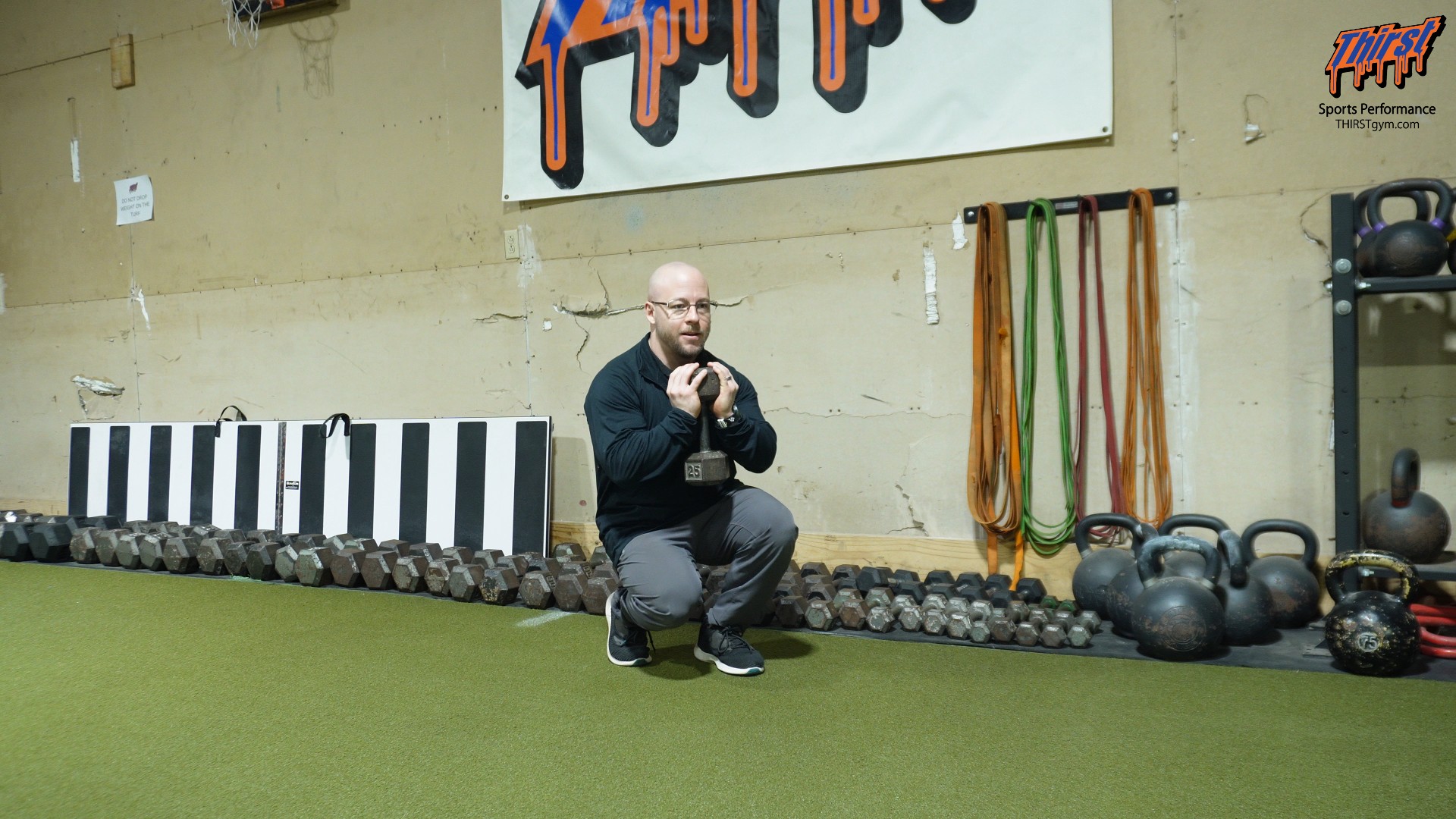
All you need is one dumbbell or kettlebell. You’ll hold the weight in the goblet position: cradled in the crooks of your elbows, held tight against your chest at roughly sternum height. This keeps the load anterior, which encourages an upright torso and naturally reinforces good squat mechanics.
How to Set Up the Kickstand Position
The “kickstand” refers to the foot positioning that makes this variation unique. Start with a hip-width stance, then stagger your feet so that one foot is slightly ahead of the other. Your back foot should be positioned so that your back toe is roughly in line with the heel of your front foot. Rise up onto the toes of the back foot and keep a slight bend in that back knee. The back leg is essentially acting as a kickstand on a bicycle — it’s there for balance and light support, but it’s not doing the heavy lifting. That responsibility falls on the front leg.
How to Perform the Movement
From your kickstand stance with the dumbbell in the goblet position, push your hips back and descend into a squat pattern just as you would in a standard goblet squat. Keep your chest tall, core braced, and focus your weight and effort through the front leg. At the bottom, drive through the front heel to return to standing. The back leg assists with balance but contributes minimal force production — the goal is to make the movement as quad-dominant as possible through that front leg. Once you’ve completed your reps on one side, switch your stance and repeat with the opposite leg forward.
Why the Kickstand Goblet Squat Works
The real value of this exercise lies in what it accomplishes without the complexity of a true single-leg movement. A full pistol squat or Bulgarian split squat demands significant mobility, stability, and coordination that beginners or fatigued athletes may not have access to on a given training day. The kickstand squat sidesteps those barriers while still creating meaningful unilateral quad stimulus.
Because both feet remain on the ground, you maintain a more stable base than in a split squat, which makes it easier to control loading and focus on the target muscle rather than fighting for balance. At the same time, the staggered stance forces the front leg to take on the majority of the work, creating the asymmetrical loading that makes unilateral training so effective for addressing side-to-side strength imbalances and building single-leg stability.
It’s also an excellent option for garage gym athletes or anyone training in a barebones environment. No leg press, no leg extension machine? The kickstand goblet squat gives you a legitimate quad-isolation stimulus with nothing more than one dumbbell.
Programming Recommendations
Think of the kickstand goblet squat as an accessory movement, not a primary lift. It works best as a supplementary exercise after your main lower body work — think squats, deadlifts, or any primary compound movement. Aim for two to three sets of 10 to 20 reps per leg. The higher rep range is intentional here; because this is an accessory exercise using relatively lighter load, accumulating volume is the goal rather than chasing heavy weight. The higher rep ranges also tend to produce a strong quad burn that reinforces the mind-muscle connection in that front leg.
This exercise fits naturally into hypertrophy-focused lower body days, rehabilitation or corrective phases where a lifter needs to address quad asymmetry, or any program where unilateral leg work is needed but equipment is scarce.
Who Should Use This Exercise
The kickstand goblet squat is a versatile tool that spans multiple training populations. Beginners will appreciate the stability of having both feet on the ground while still learning to load one leg at a time. Intermediate and advanced athletes can use it as a high-rep quad finisher to round out a training session. Coaches working with athletes in limited-equipment settings — travel, home gyms, off-season conditioning — will find it a reliable go-to. Anyone dealing with minor asymmetries between legs can use it as a corrective tool without the intensity of heavier unilateral work.
If you’re looking to mix up your quad training, challenge one leg at a time, and do it all with a single dumbbell, the kickstand goblet squat is exactly the kind of smart, simple variation worth adding to your exercise toolkit.