
Lateral Shuffle with Medicine Ball Fake Chop: Advanced Change of Direction Training
Change of direction mechanics separate good athletes from great ones, yet many athletes struggle with a fundamental component of effective cutting: loading the hip. The lateral shuffle with medicine ball fake chop addresses this critical movement pattern, teaching athletes how to decelerate efficiently and position their body for explosive directional changes. This medicine ball drill specifically targets the yield phase of cutting mechanics, helping athletes develop the hip loading patterns necessary for powerful lateral movement.
Watch the video below on how to maximize this exercise.
Understanding the Movement Problem
When athletes change direction laterally, proper mechanics require dropping the center of mass and loading the hip on the plant leg. However, many athletes—particularly larger, less mobile individuals—maintain an upright posture throughout directional changes, shuffling with minimal hip flexion. This mechanical inefficiency limits their ability to generate force off the plant leg and reduces their overall change of direction speed.
The inability to “get into the back pocket,” as coaches commonly describe hip loading during cuts, creates a cascade of performance limitations. Without proper hip engagement, athletes cannot create the necessary ground reaction forces to explosively push off in the new direction. The lateral shuffle with medicine ball fake chop uses external loading and movement cueing to teach proper hip positioning during the deceleration and cutting phases of lateral movement.
Equipment and Setup Requirements
This athletic training drill requires minimal equipment but demands attention to space and load selection. A light medicine ball weighing four to six pounds provides sufficient external loading without overwhelming the movement pattern. The relatively light load allows athletes to focus on movement quality and hip mechanics rather than simply managing heavy resistance.
Space requirements are deliberately constrained for this change of direction drill. Athletes need approximately two and a half to five yards of lateral movement space—enough distance to establish shuffle mechanics but not so much that they lose focus on the cutting mechanics at the endpoint. This compressed training space allows for higher repetition volumes and maintains focus on the specific movement pattern being developed.
Detailed Exercise Execution
The lateral shuffle with medicine ball fake chop begins with the medicine ball positioned on the shoulder opposite the direction of intended hip loading. If the goal is loading the right hip, the ball starts above the left shoulder. This cross-body positioning is essential for the movement’s effectiveness, as it sets up the diagonal pattern that will facilitate proper torso rotation and hip engagement.
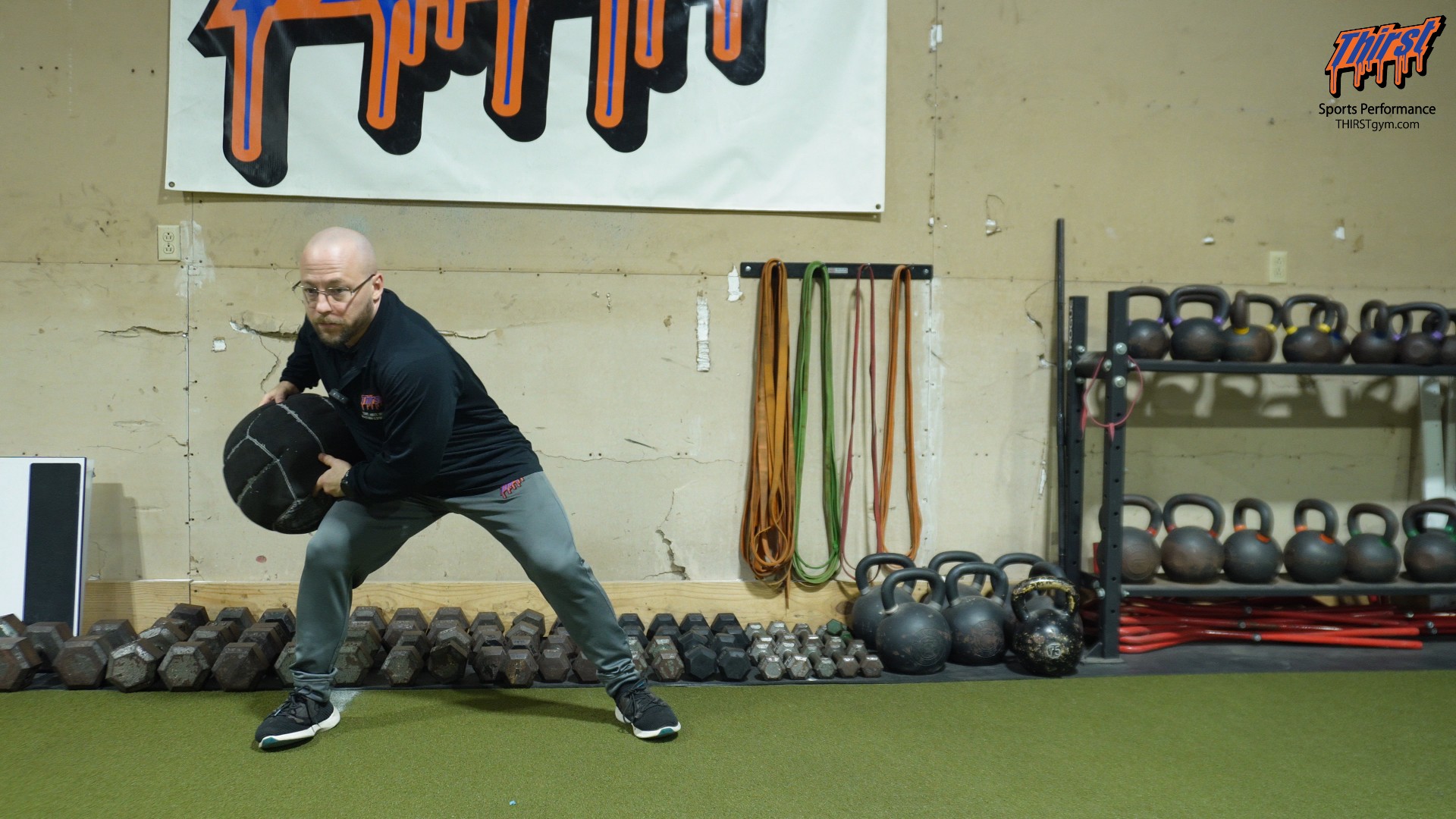
From this starting position, the athlete initiates a lateral shuffle toward the target line or marker. As they approach the endpoint where directional change would occur, they aggressively chop the medicine ball diagonally across the body into the hip on the plant leg side. This chopping action isn’t passive—athletes should drive the ball forcefully across the body while simultaneously dropping their hips and flexing at the plant leg.
The finishing position requires specific attention to body mechanics. The plant leg achieves approximately 90 degrees of knee flexion while the opposite leg remains relatively straight and extended, creating a strong, wide athletic base. The torso maintains an upright position despite the hip drop—the chest stays tall while the hips lower. This combination of hip flexion with torso stability represents ideal cutting mechanics that transfer directly to sport-specific movement patterns.
Critical to the exercise’s effectiveness is the deliberate pause at the bottom position. Athletes hold this loaded hip position for a full one-count, reinforcing proper body positioning and allowing neurological adaptation to the movement pattern. This isometric hold at the endpoint distinguishes this drill from simple shuffling exercises and emphasizes the yield and stabilization phases of change of direction mechanics.
Common Execution Errors and Corrections
The most frequent mistake athletes make involves bringing the feet together during the chop phase, collapsing the athletic base that provides stability and power potential. Proper execution maintains a wide stance throughout the movement, with the step and chop occurring simultaneously to create that stable cutting platform. Coaches should cue athletes to “step and rip” the ball across the body rather than shuffling into a narrow stance before chopping.
Another common error involves insufficient aggression with the medicine ball chop. Athletes often passively bring the ball to their hip rather than forcefully driving it across the body. The chopping action should be violent and deliberate, as this aggressive movement helps pull the torso into the proper position and reinforces the neuromuscular patterns associated with explosive cutting. The external resistance of the medicine ball provides feedback that helps athletes develop the necessary force production patterns.
Programming Recommendations for Speed and Agility Development
The lateral shuffle with medicine ball fake chop fits optimally into the speed, power, and agility block of athletic programming, particularly on lateral-focused training days. This drill serves as either a teaching tool for movement pattern development or as activation work before more intensive change of direction training. Its placement in a training session depends on the athlete’s movement competency and the session’s overall objectives.
Volume recommendations typically range from three to five sets of three to five repetitions per side. This moderate repetition range allows sufficient practice to develop motor patterns without inducing fatigue that compromises movement quality. The drill pairs effectively with other lateral-based exercises including lateral bounds, lateral sled drags, and lateral running variations, creating comprehensive training sequences that address change of direction from multiple angles.
For athletes struggling with cutting mechanics, this drill can serve as a regression before progressing to reactive change of direction drills or competitive directional change scenarios. The controlled, predetermined nature of the movement allows athletes to develop proper patterns before introducing the decision-making and reactive components present in actual sport situations.
Target Population and Training Applications
This corrective exercise drill proves particularly valuable for larger, less mobile athletes who struggle with the hip mobility and body awareness required for effective cutting mechanics. Football linemen, bigger basketball post players, and field athletes who need improved lateral mobility without sacrificing size or strength benefit significantly from this movement pattern training.
Conversely, naturally hypermobile athletes typically don’t require this specific intervention, as they generally possess the requisite hip mobility and body control for effective cutting. However, even mobile athletes can benefit from the drill’s reinforcement of aggressive hip loading and proper torso positioning during directional changes, making it a versatile tool across athletic populations seeking improved change of direction performance.