
Skip to Sprint
The skip to sprint is a locomotion-based sprint drill that combines fundamental skipping mechanics with high-effort sprinting to develop coordination, knee drive, and opposite arm-leg synchronization. This exercise is particularly effective for youth athletes who need more exposure to basic movement patterns, but it also serves as an excellent warm-up drill for athletes of all levels preparing for speed, agility, or sport-specific training sessions.
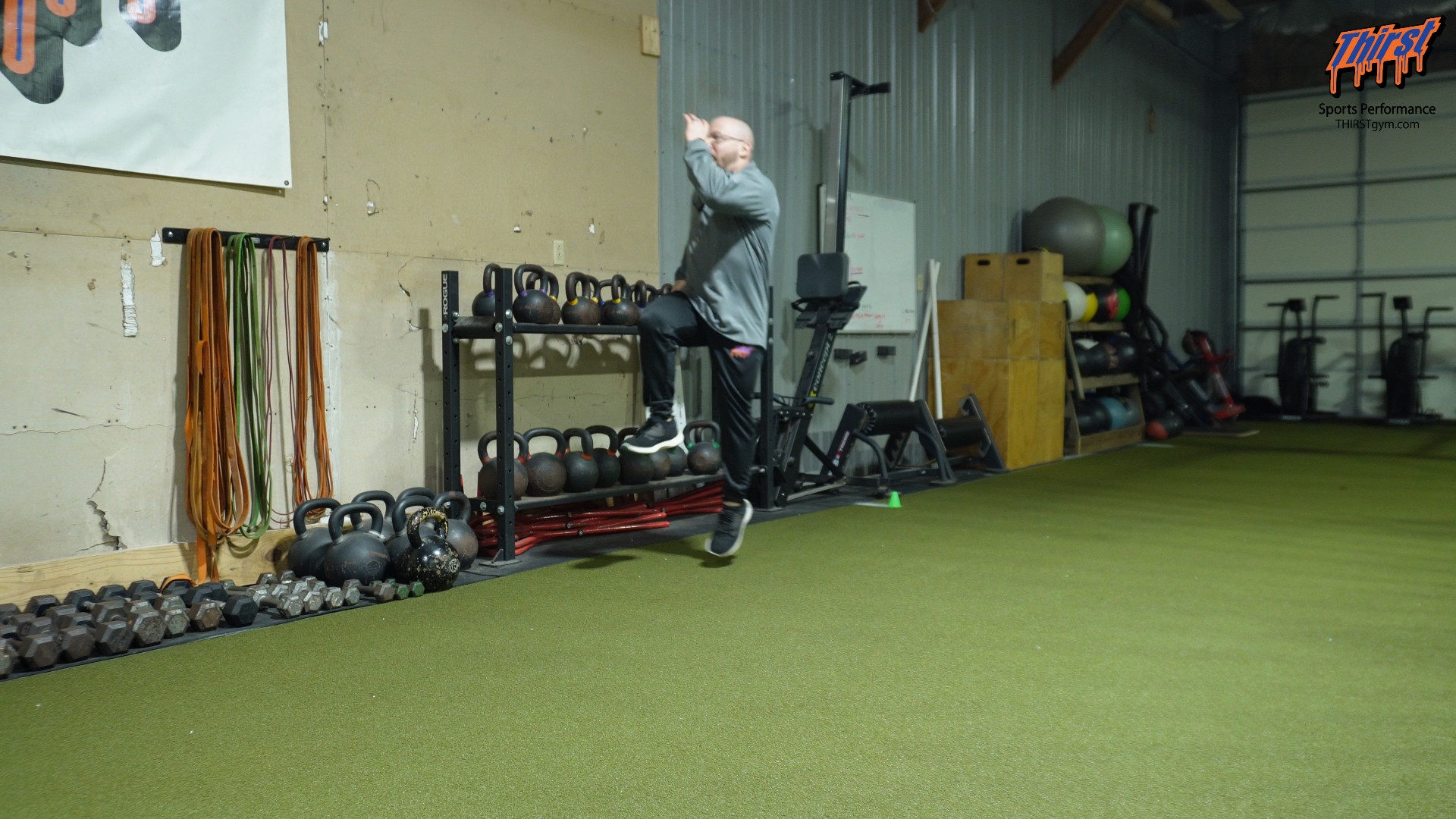
Watch the video below on how to maximize this exercise.
How to Perform the Skip to Sprint
Setting up the skip to sprint requires nothing more than open space—a turf strip, field, gym floor, or any area where an athlete can move freely in a straight line. The athlete begins by performing a series of controlled skips, focusing on driving the knee upward while coordinating the opposite arm in a natural pumping motion. After two to four skips, the athlete seamlessly transitions into a full sprint, carrying the movement patterns established during the skipping phase directly into their acceleration and top-speed mechanics.
The skipping portion does not need to be performed at maximum height or maximum speed. The goal is quality movement, not intensity during the skip itself. Athletes should focus on achieving a rhythmic skip with deliberate knee drive and purposeful arm action. Once that pattern is established over five to ten yards, the transition into sprinting should feel natural and fluid. The sprint portion can cover an additional five to fifteen yards depending on available space and training goals.
Why the Skip to Sprint Works
The brilliance of this drill lies in how it bridges a fundamental locomotion pattern with a high-performance athletic movement. Skipping reinforces several critical components of sprint mechanics in an accessible, low-threat environment. The knee drive required during each skip mirrors the hip flexion needed during sprinting, training athletes to lift their knees aggressively rather than shuffling or reaching with their feet. The opposite arm action developed during skipping directly transfers to the contralateral arm-leg coordination that drives efficient running mechanics.
When athletes transition from the skip into a sprint, they carry these reinforced patterns with them. The knee drive stays high, the arms continue working in opposition to the legs, and ground contacts remain purposeful and powerful. This makes the skip to sprint an incredibly effective teaching tool for athletes who struggle with coordination during full-speed running, because the skip slows everything down just enough to let proper mechanics take hold before ramping up to sprint intensity.
Programming the Skip to Sprint
The skip to sprint fits naturally into the beginning of a training session as part of a dynamic warm-up or movement preparation block. It can also be incorporated into dedicated speed and agility work or used as a power development drill early in a session when athletes are fresh and can produce high-quality efforts. Coaches running sport practices will find this drill particularly useful as a warm-up activity that prepares athletes for the demands of their sport while simultaneously developing fundamental movement skills.
For distance recommendations, having athletes skip for five to ten yards before sprinting for an additional five to fifteen yards works well in most training environments. These distances can be adjusted based on available space, and the ratio of skipping to sprinting can be modified depending on whether the emphasis is on reinforcing locomotion patterns or building sprint speed. Athletes working in shorter spaces can perform more repetitions at compressed distances, while those with access to longer turf or field space can extend the sprint portion for greater speed development.
Three to six repetitions per set with adequate rest between efforts ensures athletes maintain quality movement throughout the drill. Because this exercise serves primarily as a warm-up or movement quality tool, it should not be pushed to the point of fatigue where mechanics begin to break down.
Who Benefits Most from the Skip to Sprint
Youth athletes stand to gain the most from this drill because many young athletes today lack exposure to fundamental locomotion patterns like skipping and galloping. Early sport specialization often means these athletes spend the majority of their training time on sport-specific skills without developing the broad movement foundation that supports long-term athletic development. The skip to sprint addresses this gap by embedding essential locomotion work into a drill that also develops sprint mechanics, making it both developmental and immediately applicable to sport performance.
Beyond youth populations, the skip to sprint works well for any athlete as part of a general warm-up sequence. The combination of rhythmic skipping and explosive sprinting elevates heart rate, activates the muscles responsible for running, and primes the nervous system for high-speed movement. Older athletes, recreational trainees, and team sport athletes at any level can all benefit from including this drill in their warm-up rotation to improve coordination and reinforce quality sprint mechanics before moving into more demanding training.