
X-Cable Face Pull: The Superior Face Pull Variation for Shoulder Health and Upper Back Development
The X-cable face pull represents an advanced variation of the traditional face pull exercise that addresses one of the most common limitations in standard face pull execution—restricted scapular movement. By crossing the cables in an X pattern, this variation allows for significantly greater scapular protraction at the start of each repetition, creating a fuller range of motion that better targets the posterior deltoids, upper trapezius, and the critical scapular retractor muscles that contribute to both shoulder health and improved posture.
For athletes, powerlifters, and anyone dealing with shoulder discomfort during pressing movements, the X-cable face pull offers a more shoulder-friendly alternative to standard rope face pulls while potentially providing superior muscle activation through enhanced biomechanical positioning. This exercise variation proves particularly valuable for combat sports athletes who require exceptional shoulder mobility and stability, as well as desk workers struggling with forward shoulder posture from prolonged sitting.
Watch the video below on how to maximize this exercise.
Equipment Setup for the X-Cable Face Pull
Executing the X-cable face pull requires a dual cable machine equipped with two independent cable stations positioned close enough together to create the crossed cable pattern. Each cable station needs a D-handle attachment rather than the single rope typically used for standard face pulls. This dual-handle setup proves essential for the crossed-arm positioning that defines this variation.
Position both cable stations at approximately face to neck height, similar to where you would set the cables for a traditional face pull. The exact height may vary slightly based on your individual anthropometry and shoulder structure, but generally speaking, the cables should align somewhere between your chin and the top of your head when you’re standing upright. This positioning ensures optimal shoulder joint alignment throughout the movement and allows for proper posterior deltoid engagement without unnecessary stress on the rotator cuff.
Proper Execution and Technique
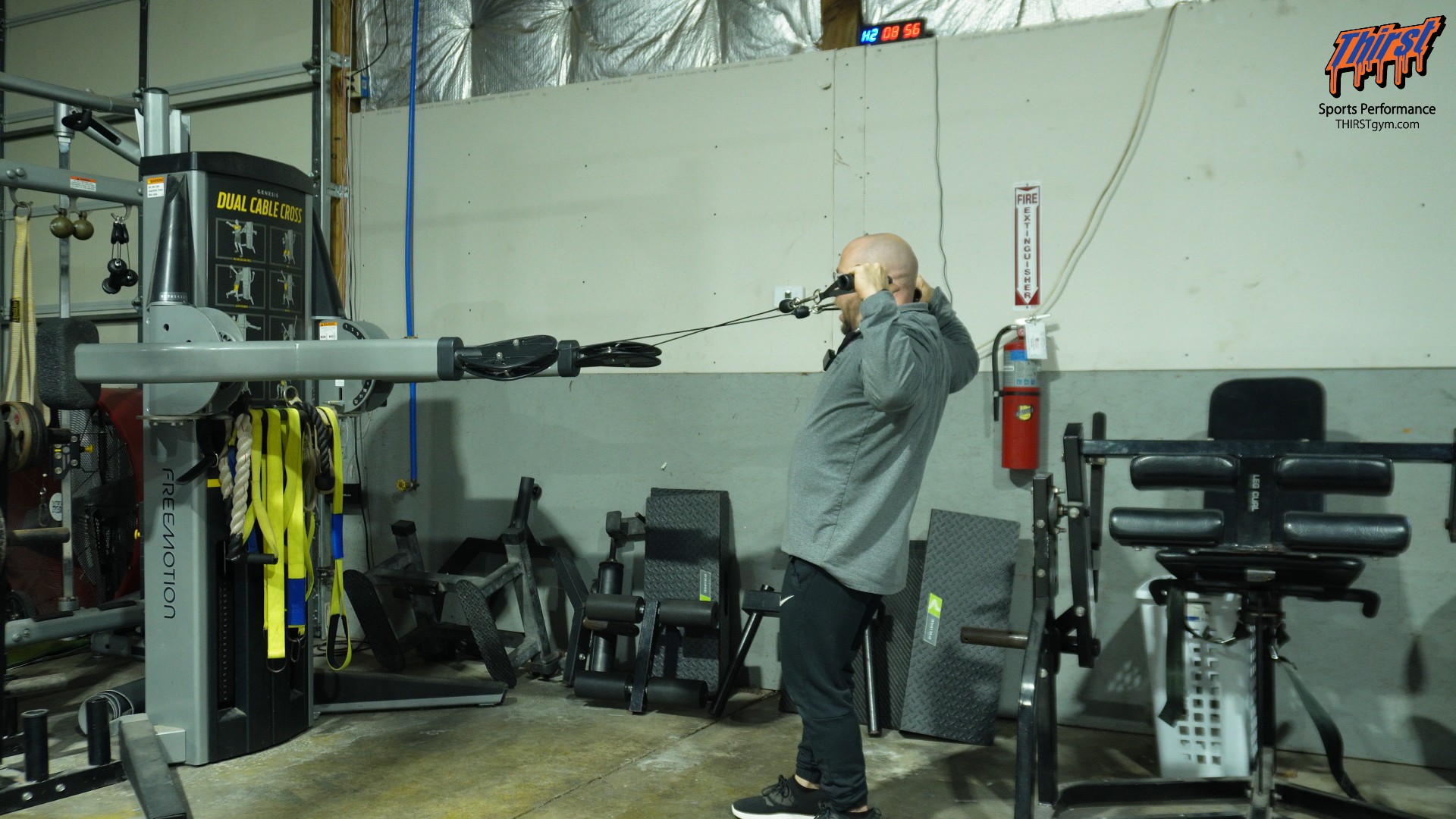
The defining characteristic of the X-cable face pull lies in the crossed-cable setup. Reach across your body to grab the left cable handle with your right hand, then grab the right cable handle with your left hand, creating an X pattern with the cables crossing in front of your torso. This crossed positioning immediately places your scapulae in a protracted position, setting up the enhanced range of motion that makes this variation so effective.
Step back from the cable machine until you feel moderate tension in the cables while maintaining the crossed-arm position. Your stance can be either neutral with feet parallel or slightly staggered with one foot forward, particularly if you’re using heavier resistance that requires you to lean back slightly for counterbalance. The staggered stance provides additional stability and allows you to maintain better postural control throughout the set without compromising form as fatigue accumulates.
Maintain a pronated grip with your palms facing down throughout the entire movement. From this starting position with your scapulae protracted and arms extended, initiate the pull by driving your elbows up and back while simultaneously retracting your scapulae. Pull the handles toward your face, focusing on keeping your elbows elevated above hand level throughout the concentric portion of the movement. This high elbow position ensures proper posterior deltoid activation and prevents the exercise from becoming primarily a rowing movement.
The eccentric portion of each repetition proves equally important. Rather than simply lowering the weight, actively allow your scapulae to protract around your rib cage as your arms extend forward, reaching as far as your shoulder mobility comfortably allows. This full protraction-to-retraction movement pattern creates the enhanced range of motion that distinguishes the X-cable face pull from traditional variations.
Biomechanical Advantages and Muscle Targeting
The crossed cable configuration fundamentally changes the biomechanics of the face pull exercise by removing the physical limitation that prevents full scapular protraction when using a single rope attachment. In standard face pulls, the rope’s length and your body’s proximity to the cable machine naturally limit how far forward you can reach without the rope bottoming out. The X-cable setup eliminates this restriction, allowing your scapulae to fully wrap around your rib cage at the start of each repetition.
This enhanced protraction capability translates to greater activation of the serratus anterior and lower trapezius muscles during the protraction phase, while still delivering excellent retraction work for the middle trapezius, rhomboids, and posterior deltoids during the pulling phase. The result is a more complete training stimulus for the entire scapular stabilizer complex, which proves critical for maintaining shoulder health during heavy pressing movements and overhead work.
The X-cable face pull effectively targets the posterior deltoids, upper and middle trapezius, rhomboids, infraspinatus, teres minor, and the often-neglected serratus anterior. This comprehensive muscle recruitment makes the exercise particularly valuable for addressing the muscular imbalances that develop from desk work, excessive pressing volume, or poor postural habits. For combat sports athletes, the enhanced scapular control developed through this movement pattern directly transfers to improved punching mechanics and shoulder stability during grappling.
Programming Recommendations and Training Applications
Incorporate the X-cable face pull into your training program using approximately two to four sets of ten to twenty repetitions. The higher repetition range works exceptionally well for this exercise since the goal centers on muscle activation, movement quality, and shoulder health rather than maximum strength development. The extended time under tension created by higher rep sets also enhances the postural benefits by building muscular endurance in the muscles responsible for maintaining proper shoulder position.
Position this exercise strategically within your training sessions either as part of your upper back accessory work following main pressing movements or as a dedicated shoulder prehabilitation exercise during your warm-up routine. When used as prehabilitation, lighter resistance with a focus on movement quality and scapular awareness helps activate the posterior shoulder complex before heavy pressing, potentially reducing injury risk and improving pressing performance.
For individuals dealing with shoulder discomfort during standard face pulls or other upper back exercises, the X-cable variation often feels considerably more comfortable due to the improved biomechanical positioning and the natural movement path created by the crossed cables. If you’re experimenting with this exercise for the first time, start with lighter resistance than you’d typically use for rope face pulls and gradually increase the load as you become comfortable with the crossed-cable setup and the enhanced range of motion.
The X-cable face pull deserves consideration from anyone serious about shoulder health, upper back development, or correcting postural issues resulting from excessive anterior chain work or prolonged sitting. While it requires slightly more complex setup than traditional face pull variations, the biomechanical advantages and shoulder-friendly nature of the movement make it a valuable addition to any well-rounded training program focused on long-term joint health and balanced muscular development.