
Band Resisted Split Stance Vertical Jump: Build Explosive Single-Leg Power
The band resisted split stance vertical jump is a dynamic plyometric exercise that develops unilateral lower body power, reactive strength, and explosive athleticism through accommodating resistance. This advanced jumping variation combines the benefits of traditional split stance plyometrics with the unique training stimulus provided by elastic band tension, creating overspeed eccentric loading that enhances the stretch-shortening cycle and builds tendon elasticity essential for sprinting, jumping, and change-of-direction performance.
Watch the video below on how to maximize this exercise.
Equipment Setup and Exercise Configuration
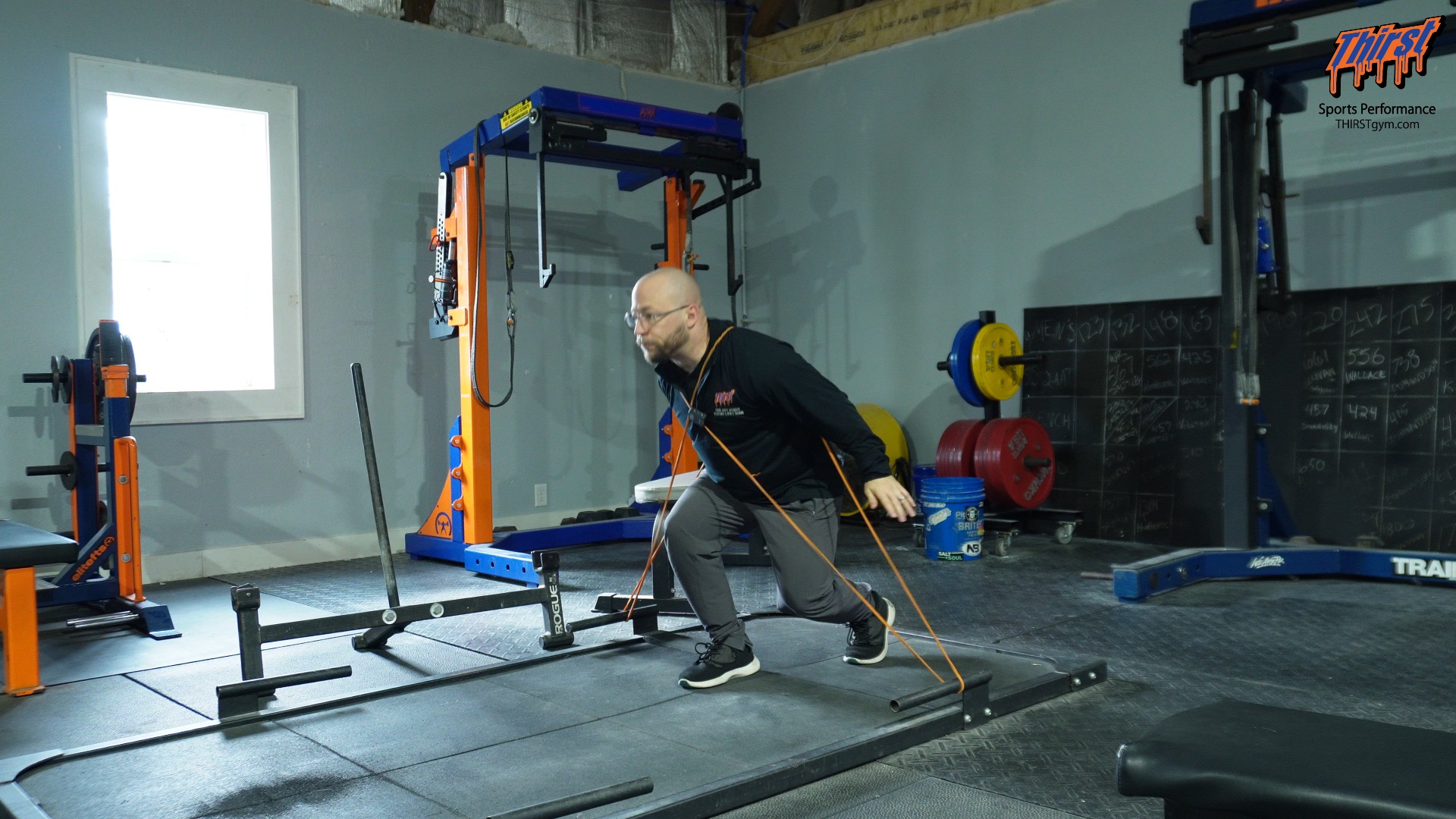
To perform the band resisted split stance vertical jump, you’ll need two resistance bands with relatively light tension. The setup can be configured using either a deadlift platform with band peg attachments or a standard power rack. For the power rack setup, choke the bands to the bottom anchoring points on either side of the rack. The deadlift platform with band pegs offers easier entry and exit from the bands, making it the preferred option when available.
Once your anchoring station is established, thread one band over your shoulder on the same side as the anchor point, then bring the opposite band across to the other shoulder. This creates an X-pattern across your torso that keeps the bands secured to your body throughout the jumping motion, preventing them from sliding off during explosive movements while distributing the resistance evenly across your upper body.
Proper Body Position and Movement Mechanics
The starting position for this exercise replicates a split stance similar to the bottom position of a lunge, though you’ll never actually descend to that full lunge depth during the jumping motion. Position your feet in a staggered stance with adequate space between your front and rear foot, maintaining an athletic posture that keeps your hips higher than your knees throughout the movement.
This hip positioning is critical for maximizing power production and maintaining the exercise’s plyometric intent. Unlike a traditional lunge where you sink deep into hip and knee flexion, the band resisted split stance jump keeps you in what’s often called a “power position”—the same athletic stance you’d adopt when preparing to explode into a sprint or jump in competitive settings.
Training Variations: Dead Stop vs. Reactive Execution
The band resisted split stance vertical jump can be performed using two distinct methods, each offering unique training benefits. The dead stop approach involves coming to a complete pause at the bottom of each repetition before explosively jumping as high as possible against the band tension. This variation emphasizes pure concentric power production and eliminates the contribution of elastic energy storage, making it excellent for developing raw explosive strength from static positions.
The reactive variation transforms the exercise into a continuous movement pattern where you immediately transition from landing back into the next jump without pausing. As soon as your feet contact the ground, you drive back up into maximum vertical displacement. This method maximizes the stretch-shortening cycle by utilizing the elastic energy stored in your tendons and muscles during the eccentric landing phase, then rapidly releasing that energy during the subsequent concentric jump phase.
The Science Behind Band Resistance and Athletic Performance
The band resistance component creates what’s known as overspeed eccentric loading—the bands are constantly pulling downward, which accelerates your descent and increases the speed of the eccentric phase beyond what gravity alone would produce. This enhanced eccentric velocity places greater demands on your muscles and tendons to decelerate and control the landing, which subsequently improves your body’s ability to generate force rapidly during the concentric phase.
This training effect directly enhances tendon stiffness and elasticity, which are critical mechanical properties for explosive athletic movements. Stiffer tendons act like powerful springs, storing and releasing energy more efficiently during activities like sprinting, jumping, cutting, and bounding. The stretch-shortening cycle development from this exercise translates directly to improved performance in single-leg athletic actions including unilateral jumping, hurdle clearance, sprint mechanics, and change-of-direction movements.
Single-Leg Power Development and Athletic Transfer
Training power and explosiveness from a split stance or single-leg position offers significant advantages over bilateral jumping variations for athletic development. Most sporting movements occur with asymmetrical loading patterns or involve propulsion from one leg, making unilateral power training highly specific to competitive demands. The band resisted split stance vertical jump isolates the front leg as the primary driver of force production while still engaging the rear leg for stability and assistance.
This exercise specifically targets the neuromuscular qualities needed for acceleration mechanics, where each stride involves a brief ground contact with substantial force production from a single leg. Similarly, athletes who must jump off one leg for layups, contested catches, or hurdle clearance will find direct carryover from this training modality. The split stance position also helps identify and address strength or power asymmetries between legs, allowing coaches and athletes to ensure balanced development.
Optimal Band Selection and Resistance Progression
While it might seem intuitive to use heavy band resistance for a power exercise, lighter bands actually provide the most appropriate training stimulus for the band resisted split stance vertical jump. The bands don’t need to provide significant resistance—their primary function is to accelerate the eccentric phase and create the overspeed effect that enhances the stretch-shortening cycle.
Most athletes will find success using the lightest bands available in their training facility. Exceptionally powerful athletes with extensive plyometric training backgrounds might progress to slightly heavier resistance, but the emphasis should always remain on maximizing jump height and maintaining explosive intent rather than simply increasing resistance load. The accommodating resistance from the bands naturally increases as you ascend higher in the jump, providing more resistance at the top range where you’re mechanically strongest.
Programming Recommendations and Training Integration
As a power-based plyometric exercise, the band resisted split stance vertical jump should be programmed with volume and rest periods that prioritize movement quality and maximum effort. An effective programming approach involves performing three to five sets of three to five repetitions per leg with complete rest between sets. This relatively low volume with adequate recovery ensures each repetition maintains the explosive velocity and neuromuscular freshness necessary for optimal power development.
This exercise fits best early in training sessions when the nervous system is fresh and fatigue hasn’t compromised explosive capabilities. Plyometric work generally precedes strength training in periodized programs, and power exercises should always come before high-volume or fatiguing movements that could diminish force production capacity.
The band resisted split stance vertical jump serves as an excellent progression from basic plyometric exercises like broad jumps or box jumps, introducing accommodating resistance and unilateral loading while building the reactive strength qualities that separate good athletes from elite performers. Whether you’re training for improved sprint speed, jumping ability, or general athletic explosiveness, this exercise delivers targeted adaptations that translate directly to competitive performance.