
The Complete Guide to Box Jump Progressions: From Beginner to Advanced Athlete
Box jumps represent one of the most widely utilized plyometric exercises in athletic performance training, yet they’re also one of the most frequently butchered movements you’ll encounter in gyms and training facilities. Despite their apparent simplicity, proper box jump execution requires precise technique, progressive programming, and a thorough understanding of the biomechanical principles that make them effective for developing explosive power. Whether you’re a complete beginner looking to improve general athleticism or an advanced athlete seeking to maximize rate of force development and reactive strength, understanding how to properly progress box jump variations can dramatically enhance your training outcomes and reduce injury risk.
The challenge with box jumps lies not in their complexity but in the widespread misconceptions about what constitutes effective execution. Too often, athletes focus exclusively on achieving maximum box height without regard for landing mechanics, force production quality, or the systematic progression necessary to build genuine explosive power. This misguided approach not only limits performance gains but also increases the likelihood of developing poor movement patterns that can negatively impact other aspects of athletic training. By implementing a structured progression system that emphasizes technical mastery alongside intensity increases, athletes can harness the full potential of box jump training while building a foundation for long-term athletic development.
You can also watch the video below that goes along with this article.
Understanding the Athletic Value of Box Jump Training
Box jumps develop three critical components that translate directly to improved performance across virtually every athletic endeavor. The first of these is reactive strength, which represents your body’s ability to rapidly transition from eccentric to concentric muscle actions. This quality proves essential for movements requiring quick changes of direction, immediate force redirection upon ground contact, and the ability to generate power with minimal ground contact time. Athletes who develop superior reactive strength through properly executed plyometric training demonstrate enhanced performance in sprinting acceleration, cutting movements, and explosive actions like jumping and throwing.
The second critical component is rate of force development, often abbreviated as RFD in strength and conditioning literature. This represents how quickly you can generate maximal force from a resting or low-force state. In practical athletic terms, rate of force development determines how explosively you can initiate movement, which directly impacts your ability to create separation in competitive situations, accelerate quickly from static positions, and generate power in time-constrained scenarios. Box jumps, when performed with maximal intent and proper rest intervals, train the neuromuscular system to recruit muscle fibers rapidly and coordinate force production efficiently.
The third component involves the overall coordination of athletic movement patterns, specifically the synchronization of triple extension at the hips, knees, and ankles. This coordinated extension pattern appears in virtually every explosive athletic movement, from vertical jumping and sprinting to Olympic weightlifting derivatives and sport-specific power actions. By repeatedly practicing this fundamental movement pattern under various conditions and intensity levels, athletes develop more refined motor control and improved intermuscular coordination that transfers readily to sport performance.
Beyond these primary benefits, box jumps serve additional valuable functions within comprehensive training programs. They can function as effective neural activation tools when performed before heavy strength training, helping to prime the nervous system for maximal force production through post-activation potentiation mechanisms. They also provide useful readiness assessment opportunities, as day-to-day variations in box jump performance can indicate whether an athlete is adequately recovered for high-intensity training or experiencing residual fatigue from previous sessions.
Establishing Proper Box Jump Mechanics and Starting Position
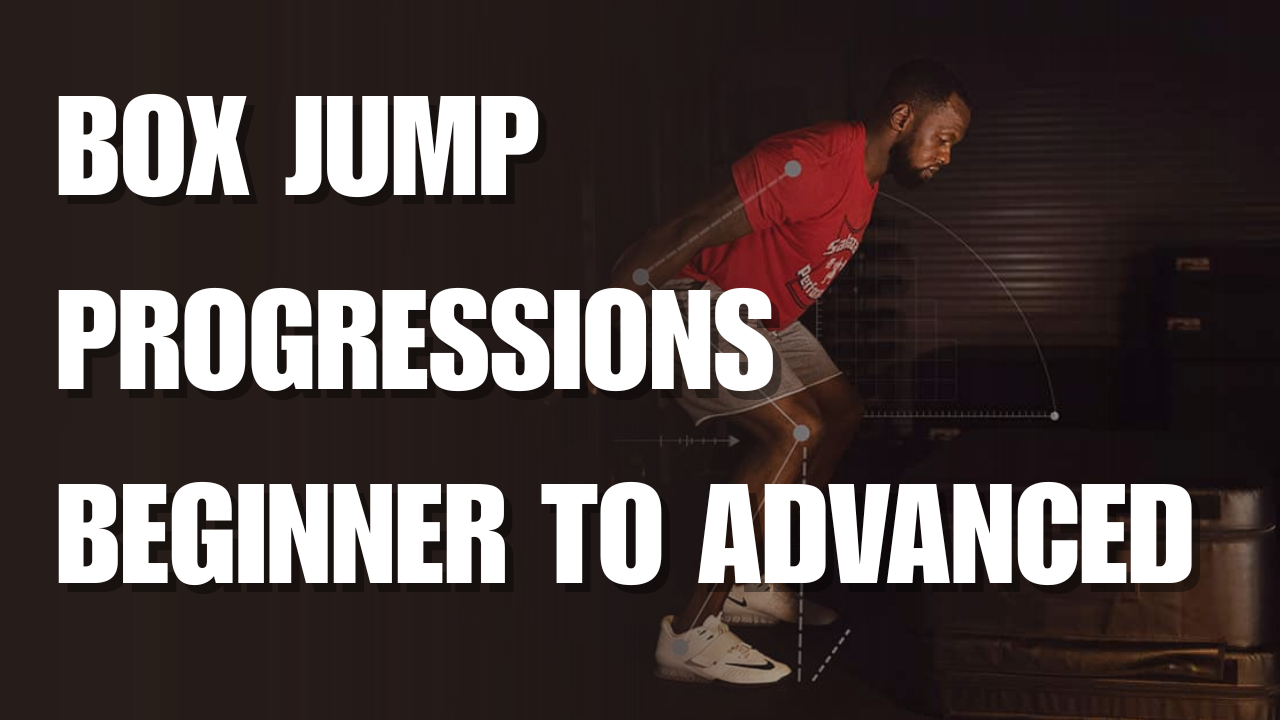
Before attempting any progressive box jump variations, athletes must first establish proper fundamental mechanics that will carry through all subsequent progressions. The starting position for box jumps requires what’s commonly called an athletic stance, with feet positioned slightly wider than hip width apart. This stance width allows for optimal force production through the ground while maintaining balance and control throughout the movement. Your knees should maintain a slight bend rather than locking completely straight, and your hips should track slightly backward to engage the posterior chain musculature that will drive the explosive jumping action.
The arm position in the starting stance often gets overlooked, but proper arm mechanics contribute substantially to overall jump height and power output. Before initiating the jump, your arms should be positioned overhead or slightly in front of your body at approximately shoulder height. This elevated arm position creates a longer range of motion for the subsequent arm drive that will assist in generating upward momentum. Many beginners fail to recognize that arm action can contribute ten to fifteen percent of total jump height, making proper arm mechanics a crucial technical element rather than an optional consideration.
The descent phase that precedes the actual jump demands particular attention to hip hinge mechanics rather than traditional squatting patterns. As you prepare to jump, your hips should move backward while your chest remains relatively upright, creating a loaded position in your glutes and hamstrings. This hip hinge pattern differs fundamentally from simply squatting down, which loads the quadriceps predominantly and fails to optimally engage the powerful posterior chain muscles. Simultaneously with this hip hinge, your arms should drive downward and backward, creating a stretch reflex in your shoulders and upper body that will enhance the subsequent upward arm drive.
The actual jumping phase involves explosive triple extension of the hips, knees, and ankles executed simultaneously with a powerful upward arm drive. This coordinated effort should feel like you’re trying to push the ground away from you with maximal force while simultaneously driving your arms overhead as violently as possible. The goal isn’t simply to lift your feet high enough to clear the box but rather to generate maximum force through the ground, propelling your entire body upward with genuine explosive intent. Understanding this distinction proves crucial because genuine power development comes from force production quality, not merely from tucking your knees high enough to clear progressively taller boxes.
Landing mechanics deserve equal attention to takeoff mechanics, as poor landing patterns can negate training benefits and increase injury risk. When landing on the box, you should aim to touch down in an athletic position with your feet slightly wider than your starting stance, hips positioned above knee height, and your chest maintaining an upright position. The landing should feel controlled and relatively quiet, indicating proper force absorption through controlled eccentric muscle action rather than jarring impact. Athletes who land with completely straight legs or in deeply flexed positions with their chest collapsed forward have either misjudged appropriate box height or developed compensatory movement patterns that require correction.
Assessment Protocols for Determining Starting Box Height
Before beginning any systematic box jump progression, athletes benefit from establishing a baseline measurement of their current jumping ability. This assessment should balance the desire to determine maximum capability with the need to maintain proper technical standards that will carry forward into training. To conduct this assessment, select a box height that you believe challenges your ability without requiring extreme compromises in landing position or technique. The goal is to identify the highest box you can clear while still landing in a proper athletic stance with hips above knees, chest upright, and feet contacting the box surface fully rather than just catching the edge with your toes.
During this assessment, pay particular attention to your landing position quality rather than simply measuring absolute height cleared. Landing in an excessively deep squat position with your chest collapsed forward and your weight pitched onto your toes might allow you to claim a higher box height, but this position fails to represent genuine athletic capability and creates a poor baseline for measuring actual improvement. Instead, use landing quality as a governing factor in determining your true maximum box height. If you can’t land in a position from which you could immediately execute another athletic movement, the box height exceeds your current controlled jumping ability.
Common assessment errors include starting with feet positioned too wide or too narrow, which compromises force production efficiency from the outset. Your assessment attempts should utilize the same athletic stance width you’ll employ during training, ensuring consistency between your baseline measurement and subsequent progression tracking. Another frequent mistake involves inconsistent arm action during assessment attempts, with some athletes using full arm drive on certain jumps while neglecting arm mechanics on others. Standardize your arm action during assessment to ensure your baseline measurement accurately reflects your jumping capacity when using proper technique.
The box height you establish during this assessment serves multiple purposes beyond simply satisfying curiosity about your current ability. This measurement provides a reference point for calculating appropriate training loads across the beginner progression, typically starting at fifty to seventy percent of maximum height for technical practice. It also offers a metric for tracking improvement over training cycles, allowing you to objectively measure whether your plyometric training is producing desired adaptations. Finally, it helps identify potential technical limitations or strength deficits if you notice significant discrepancies between your assessed jumping ability and what you’d expect based on your general strength levels or athletic background.
Beginner Box Jump Progressions and Technical Development
For athletes new to plyometric training or those with limited jumping experience, the initial progression phase focuses exclusively on technical mastery rather than intensity maximization. Begin with a box height set between fifty and seventy percent of your assessed maximum, creating a comfortable margin for error that allows you to concentrate on movement quality rather than struggling to clear the height. This reduced height enables you to accumulate sufficient practice repetitions to ingrain proper mechanics without the mental pressure or physical fatigue that comes from constantly working at or near maximum capacity.
The fundamental technical elements to emphasize during this beginner phase include the proper hip hinge pattern during the descent, coordinated arm action that synchronizes with lower body movement, and controlled landing mechanics that position you in an athletic stance. Each repetition should look virtually identical to the previous one, with consistent stance width, arm positioning, descent depth, and landing position. This consistency in execution represents the primary training goal during the beginner phase, taking precedence over any desire to rapidly increase box height or training volume.
Programming for beginner box jump training typically involves three to six sets of five to six repetitions, performed with complete rest intervals between sets to ensure each repetition receives maximal attention and effort despite the submaximal height. The relatively higher repetition range compared to advanced plyometric protocols reflects the lower nervous system demand of submaximal jumping and the need for sufficient practice volume to develop technical competency. As you perform these sets, maintain unwavering focus on the fundamental movement pattern, treating each repetition as deliberate practice rather than simply going through the motions.
After establishing consistent technical execution at the initial reduced height, begin incrementally increasing box height while simultaneously reducing repetition counts. Appropriate progression involves adding two to four inches of box height every two to three weeks, provided you’ve maintained proper technique at the previous height and feel confident in your execution. As the box height increases and approaches your maximum tested height, reduce repetitions from five to six down to three to four per set. This inverse relationship between intensity and volume reflects a fundamental principle of plyometric training: as the demand on the neuromuscular system increases through greater height requirements, you must reduce repetition counts to maintain quality and avoid fatigue-induced technical breakdowns.
Throughout this progression, nothing about your movement mechanics should change except the height you’re clearing. The stance width, arm action, hip hinge depth, and landing position should remain consistent whether you’re jumping onto a twenty-inch box or a thirty-six-inch box. If increasing box height forces you to alter your mechanics, tuck your knees excessively, or land in compromised positions, the height exceeds your current ability and should be reduced until you can execute proper technique. This disciplined approach to progression might feel slow compared to simply chasing maximum height, but it builds genuine jumping ability that transfers to athletic performance rather than merely developing compensatory movement patterns.
Common Technical Errors in Beginner Box Jump Execution
The most prevalent technical error among beginning athletes involves using a squat pattern rather than a hip hinge during the descent phase before the jump. When athletes squat straight down, they position their knees far forward over their toes while keeping their torso relatively upright, which predominantly loads the quadriceps and fails to engage the powerful glutes and hamstrings effectively. In contrast, proper hip hinge mechanics involve pushing the hips backward while maintaining a relatively upright chest position, creating stretch and tension in the posterior chain muscles. This loaded position in the glutes and hamstrings proves far more effective for generating explosive power because these larger muscle groups can produce greater force and activate the stretch-shortening cycle more efficiently.
The biomechanical advantage of the hip hinge pattern extends beyond simple muscle group recruitment. When you hinge at the hips rather than squatting, you create elastic energy storage in the stretched posterior chain muscles and connective tissues. As you explosively reverse this downward movement into the upward jump, this stored elastic energy contributes to force production through the stretch-shortening cycle, effectively amplifying your muscular force output. Athletes who squat straight down without this hip hinge miss this elastic contribution, forcing them to rely exclusively on concentric muscle contraction to generate upward force. This not only reduces jump height but also fails to develop the reactive strength qualities that make plyometric training valuable for athletic performance.
The second major technical error involves improper arm action or complete neglect of arm mechanics during the jump. Some beginners successfully execute the hip hinge pattern but fail to coordinate their arm movement with their lower body action, keeping their arms stationary or driving them downward as they extend their hips to jump. Others might bring their arms down during the descent phase but then fail to drive them upward with maximal effort during the actual jump, missing the significant contribution that proper arm drive provides. The correct pattern involves driving the arms downward and backward simultaneously with the hip hinge, then explosively driving them upward as you extend through the hips, knees, and ankles.
The contribution of proper arm action to jump height cannot be overstated, particularly for developing athletes. Research consistently demonstrates that coordinated arm drive can increase vertical jump height by ten to fifteen percent compared to jumping with hands on hips or with poor arm mechanics. This improvement comes from multiple mechanisms: the upward arm drive contributes additional momentum to the system, the shoulder muscles generate additional upward force, and the timing of arm movement can enhance overall coordination and sequencing of the jumping pattern. For beginners especially, focusing on aggressive, coordinated arm drive often produces immediate improvements in jump height and helps ingrain better overall movement mechanics.
Intermediate Box Jump Variations for Enhanced Athletic Development
Once athletes have mastered fundamental box jump mechanics and can consistently execute proper technique across a range of box heights, introducing variation through different jumping patterns challenges the neuromuscular system in new ways while continuing to develop explosive power. The first valuable variation involves lateral box jumps, where you position yourself sideways relative to the box rather than facing it directly. This orientation requires you to generate force in a different plane of movement while maintaining the same fundamental mechanics of proper arm action, hip hinge, and controlled landing.
Lateral box jumps develop several qualities that traditional forward-facing box jumps don’t emphasize as strongly. They require greater lateral stability through the hips and core musculature to control side-to-side movement, challenge single-leg strength more significantly due to asymmetrical loading during takeoff and landing, and develop coordination in the frontal plane that transfers well to sports requiring lateral movement and cutting. When performing lateral box jumps, maintain all the same technical standards that apply to regular box jumps: proper stance width, coordinated arm drive, hip hinge loading pattern, and athletic landing position with hips above knees and chest upright.
The second intermediate variation adds a rotational component to the traditional box jump. Start by positioning yourself sideways to the box as you would for a lateral jump, but instead of landing while still facing sideways, rotate your body ninety degrees during flight so you land facing forward on the box. This rotational element increases the coordination demand substantially and develops rotational power that proves valuable for athletes in sports requiring twisting, turning, and multidirectional movement. The rotation should occur smoothly during the flight phase rather than being forced or jerky, and you should still land in proper athletic position despite the added complexity of the rotational component.
The third intermediate variation involves transitioning from bilateral takeoff to single-leg landing. Execute the initial jump using both legs exactly as you would for a standard box jump, but during flight, lift one leg so that you land exclusively on one limb. This variation maintains the power production benefits of bilateral jumping while dramatically increasing the landing demands on the stabilizing leg. The single-leg landing requires greater ankle stability, knee control, and hip stability to absorb landing forces safely and maintain proper alignment. Start this variation with significantly reduced box height compared to bilateral landing variations, as the single-leg landing substantially increases difficulty and injury risk if attempted at excessive heights.
When programming these intermediate variations, apply the same principles that govern beginner progressions: start with reduced heights to establish proper technique, progressively increase height as competency improves, and maintain relatively low repetition counts of three to five repetitions per set to ensure quality execution. Perform three to five total sets depending on overall training volume and recovery capacity. For variations involving lateral or rotational elements, perform equal work on both sides to maintain balanced development and prevent creating side-to-side asymmetries in power production or movement competency.
Advanced Plyometric Progressions Using Depth Drops
For athletes who have mastered fundamental and intermediate box jump variations, depth drop progressions represent the next level of plyometric training intensity and nervous system demand. Depth drops involve stepping off an elevated platform, contacting the ground, and immediately redirecting that downward force into an explosive upward jump onto a second box. The key distinguishing feature of depth drops compared to simpler box jump variations is the eccentric loading created by stepping off a box higher than your normal vertical jump height, which creates a training stimulus that you cannot replicate through ordinary jumping movements.
The value of depth drop training lies in its ability to develop the stretch-shortening cycle more effectively than standard plyometrics. When you step off a box positioned above your normal jump height, you expose your muscles and connective tissues to eccentric forces greater than they experience during typical athletic movements. This increased eccentric load, when properly controlled and immediately redirected into concentric force production, trains your neuromuscular system to store and release elastic energy more efficiently. The result is improved reactive strength, faster force development, and enhanced springiness that translates directly to improved athletic performance in activities requiring rapid force production.
Proper depth drop execution requires stepping off the initial box rather than jumping off, ensuring you don’t generate additional downward velocity that would increase impact forces beyond what you can safely control. Upon ground contact, your goal is to minimize ground contact time while maintaining proper body position, immediately redirecting the downward force into an explosive jump onto the second box. Think of the ground as being extremely hot and attempt to spend as little time in contact with it as possible. However, this quick ground contact must not come at the expense of proper mechanics. If you find yourself absorbing the landing with excessive knee or hip flexion, dropping your chest forward, or struggling to redirect force effectively, the depth drop box height exceeds your current eccentric strength capacity.
The selection of appropriate depth drop height represents a critical programming consideration that dramatically affects training outcomes and injury risk. Begin with a drop height approximately equal to or slightly above your vertical jump measurement, which ensures you’re providing a genuinely supramaximal eccentric stimulus without exceeding your ability to control and redirect forces. As your eccentric strength and reactive ability improve, you can progressively increase the depth drop height, but these increases should occur gradually and only when you can consistently demonstrate proper mechanics at the current height. Excessive depth drop heights that force you into deep landing positions or prevent rapid force redirection defeat the purpose of the exercise and shift the training stimulus away from reactive strength development toward simple eccentric strength work.
An alternative advanced plyometric progression involves hurdle hop variations, where you jump over a series of hurdles or other obstacles before landing and immediately jumping onto a box. This variation develops the stretch-shortening cycle through repeated ground contacts rather than single high-intensity contacts as with depth drops. Hurdle hops emphasize horizontal force production and rapid ground contact cycling, making them particularly valuable for athletes in sports requiring repeated explosive movements like basketball, soccer, or track and field events. Programming for hurdle hop variations typically involves two to four hurdles followed by a box jump, performed for two to three repetitions per set with extended rest intervals.
When programming advanced plyometric work including depth drops and hurdle hop variations, maintain strict limits on repetition counts due to the high nervous system demand these exercises impose. Two to three repetitions per set represents an appropriate range for most athletes, particularly when working with challenging depth drop heights. The high intensity of these movements means that additional repetitions beyond this range typically occur in a fatigued state where force production quality degrades and injury risk increases. Focus on maximizing the quality of each individual repetition rather than accumulating high training volumes.
Programming Guidelines for Maximizing Box Jump Training Benefits
Effective box jump programming requires understanding several key principles that distinguish plyometric training from traditional strength work. The first and most important principle involves maintaining relatively low repetition counts compared to strength training exercises. Box jumps and other plyometric movements demand maximal or near-maximal effort on each repetition to develop explosive power and rate of force development. Performing sets of ten, twelve, or fifteen repetitions might feel challenging from a cardiovascular or muscular endurance perspective, but these high repetition schemes transform plyometric training into conditioning work rather than genuine power development.
The appropriate repetition range for box jump training varies based on intensity level and training goal. Beginner athletes working at submaximal heights can effectively utilize five to six repetitions per set while maintaining quality execution and sufficient effort. Intermediate athletes working with challenging heights should reduce repetitions to three to five per set. Advanced athletes performing high-intensity variations like depth drops should limit repetitions to two to three per set. These reduced repetition counts ensure that each jump receives maximal effort and attention without the quality degradation that occurs under accumulated fatigue.
Rest intervals between sets represent another critical programming variable that many athletes neglect or misunderstand. Box jump training requires complete or near-complete recovery between sets to ensure the nervous system can fully activate muscle fibers and coordinate force production optimally. Minimum rest intervals should be at least sixty seconds between sets, with two to three minutes representing a more ideal target for higher-intensity variations. This extended rest might feel counterintuitive if you’re accustomed to traditional strength training tempos or circuit-style conditioning work, but it proves essential for maximizing the power development benefits that justify including plyometric work in your program.
During these rest intervals, you have several options beyond simply standing idle. Pairing box jumps with active mobility drills allows you to use recovery time productively while ensuring adequate nervous system recovery for subsequent jumping sets. Appropriate mobility work during these intervals might include hip flexor stretches, ankle mobility drills, or thoracic spine rotation work. Alternatively, you can pair box jumps with upper body strength exercises that don’t interfere with lower body recovery, such as rowing variations, pull-up progressions, or core stability exercises.
The placement of box jump training within your overall workout structure significantly impacts both the quality of plyometric work and the effectiveness of subsequent training. Box jumps and other plyometric exercises should always occur at the beginning of training sessions when you’re mentally fresh and physically recovered. Performing plyometric work after heavy squats, deadlifts, or other fatiguing lower body exercises compromises explosive power development through accumulated fatigue and increases injury risk when tired muscles and nervous systems attempt to generate maximal force. The only exception to this sequencing guideline involves deliberate use of post-activation potentiation protocols, which we’ll address in the next section.
Advanced Programming Concepts: Post-Activation Potentiation and Contrast Training
Post-activation potentiation represents a sophisticated programming strategy that intermediate to advanced athletes can utilize to enhance box jump performance and develop explosive power more effectively. This physiological phenomenon occurs when a heavy strength exercise temporarily increases the nervous system’s excitability and muscle contractile properties, creating a window of enhanced power production capacity lasting approximately three to twelve minutes after the strength exercise concludes. By strategically pairing heavy strength work with explosive plyometric exercises during this potentiation window, athletes can perform box jumps with enhanced power output compared to performing them in isolation.
A typical post-activation potentiation protocol involves performing a heavy strength exercise like back squats, front squats, or deadlift variations for three to five repetitions at eighty-five to ninety-five percent of maximum, resting for three to five minutes to allow the potentiation effect to develop while acute fatigue dissipates, then performing box jumps or other plyometric work during the enhanced power production window. The strength exercise must be sufficiently heavy to create the potentiation effect but not so heavy or voluminous that residual fatigue overwhelms the potentiation benefit. Finding this balance requires experimentation and individual assessment, as the optimal loading and rest interval varies between athletes based on training experience, strength levels, and individual response characteristics.
Contrast training represents a related but distinct programming approach that alternates between heavy strength exercises and explosive power movements within the same training session. A basic contrast training setup might involve performing a heavy squat variation followed immediately or after brief rest by box jumps, then repeating this pairing for multiple sets. More complex contrast protocols might incorporate additional intensity variations such as weighted jumps, band-resisted jumps, or other loading strategies between the heavy strength work and bodyweight plyometrics. These graduated intensity levels create a contrast effect that enhances nervous system recruitment and power production.
Both post-activation potentiation and contrast training methods should be reserved for intermediate to advanced athletes who have established solid technical proficiency in both strength and plyometric exercises. Beginner athletes attempting these advanced programming strategies often lack the technical competency to maintain proper execution under the complex loading schemes these methods require, and they can achieve excellent progress through simpler programming approaches that focus exclusively on technical mastery and progressive overload. As athletes advance and basic progressions become less effective at driving adaptation, these more sophisticated programming strategies provide additional tools for continued development.
When implementing post-activation potentiation or contrast training, monitor your box jump performance carefully to verify that the programming strategy is producing the intended enhancement effect. You should notice subjectively that jumps feel more explosive and powerful during the potentiation window, and objective measurements of jump height should increase compared to performing box jumps without prior potentiation. If you don’t observe these improvements, you may need to adjust the strength exercise loading, the rest interval between strength and plyometric work, or your overall training volume to better balance potentiation and fatigue effects.
Integrating Box Jumps into Comprehensive Athletic Development Programs
Box jumps represent just one component of complete athletic development programs, and their integration with other training elements requires thoughtful consideration to maximize benefits while managing cumulative fatigue. In general training program structures, box jump work typically occurs two to three times per week, providing sufficient frequency to develop explosive power and movement competency without creating excessive nervous system fatigue that would compromise other training goals. More frequent plyometric work risks overtraining the nervous system and can lead to diminished performance in both jumping activities and complementary strength training.
The specific box jump variations you program should align with your current training phase and performance goals. During general preparation phases focused on building broad athletic capacity, you might emphasize fundamental box jump progressions that develop basic power and movement competency across multiple planes of movement. As you transition into more specific preparation phases targeting particular performance qualities, your box jump selection should become more specialized, potentially incorporating sport-specific variations like single-leg landings for field sport athletes or extensive depth drop progressions for athletes requiring maximum reactive strength.
Box jump training integrates particularly well with lower body strength training focused on developing the same muscle groups and movement patterns. Exercises like back squats, front squats, Romanian deadlifts, and various lunging variations all contribute to the strength qualities necessary for generating powerful box jumps while benefiting from the neurological adaptations that plyometric training creates. However, this integration requires careful management of total training volume and intensity to avoid excessive fatigue accumulation. If you notice declining box jump performance, excessive soreness, or difficulty recovering between training sessions, you may need to reduce overall training volume or adjust the balance between strength and plyometric work.
Beyond traditional athletic performance applications, box jumps serve valuable functions in general fitness programming for individuals seeking improved functional capacity, injury resilience, and movement competency. For these populations, the emphasis shifts away from maximum power development toward developing proper landing mechanics, building eccentric strength to absorb impact forces safely, and enhancing overall movement coordination. Lower box heights, higher relative repetitions compared to advanced athletes, and longer progression timelines all represent appropriate modifications that allow general fitness enthusiasts to capture the benefits of plyometric training while managing injury risk appropriately.
Conclusion: Building Long-Term Explosive Power Through Systematic Box Jump Progression
Developing genuine explosive power and athletic performance through box jump training requires patience, technical discipline, and commitment to systematic progression principles. The athletes who achieve the greatest benefits from plyometric work are those who resist the temptation to simply chase maximum box heights without regard for movement quality, who progressively challenge themselves through appropriate variations matched to their skill level, and who integrate box jump training intelligently within comprehensive athletic development programs. Whether you’re beginning your plyometric training journey or seeking to refine advanced techniques, maintaining focus on proper mechanics, appropriate progression, and intelligent programming will ensure that your box jump training delivers meaningful improvements in explosive power, reactive strength, and overall athletic performance.
Need help improving your athletic performance? Contact us to see how we can help you, or check out our remote coaching!