
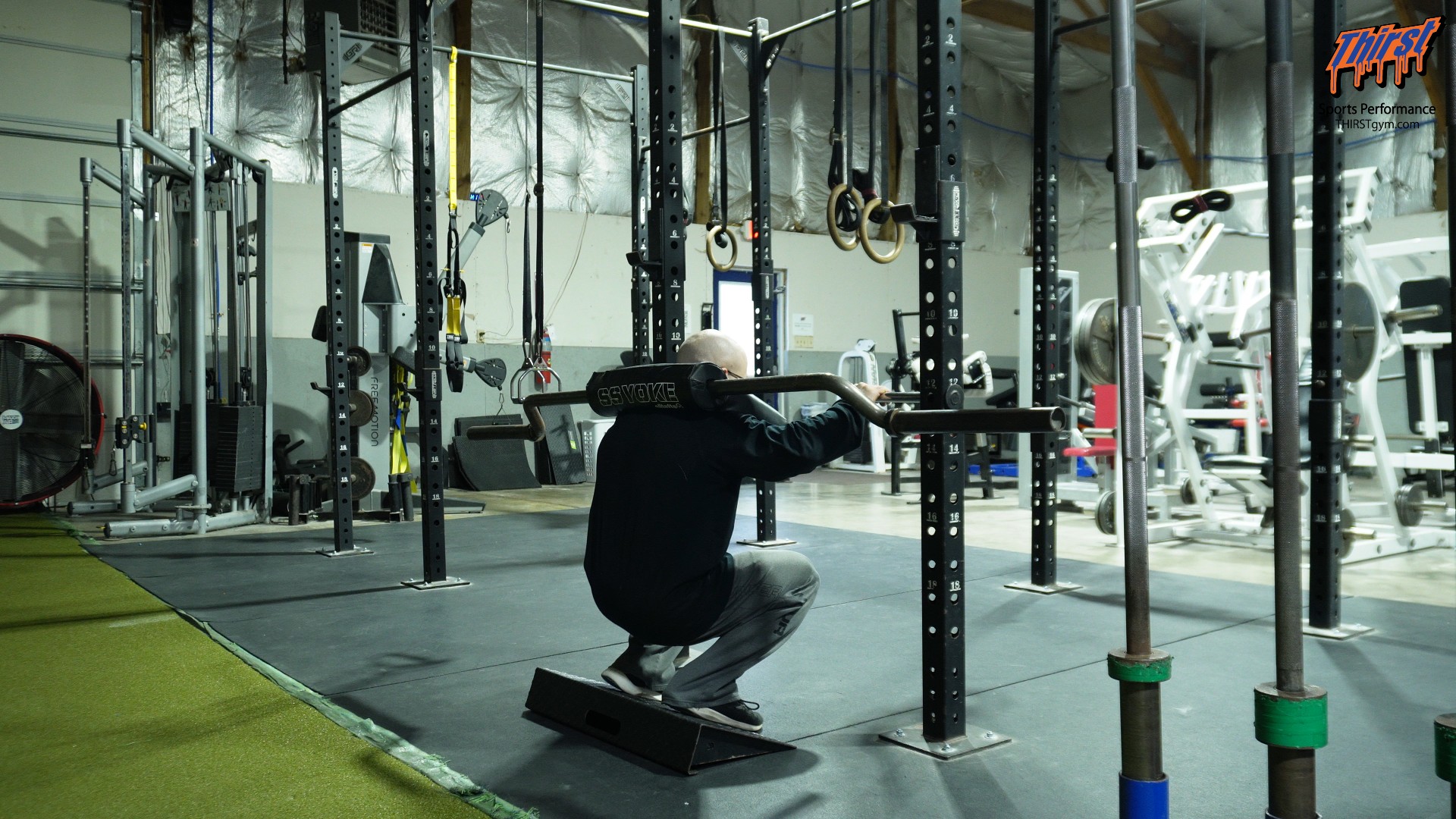
Heels Elevated Hatfield Squat: How to Do It, Muscles Worked, and Programming Tips
If you’re looking for a way to maximize quad development, address anterior pelvic tilt, or simply add a highly effective supplemental squat variation to your training, the heels elevated Hatfield squat deserves a spot in your program. This variation combines the stability benefits of the traditional Hatfield squat with an elevated heel position that shifts the movement into a more quad-dominant pattern — making it one of the most versatile squat tools available in a well-equipped gym.
Watch the video below on how to maximize this exercise.
Equipment You’ll Need
To perform the heels elevated Hatfield squat, you’ll need a safety squat bar set up in a power rack. For the heel elevation, a dedicated squat ramp is the preferred option, though 5- or 10-pound plates stacked flat or heeled lifting shoes will accomplish the same goal. For the Hatfield component — the hands-on support that defines the movement — band pegs built into your rig are an efficient and space-saving setup. Alternatively, you can place a barbell on the opposite side of the rack using a set of Jerry hooks to create a similar grip point. Some lifters set the support bar on the same side of the rack, though this can interfere with unracking the safety squat bar and is generally not the most practical approach.
Why Elevate the Heels?
The heel elevation is the key differentiator in this variation, and it’s not just a minor tweak. Raising the heels increases the range of forward knee travel, allowing you to stay more upright through the torso and load the quadriceps more directly throughout the range of motion. For athletes and lifters who struggle with anterior pelvic tilt or an anteriorly oriented pelvis, the elevated heel position also helps keep the pelvis tucked underneath the body more naturally, reducing the compensation patterns that often creep in during heavy squatting. In short, it cleans up mechanics while simultaneously increasing quad stimulus — a rare combination.
Muscles Worked
The heels elevated Hatfield squat is primarily a quad-dominant movement. The rectus femoris, vastus lateralis, vastus medialis, and vastus intermedius are all heavily targeted due to the upright torso position and increased knee flexion range promoted by the heel elevation. The glutes and adductors contribute as synergists, while the core musculature works to maintain rib cage positioning over the pelvis. Because the hands provide a degree of external stability, less demand is placed on the lower back and spinal erectors compared to a traditional barbell squat — making this an excellent option when you want to prioritize leg development without excessive axial loading stress.
How to Perform the Heels Elevated Hatfield Squat
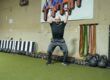
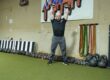
Begin by setting up the safety squat bar in your rack at the appropriate height. Position your ramp or heel elevation directly behind you in your squat stance zone. Step underneath the bar, grab the handles to unrack, and walk back so your heels are resting on the ramp. From here, take hold of your band pegs or support apparatus with a relaxed but controlled grip.
Set your stance slightly wider than hip width, keep your chest tall, and ensure your rib cage stays stacked over your pelvis throughout the movement. The safety squat bar should sit squarely on top of your traps — not tipping forward or backward. Avoid letting the handles point downward, which would indicate excessive forward lean, and resist the urge to let the bar flip off your back by going too upright.
From your starting position, descend into a squat to at least 90 degrees of knee flexion. With a proper ramp and good mobility, many lifters can comfortably reach below parallel in this variation. The hands on the support apparatus should provide just enough stability to help you stay organized — they are not there to pull or pry you out of the bottom. Drive through your feet to return to the starting position and repeat.
Programming the Heels Elevated Hatfield Squat
This exercise works best as a supplemental movement after your primary squat or deadlift work, though it can absolutely function as a main squat driver if that fits your training goals. For most lifters, two to four sets of five to ten repetitions is an effective range that allows for meaningful quad development without excessive fatigue.
One of the more underrated applications for this exercise is as a substitute for machine-based quad work. Not every gym has a quality leg press, belt squat, or leg extension. The heels elevated Hatfield squat fills that gap effectively — you can finish your primary barbell work, clip in a pair of band pegs, and immediately transition into focused quad-isolation work without leaving your rack. For athletes in wrestling, MMA, or other combat sports where quad strength and lower body durability matter enormously, this kind of efficient, targeted accessory work adds up quickly over a training cycle.
Whether your goal is building a bigger squat, improving quad mass, cleaning up movement quality, or working around limited equipment, the heels elevated Hatfield squat is a tool worth having in your arsenal. Give it a shot and leave any questions in the comments below.