
Kickstand Barbell RDL: How to Do It, Muscles Worked, and Programming Tips
The kickstand barbell RDL is one of the most underutilized accessory exercises for building serious glute and hamstring strength. If you’ve been looking for a way to bridge the gap between bilateral and true single-leg hinging, this variation deserves a spot in your training program. It gives you the loading potential of a standard barbell RDL while allowing you to emphasize one leg at a time — making it an excellent tool for addressing strength imbalances, developing eccentric hamstring control, and building the posterior chain strength that carries over to everything from powerlifting to athletic performance.
Watch the video below on how to maximize this exercise.
What Is the Kickstand Barbell RDL?
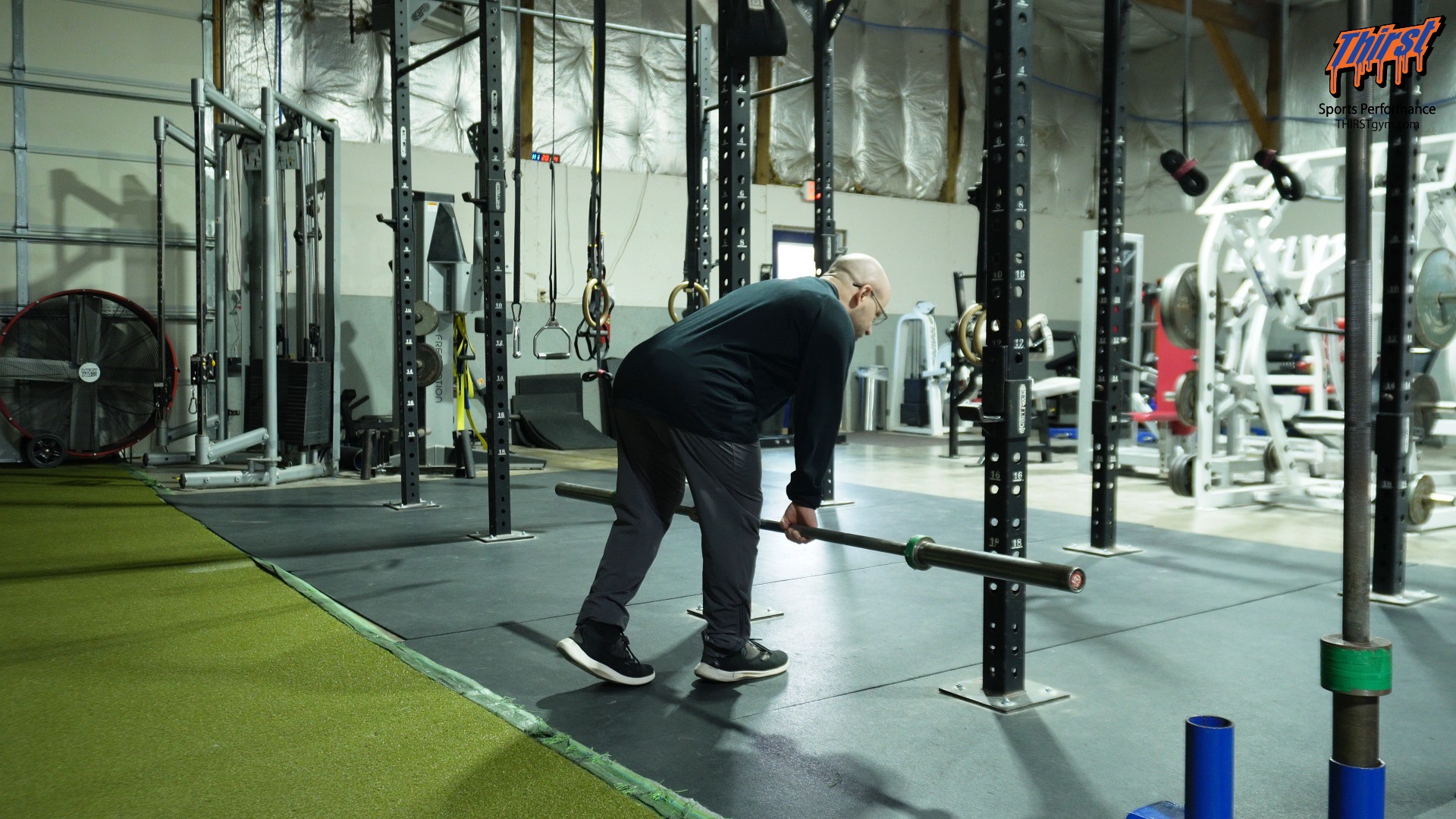
The kickstand barbell RDL is a hinge-based accessory exercise performed with a barbell. Unlike a traditional bilateral RDL where both feet are planted equally, the kickstand stance uses one leg as the primary working leg while the opposite foot serves as a stability point positioned at the heel of the lead foot. Think of that back leg as a “kickstand” — it’s there to keep you balanced, not to share the load. The goal is to place 90% or more of your weight through the front leg throughout the entire movement.
This setup makes the exercise far more accessible than a strict single-leg RDL while still delivering most of the same unilateral benefits. Because you have that extra contact point with the floor, you can load the barbell heavier than you typically could on a true single-leg variation without fighting for balance the entire set.
How to Perform the Kickstand Barbell RDL
Start by setting your barbell in a rack at roughly hip height. You can grip the bar double overhand, use a mixed grip for heavier loads, or throw on lifting straps if grip fatigue is going to become a limiting factor. If your primary goal is developing the glutes and hamstrings, don’t let your grip get in the way — use straps and keep the focus where it belongs.
Unrack the bar and take a few steps back from the rack. Set your stance with one foot forward flat on the floor and your opposite foot placed just behind it, aligned with the back of your lead foot and approximately hip-width apart. The back foot should be on the toes with a slight bend in the knee — it is there for balance only, not weight-bearing.
From this position, stand tall with a proud chest and neutral spine. Initiate the movement by driving your hips back, allowing the barbell to lower along your legs as you feel a deep stretch build through the glute and hamstring of your working leg. Control the descent, then drive your hips forward to return to the starting position. Complete all reps on one side before switching legs.
Muscles Worked
The kickstand barbell RDL primarily targets the hamstrings and glutes of the working leg, with particular emphasis on the eccentric loading phase as you push the hips back. The glute max and hamstrings are under significant stretch at the bottom of the movement, which is exactly where you want to develop strength and control for athletic performance and injury resilience. The lower back, adductors, and core also work as stabilizers throughout the lift.
Programming the Kickstand Barbell RDL
This exercise is best used as an accessory movement following your main compound lifts. Aim for two to four sets of five to ten repetitions per leg. Because the kickstand stance offers more stability than a traditional single-leg RDL, you can progressively load this exercise over time, making it a reliable option for building measurable strength in the posterior chain without the coordination demands of strictly unilateral work.
It fits well into lower body accessory blocks for powerlifters, strength athletes, and general fitness trainees alike. For athletes involved in wrestling, sprinting, or other sports requiring powerful hip extension, the eccentric emphasis of this movement makes it a particularly valuable addition.