
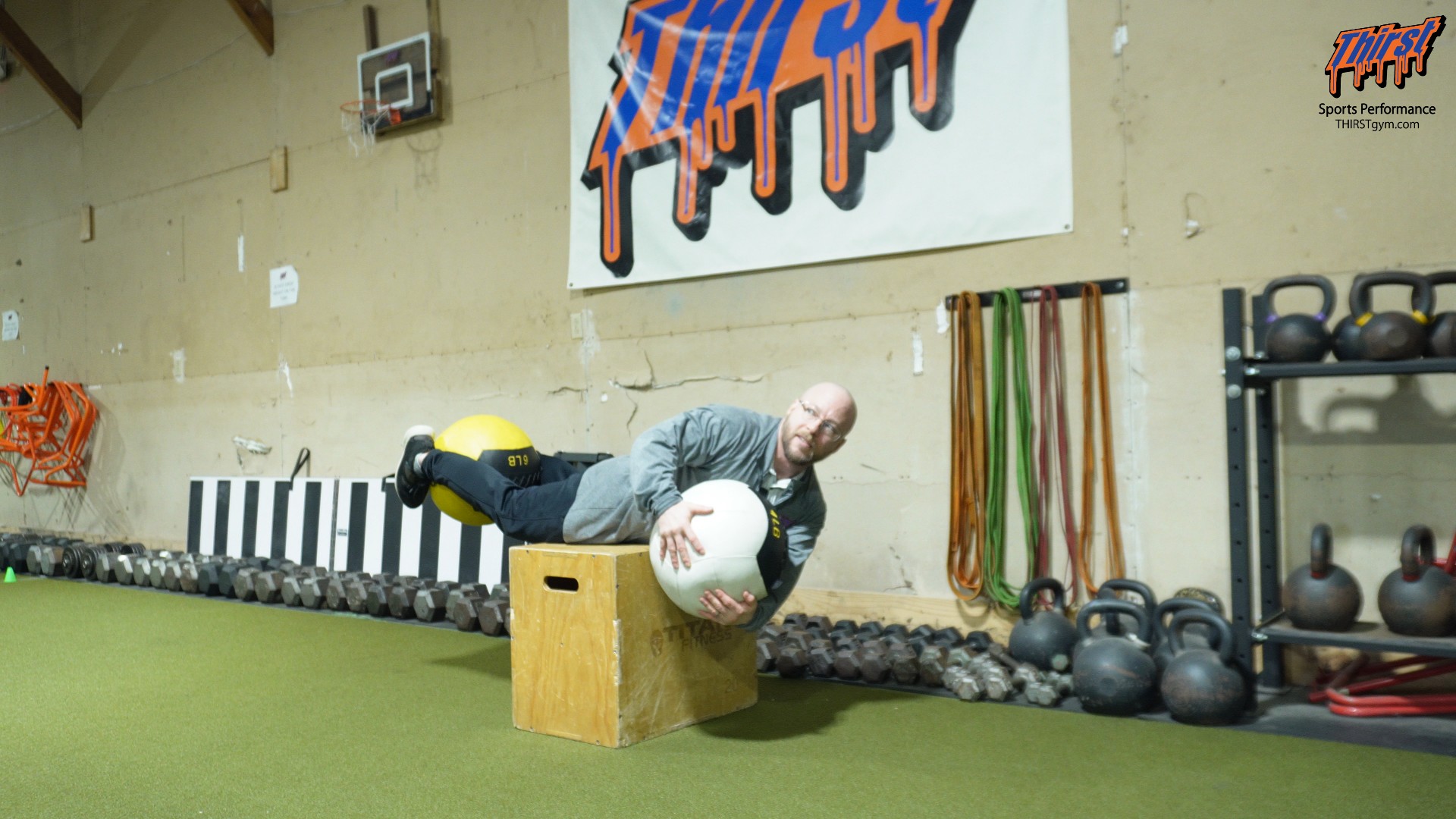
The Elevated Superman with Med Ball Rotation: Build a Stronger, More Resilient Lower Back
If you have ever finished a training session with a lower back that feels tight, cranky, or under-prepared for the work you just asked of it, the problem often is not strength in the traditional sense. It is a posterior chain that has not learned to brace, extend, and rotate under control at the same time. The elevated superman with med ball rotation is a deceptively simple exercise that trains all three of those qualities at once, and it has quickly become one of my favorite ways to prime the body before heavy lifting or conditioning work.
This is a low-impact, high-value movement that lights up the entire back side of the body while asking you to control rotation through the spine. It is friendly to people with lower back concerns, scalable for beginners and advanced athletes alike, and it requires almost no equipment. Below, I will walk you through exactly what it is, which muscles it targets, how to perform it correctly, the mistakes to avoid, and how to program it into your training.
Watch the video below on how to maximize this exercise.
What Is the Elevated Superman with Med Ball Rotation?
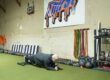
The elevated superman with med ball rotation is a variation of the classic superman back extension exercise, elevated on a plyometric box and loaded with two medicine balls. Instead of simply lying on the floor and lifting your arms and legs, you position your hips on top of a soft plyometric box so that your torso and legs can extend freely off either end. From there, you hold one medicine ball between your feet as a counterbalance and hug a second, lighter medicine ball to your chest. Once you are locked into that extended position, you rotate your upper body from side to side, twisting as far as your mobility comfortably allows.
The result is an exercise that combines an isometric hold for the posterior chain with dynamic rotation through the thoracic and lumbar spine. You are essentially teaching your glutes, hamstrings, and spinal muscles to maintain a strong, extended position while your trunk moves. That combination of “stay stiff here while you rotate there” is exactly the kind of coordination that transfers to real athletic movement and to a back that holds up under load.
Muscles Worked: A Full Posterior Chain Exercise
One of the reasons this movement earns a spot in a warm-up is how much of the body it recruits. It is a genuine posterior chain exercise, meaning it targets the muscles that run along the back of your body from your heels to the base of your skull.
The glutes and hamstrings work hard to maintain hip extension against the weight of the ball held between your feet. The erector spinae, the long muscles running up either side of your spine, contract isometrically to keep your torso lifted and extended. The multifidus, a set of smaller, deeper muscles that stabilize each segment of the spine, are heavily involved as you fight to hold position and control the rotation. Meanwhile, the obliques and the rest of the trunk musculature drive and decelerate the twisting motion.
Because you are holding the extended position while rotating, the posterior chain gets stronger isometrically, and the muscles responsible for spinal rotation and stabilization get trained through a controlled range of motion. You feel this most clearly right up and down the spine, from the lumbar region through the lower thoracic extension area, along with a deep burn in the lower back erectors and multifidus.
Equipment You Will Need
The beauty of this exercise is that the equipment list is short and forgiving. You will need two medicine balls and a plyometric box.
For the medicine balls, I recommend one relatively light ball and one that is light to moderate. In my own setup, I use a 4 lb ball at my chest and a 6 lb ball between my feet. The lighter ball is the one that does the majority of the work, since it is what you hug to your chest and rotate with. The heavier ball goes between your feet as a counterbalance, which serves two purposes: it makes it a little easier to stay balanced on the box, and it helps you lock in hip extension by giving your legs something to squeeze and press against. Feel free to adjust the weight of either ball as you get comfortable with the movement.
For the box, a softer plyometric box that is relatively thin tends to work best, because it is more comfortable against your hips and easier to balance on. Taller athletes can generally get away with a taller box, while shorter individuals will want to keep the box lower. If you do not own plyometric boxes or medicine balls, this is an easy area to build out, and quality options through EliteFTS hold up well to years of use.
How to Perform the Elevated Superman with Med Ball Rotation
Getting into position takes a moment of setup, but once you have it, the movement itself is straightforward.
Setting the Base
Start by placing the heavier medicine ball between your feet and squeezing it tight. Then lay yourself across the plyometric box so that your hips rest on top and your torso hangs off one side while your legs extend off the other. Squeezing that ball between your feet forces your legs to stay active and locks your hips into extension, which is the key to the entire exercise. You should feel your glutes and hamstrings switch on immediately as they work to hold your legs up against the counterbalance.
Loading the Upper Body
Once your lower half is set, pick up the lighter medicine ball and hold it snug against your chest, essentially hugging it. Lift your chest so that your lower back and torso are extended and you are holding a strong superman position, elevated on the box.
The Rotation
From this locked-in, extended position, rotate your upper body toward one side, twisting as far as you comfortably can while continuing to hug the ball. Return through center and rotate toward the other side, alternating back and forth. Throughout every repetition, keep your hips extended and your lower back long and strong. The lower body should stay quiet and stable while all of the movement comes from your trunk rotating over that fixed base.
Move with control rather than speed. This is not about how fast you can twist; it is about how far you can rotate while keeping everything behind you braced and extended.
Common Mistakes to Avoid
The most common error is letting the hips drop and the legs sag as fatigue sets in. The moment you stop squeezing the ball between your feet, you lose the hip extension that makes this exercise so effective, and the movement turns into a floppy twist with none of the posterior chain tension. Keep pressing into that ball the entire set.
A second mistake is rushing the rotation and using momentum to whip from side to side. That robs the smaller stabilizing muscles like the multifidus of the work they are supposed to be doing. Slow down and own each position.
Finally, do not force your rotation past what your mobility allows. You will almost always notice that one side is harder to rotate toward than the other. Rather than muscling into that stiff side, use it as feedback. Exhale as you reach your end range, pause, relax, and then see if you can ease a little further. Over time, that patient approach will improve your rotational range far more effectively than forcing it.
Why This Exercise Works
The magic of the elevated superman with med ball rotation lies in how many jobs it asks the body to do simultaneously. Holding the superman position on the box creates a demanding isometric contraction for the entire posterior chain. Layering rotation on top of that isometric hold forces the trunk to produce and control movement while the rest of the back side stays rigid. That is a sophisticated motor pattern, and it is exactly what a healthy, athletic spine needs to be good at.
For anyone dealing with a temperamental lower back, this movement is especially valuable. Rather than loading the spine with heavy external resistance, it strengthens the erectors, multifidus, glutes, and hamstrings through a controlled, self-limiting range. You build strength and control in the extension and rotation patterns that so often feel vulnerable, without pounding the joints. Speaking as someone who has dealt with lower back issues personally, that is a big part of why this has stayed in my rotation.
How to Program It Into Your Training
I use the elevated superman with med ball rotation primarily as a primer or warm-up exercise, and it shines in that role. Because it involves so many muscles and so many movement patterns at once, it is an excellent way to wake up the posterior chain and get the body warm and coordinated before the main work of the day.
I have particularly liked it on conditioning days, but it works just as well placed before a squat day, deadlift day, or bench day. Anything that is going to demand a strong, stable trunk benefits from a few sets of this beforehand. Personally, I keep it simple: about two sets of five to eight rotations per side. That is enough volume to feel the posterior chain fully engage without draining energy you want to save for your primary lifts.
As you perform your sets, pay attention to which side is harder to rotate toward and give that side a little extra attention. A slow, controlled exhale at end range, followed by a brief relax and a gentle attempt to reach a touch further, can help you gradually reclaim range on your stiffer side.
Progressions and Regressions
If the full version feels like too much at first, you have easy ways to scale it back. Start without the counterbalance ball between your feet and simply hold the extended position on the box with a light ball at your chest, or drop to the floor and perform the rotations from a standard prone superman position. Reducing the weight of the chest ball or shrinking your rotation range are also simple regressions.
To make it more challenging, you can increase the weight of the ball you hug to your chest, slow the tempo of each rotation, add a brief pause at your end range on each side, or extend your reach so the ball travels farther from your center of mass. Each of these raises the demand on the stabilizing muscles without changing the fundamental pattern.
Who Should Use This Exercise
This is a versatile movement that fits a wide range of athletes and everyday trainees. Wrestlers and combat sports athletes benefit from the combination of trunk rotation and posterior chain stability, since so much of grappling and striking depends on generating and controlling rotational force from a strong base. Powerlifters can use it as an accessory or warm-up to prepare the lower back before heavy squats and deadlifts. Rotational-sport athletes like golfers and swimmers get valuable practice controlling spinal rotation over a stable pelvis.
General fitness clients, youth athletes learning to control their bodies, and older adults looking to keep their backs strong and mobile can all use appropriately scaled versions as well. And for anyone with a history of lower back problems, this is a gentle, effective way to build resilience where they need it most.
Final Thoughts
The elevated superman with med ball rotation packs a remarkable amount of value into a simple setup. It strengthens the entire posterior chain isometrically, trains controlled spinal rotation, reinforces hip extension, and does it all in a low-impact way that is kind to a sensitive lower back. Whether you slot it in as a warm-up before your heavy lifts, use it as a primer on conditioning days, or lean on it as part of a back-health routine, it earns its place in the program.