
The Glute Ham Roller Jackknife: A Simple Anti-Extension Core Exercise That Builds Bracing and Hip Flexion
Most core training falls into one of two traps. Either it’s endless crunching that beats up the lower back and teaches nothing about how the trunk actually functions under load, or it’s static planking that builds a little stability but never trains the abdominals through any real range of motion. The glute ham roller jackknife sits right in the sweet spot between those two extremes. It forces you to brace hard against gravity like a plank, then layers in a controlled flexion component that lights up the lower abdominals and hip flexors in a way most people never train intentionally. It’s one of the more underrated core movements you can run, and the barrier to entry is low: a little floor space and a glute ham roller or a similar rolling apparatus.
If you’ve never programmed this movement before, or you’ve seen athletes doing it and weren’t sure what it was actually accomplishing, this breakdown will walk you through the setup, the technique, the muscles involved, the most common mistakes, and how to program it for everyone from a stiff general-population client to a competitive combat athlete.
Watch the video below on how to maximize this exercise.
What the Glute Ham Roller Jackknife Actually Trains
At its core, this is a dynamic anti-extension exercise. That’s the key concept. Anti-extension simply means your abdominals are working to resist the lower back arching or “extending” under the pull of gravity. The moment you get into the top position, your midsection has to fire to keep your spine neutral and your hips from sagging toward the floor. That’s the same demand a plank places on you, and it’s foundational: before an athlete can express strength in a squat, a deadlift, or a sprint, they have to be able to brace and control the midsection under tension.
What separates the jackknife from a standard plank is the second half of the movement. Once you’re braced, you drive your knees up toward your elbows and then back out. That flexion piece is where the real value lives. You’re no longer just holding an isometric position — you’re actively training trunk flexion and hip flexion through a range of motion, which recruits the lower abdominals and the hip flexors far more directly than a static hold ever could. In effect, you get the bracing benefits of a plank and the flexion benefits of a reverse crunch in a single exercise.
How to Set Up the Glute Ham Roller Jackknife
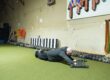
Setup is straightforward, and it’s the part that determines whether the rest of the movement goes smoothly. Place your glute ham roller on the ground with enough open space around you to get into a full push-up position. Many of these rollers have a small hook, notch, or crevice built into them where your feet can lock in, and if yours has that feature, use it — it keeps your feet anchored so you can drive into the apparatus without slipping. If your roller doesn’t have that notch, don’t worry about it. Simply placing your feet flat on the top of the apparatus works perfectly well.
From there, secure your feet, walk your hands out, and settle into a solid push-up position. Your hands should be stacked roughly under your shoulders, your body should form one clean line from your heels to the crown of your head, and your midsection should already be braced before you initiate the first rep. That starting tension matters. If you begin the movement with a soft, sagging midline, you’ll never establish the anti-extension demand that makes this exercise worth doing.
How to Perform the Movement with Proper Technique
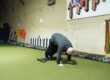
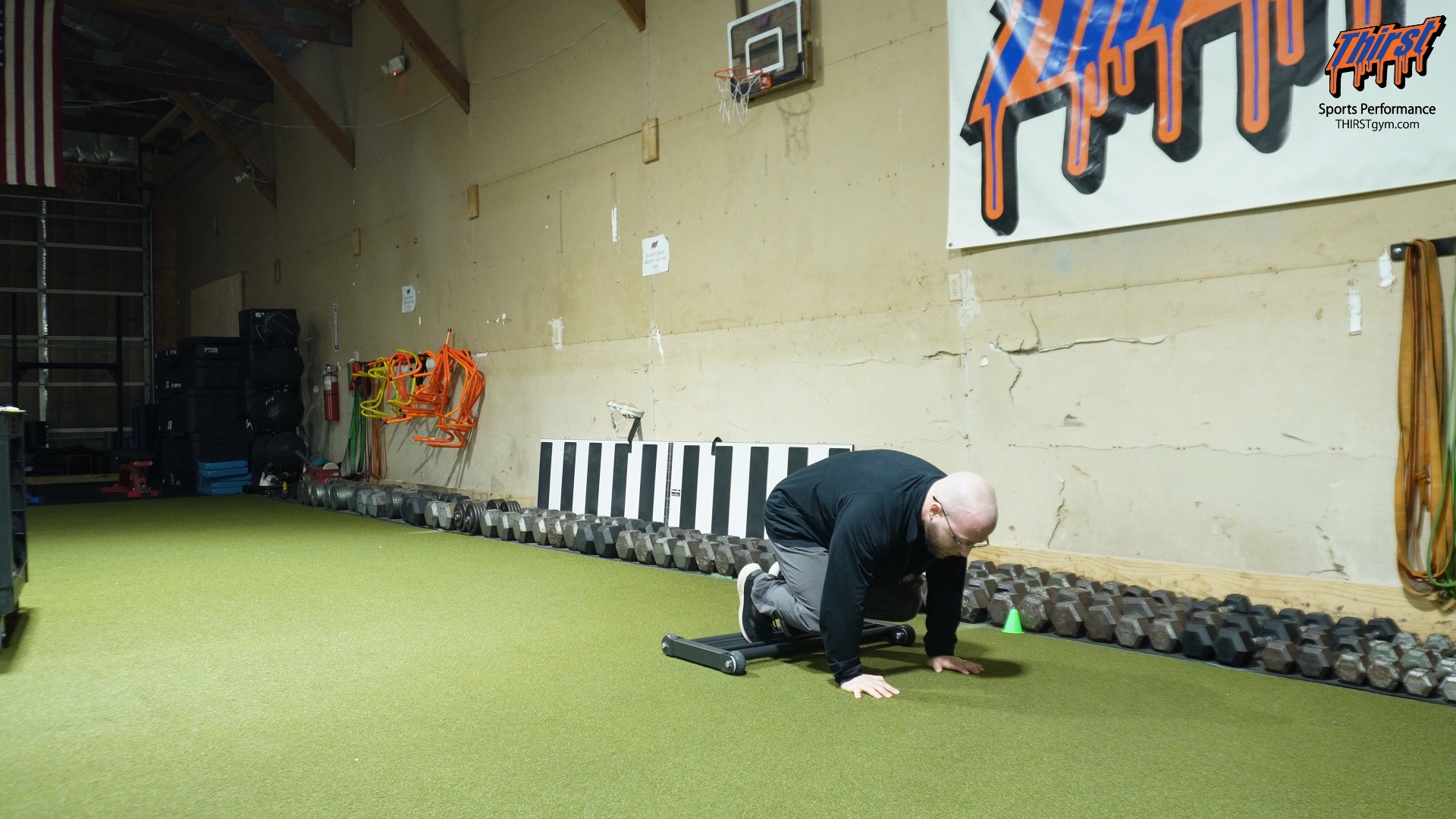
Once you’re braced in the top position, the movement itself is deceptively simple: drive your knees forward toward your elbows, then extend them back out to the starting position. The mental cue that works best here is to treat it like a reverse crunch performed from the top down. You’re rounding underneath, tucking the knees in, and rolling the pelvis rather than just shuffling your feet along the floor.
The single most important coaching point is this: your upper body does not move. The hands stay planted, the shoulders stay stacked, and the torso stays locked in place. All of the motion comes from the knees driving forward and the trunk flexing. If you find yourself rocking your shoulders back and forth to generate momentum, you’ve turned an ab exercise into a shoulder exercise, and you’ve lost the point of the drill. Keep everything above the hips still and let the lower body do the work.
The second cue is to actively drive your toes into the apparatus throughout the rep. That downward pressure keeps your feet anchored, gives you something to push against, and helps you maintain full-body tension from start to finish. It’s a small detail that makes the movement feel far more controlled and connected.
For athletes who aren’t especially mobile, getting the knees all the way to the elbows can be a genuine challenge — and that’s okay. This is one of those exercises where limited mobility isn’t a disqualifier, it’s the reason to do it. Bring the knees as far forward as your current range allows while keeping everything else locked in, and let that range improve over time.
Why the Flexion Component Is So Valuable
The flexion portion of the jackknife does more than just add difficulty. When you round underneath and drive the knees up, you’re allowing the lower back to expand and move through a range it rarely gets to explore in most strength training. For people who are stiff, sedentary, or chronically tight through the hips and lumbar spine, that controlled flexion is a gift. It gives the lower back room to breathe and the hips a chance to move, and it’s common for athletes to report that their back and hips actually feel better after a set than they did before it.
This is also why the exercise is such a strong fit for anyone who “needs more flexion in their life,” as it were. So much of modern training and daily life keeps us locked in extension or rigid neutral. Deliberately loading trunk and hip flexion under control — rather than avoiding it entirely — builds resilience through that range instead of leaving it untrained and vulnerable.
Common Mistakes to Watch For
The most frequent error is the momentum problem already mentioned: rocking the upper body to fling the knees forward. Slow the tempo down and own each rep. The second common mistake is letting the hips sag or pike excessively rather than maintaining a controlled roll — you want deliberate flexion, not a collapse. A third is holding the breath and losing the brace mid-rep; keep the midsection engaged and breathe behind the tension rather than letting the trunk go slack. Finally, some athletes rush to add load or reps before they’ve earned clean technique. Range of motion and control come first, always.
Progressions and Regressions
For those who need to scale the exercise down, reduce the range of motion, shorten the set, or simply hold the top plank position and work on bracing before adding the knee drive. Building the isometric foundation first makes the dynamic version far more productive later.
For progression, the primary lever here is volume followed by load. The programming approach that works well is to have an athlete perform as many quality repetitions as they can in a given set with good technique. Once they can comfortably clear roughly 15 to 20 clean reps per set, it’s time to increase the challenge. If your setup allows it, begin adding load to the apparatus so the athlete has to drag a weighted roller in with each rep. That added resistance ramps up the difficulty significantly and gives you a clear path to keep progressing the movement over months of training rather than plateauing once bodyweight reps get easy.
How to Program the Glute Ham Roller Jackknife
Because it’s both a bracing and a flexion exercise, the jackknife fits naturally into a few different slots. It works well as accessory core work at the end of a lower-body or full-body session, as part of a mobility-focused warm-up for stiff athletes who benefit from the flexion, or within a dedicated trunk-training block. Program it for reps rather than time in most cases, chasing quality volume in the 12-to-20 range for bodyweight work, then transitioning to loaded sets with slightly lower rep targets as the athlete advances.
Who Should Be Doing This Exercise
The short answer is nearly everyone, with the intensity and range scaled to the individual. General-population clients benefit from the bracing education and the restorative feel of controlled flexion. Powerlifters and strength athletes gain a trunk that resists extension under heavy loads. Combat athletes — wrestlers, grapplers, and MMA fighters who live in flexion and constantly fight to control their hips and midsection — get carryover that’s directly relevant to the mat. And stiff, immobile athletes get a low-risk entry point into training a range of motion they badly need.
The glute ham roller jackknife isn’t flashy, but it does exactly what good core training is supposed to do: it teaches you to brace, it trains the abdominals and hip flexors through a real range, and it leaves your back and hips feeling better than when you started. Master the bodyweight version, then start loading it, and it’ll pay off for a long time.