
Glute Ham Roller Pike-Up: How to Do It, Muscles Worked, and How to Program It
The glute ham roller pike-up is one of the most underrated abdominal exercises you can put in a program. Most people look at it and see a core movement, and it is, but it also trains your hip flexors, challenges your shoulder stability, and builds the kind of scapular movement that keeps shoulders healthy under heavy pressing and overhead work. It requires almost no equipment, scales to nearly any training level, and tells you a lot about how an athlete controls their trunk and hips. Here’s how to do it right, what it trains, and how I program it for my clients and athletes at THIRST.
Watch the video below on how to maximize this exercise.
What Is the Glute Ham Roller Pike-Up?
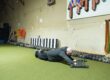
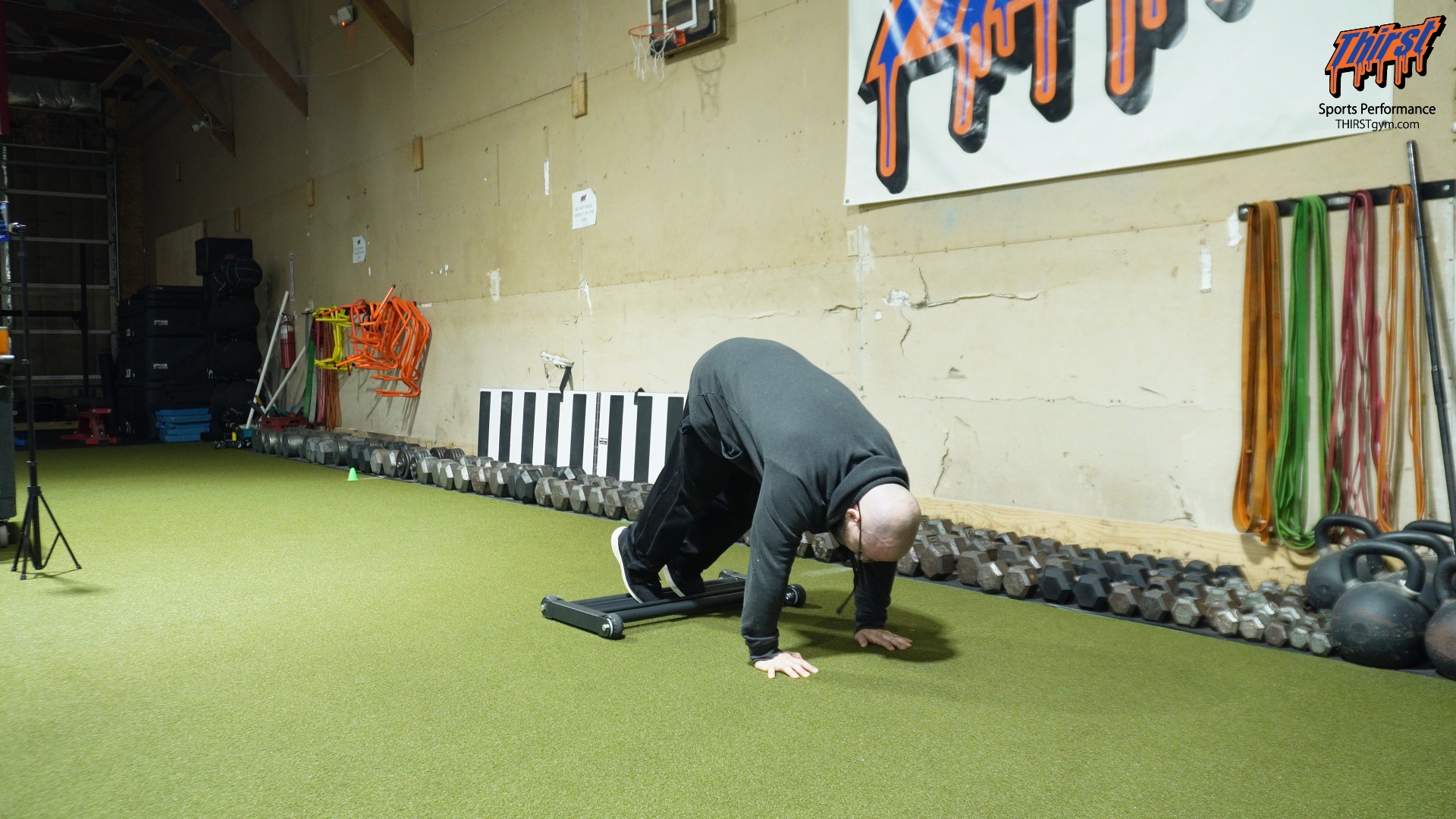
The pike-up is a bodyweight abdominal exercise performed from a push-up position with your feet on a rolling apparatus. You drive your toes toward your hands, the roller travels forward, and your hips shoot up toward the ceiling until your body forms an inverted V. Then you control the roller back out to the starting plank and repeat.
Think of it as a moving plank. The start and finish of every rep is a rigid, braced push-up position, and the work happens as you fold at the hips without losing control of your spine. That combination of anti-extension stability at the bottom and active hip flexion at the top is what makes it so effective.
Equipment You’ll Need
You need a glute ham roller or something similar, plus a few feet of open floor for it to travel. A glute ham roller is a simple wheeled apparatus, and most models have a shelf or plate where your feet sit. That shelf matters, because it gives your toes a secure place to drive from and keeps the roller tracking straight.
If you don’t have a roller, furniture sliders, a stability ball, or a suspension trainer will get you close. The movement pattern is the same, though the stability demand changes with each tool.
How to Perform the Glute Ham Roller Pike-Up
Setting Up the Starting Position
Lay the roller on the floor and get into a push-up position in front of it. Place both feet on the shelf, one at a time, with your toes set firmly. Your hands should be directly under your shoulders with your arms locked out.
What I really want to emphasize here is that you are flat from head to butt. Your hips shouldn’t sag toward the floor, and they shouldn’t be hiked up high before the rep even begins. Squeeze your glutes lightly, pull your ribs down, and push the floor away so your upper back is full rather than collapsed between your shoulder blades. That’s your home base for every repetition.
Driving the Hips Up
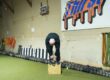
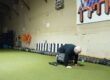
From that solid plank, drive your toes forward. The roller is going to move toward your hands, and as it does, shoot your hips up toward the ceiling as high as you can. Keep your legs mostly straight and let the movement come from folding at the hips. Your head travels between your arms as you rise, and your shoulders move into an overhead position relative to your torso.
Get as high as you can on every single rep. The top position is where you earn the scapular and hip flexor benefits, so don’t cut it short.
Controlling the Return
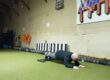
Lower under control back to the push-up position, and stop there. This is where most reps go wrong. You do not want to roll past your plank into an extended position with your butt sagging and your lower back arched. The rep ends when you’re flat from head to butt again. Hold that good quality plank for a beat, then drive right back up.
Muscles Worked in the Pike-Up
Abdominals and Hip Flexors
The obvious players are your abdominals and hip flexors. Your rectus abdominis and obliques work hard to resist extension at the bottom of every rep, then keep your trunk controlled as your hips rise. Your hip flexors, including the iliopsoas and rectus femoris, do the work of pulling the roller in and folding you into the pike. Training those two groups together matters, because that’s how they function in sprinting, kicking, and nearly every athletic movement. Strong hip flexors attached to a trunk that can’t stabilize is a recipe for a cranky lower back.
The Overlooked Benefit: Scapular Upward Rotation
What gets missed with this exercise is the quality upward rotation you get from the scapula. As your hips climb, your arms move overhead while your hands stay fixed to the floor. Your shoulder blades have to rotate upward and wrap around your ribcage to make that happen, which means your serratus anterior and trapezius are working the whole time.
You’re also protracting and reaching through the floor on every rep, which creates space for the scapulae to move the way they’re supposed to. For lifters who spend most of their training week pinned back and down on a bench, that’s valuable. It’s shoulder health work hidden inside an ab exercise, and it helps the shoulders feel good.
What Limits Your Range of Motion
How high you get is going to depend on your hamstring mobility and your overall flexibility. If your hamstrings are tight, they’ll stop your hips from folding before your abs are ever the limiting factor. A slight bend in the knees is fine if that’s what it takes to keep moving well.
Overhead shoulder mobility can limit you too. If you can’t get your arms comfortably overhead while standing, you won’t get there with bodyweight loaded through your hands either. Don’t force it. Work the range you own, get as high as you can with clean positions, and let the range improve over time. For many people, the pike-up itself becomes a useful loaded mobility drill for both areas.
Common Mistakes to Avoid
The biggest mistake is sagging through the hips on the return. When you roll back out and let your lower back drop into extension, you’ve taken the load off your abs and dumped it into your lumbar spine. If you can’t stop at a flat plank, the set is over.
The second is starting with the hips already high. If your butt is up in the air before you begin, you’ve shortened the range and skipped the hardest part of the exercise, which is controlling that long plank position.
Third is bending the knees excessively and turning the rep into a knee tuck. A knee tuck is a fine exercise, and I’ll use it as a regression, but it isn’t a pike. If the goal is a pike-up, the hips go up, not just the knees in.
Finally, watch for bent elbows and collapsed shoulders. Stay locked out and keep pushing the floor away. The moment you stop reaching, you lose the scapular benefit and your shoulders take on stress they don’t need.
How to Program the Glute Ham Roller Pike-Up
This is a traditional bodyweight exercise, and I program it simply. Most of the time I give my clients and athletes two to three sets of as many reps as they can get while maintaining good quality technique. The technique qualifier is the whole point. The set ends when the plank starts to sag or the hips stop climbing, not when you physically can’t move the roller anymore.
Once someone can get over 20 reps in a given set, it’s time to make it harder or move to a more challenging abdominal exercise. High-rep sets past that point cost time without building much.
I typically place pike-ups toward the end of a session as accessory core work, but they also fit well in a warm-up for upper body days in lower volumes, since they wake up the serratus and get the shoulder blades moving before pressing.
Progressions and Regressions
Scaling It Back
If the full pike-up is too much, start by simply holding the plank with your feet on the roller. The unstable base makes that harder than it sounds. From there, move to knee tucks, where you pull your knees toward your chest instead of piking the hips. The shorter lever makes it much more manageable. Partial-range pikes, where you only raise the hips as high as you can control, are the next step before full reps.
Making It Harder
The easiest way to level it up is tempo. Slow the lowering phase down to three to five seconds and the exercise changes completely. You can also add a pause at the top of each rep, holding the pike for a two-count before returning.
Beyond tempo, a weighted vest adds load without changing the pattern. Single-leg pike-ups, with one foot on the roller and the other held off, add a significant anti-rotation demand. Adding a push-up between each pike turns it into a full upper body and trunk combination. And when someone has truly outgrown it, ab wheel rollouts, body saws, and hanging leg raises are the natural next steps.
Who Should Use This Exercise
The pike-up is scalable, which is why I use it with so many different people. Because you control the position and the range on every rep, it works for a wide spectrum of athletes.
For wrestlers and combat sports athletes, the combination of hip flexor strength, trunk control, and shoulder stability in a hands-on-the-mat position carries over directly to scrambling, sprawling, and working from the front headlock. For powerlifters, it builds the anti-extension strength that supports a better brace under the bar, while giving the shoulders some much-needed upward rotation after all that benching. Swimmers and overhead athletes benefit from the closed-chain overhead work and serratus development. General fitness clients get a challenging, joint-friendly ab exercise that beats endless crunches. Youth athletes and older adults can start with the regressions and build toward full reps as their control improves.
Final Thoughts
The glute ham roller pike-up earns its spot in a program because it does several jobs at once. It trains your abs and hip flexors, reinforces a quality plank, and gives your shoulder blades the upward rotation and protraction they rarely get elsewhere. Set up flat from head to butt, drive your hips as high as you can, control the return, and never let that plank sag. Do two to three quality sets, progress it when you pass 20 reps, and you’ll have an abdominal exercise that keeps paying off for a long time.