
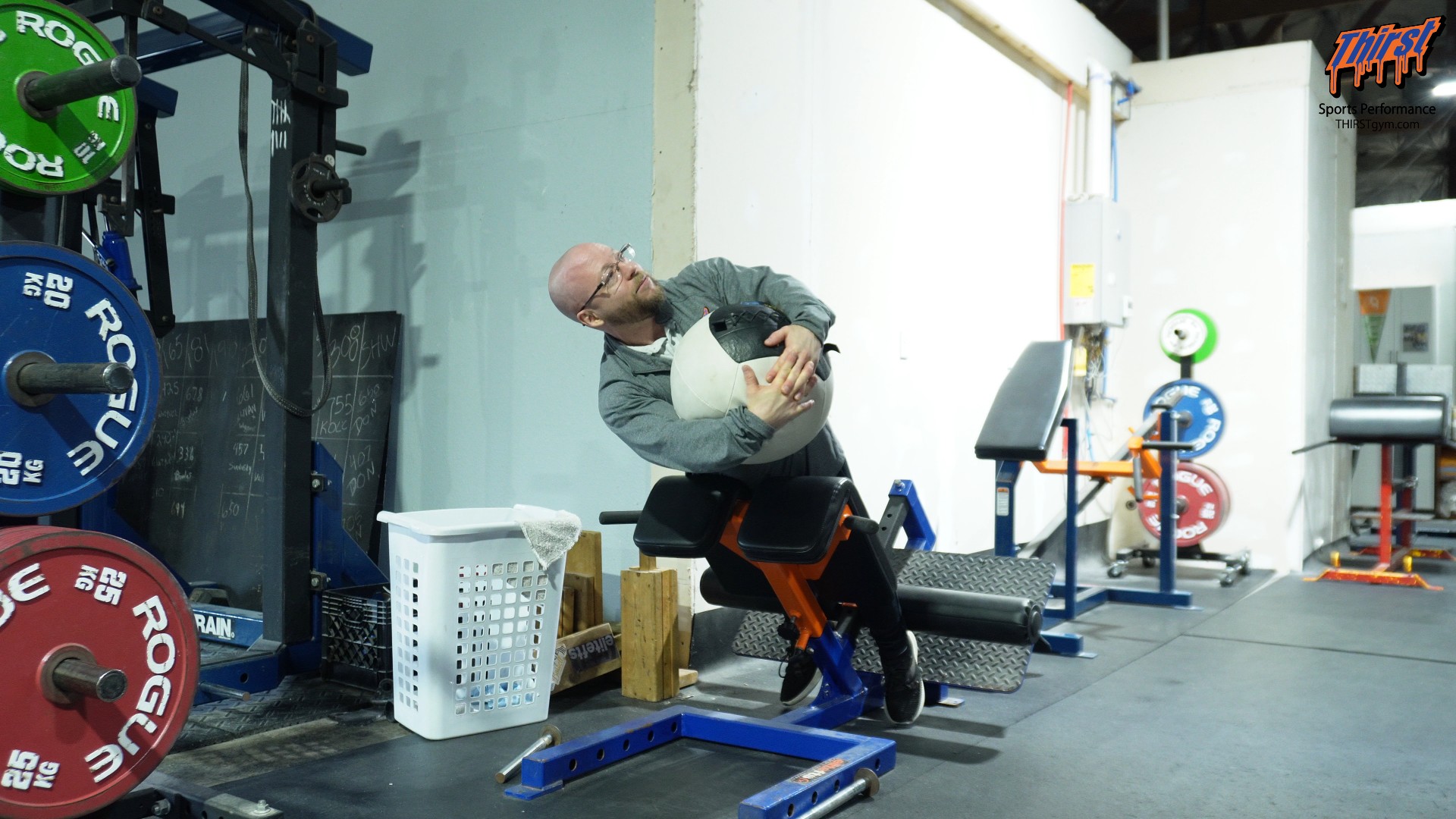
The 45-Degree Back Extension with Medball Rotation: A Better Way to Prime and Protect Your Lower Back
If you train the posterior chain hard — and if you squat, deadlift, or hinge for a living, you do — then you already know the back extension is a staple. But the standard version leaves a lot on the table. It trains hip extension in one plane, ignores rotation entirely, and does very little to prepare the spine for the twisting and bracing demands that show up in almost every sport and heavy lift. The 45-degree back extension with medball rotation fixes that. It takes a movement most lifters already own and layers in loaded thoracic rotation, turning a simple accessory into one of the most useful priming and finishing exercises you can program for the lower back, glutes, and hamstrings.
This is an exercise I came to on my own before I ever saw a similar Superman-style rotation floating around online, and it has since become a fixture in my own warm-ups — especially on the days I know I’m going to hinge heavy. Below, I’ll break down exactly how to perform it, what it trains, the mistakes that quietly rob it of value, and how to fit it into a real program whether you’re a wrestler, a powerlifter, or an older lifter trying to keep a cranky back happy.
Watch the video below on how to maximize this exercise.
What This Exercise Actually Is
The base movement is the 45-degree back extension, performed on the angled apparatus most people call a hyperextension bench. I prefer to call it a glute-ham hyper, because when it’s set up and executed correctly, it’s far more of a glute and hamstring movement than a low-back movement. That distinction matters. A lot of people treat the back extension as a lumbar exercise and end up cranking through spinal flexion and extension. Done well, the hips do the heavy lifting and the spine stays relatively neutral, letting the glutes and hamstrings drive the movement while the erectors work isometrically to hold position.
The variation adds a medicine ball hugged tight to the chest and a deliberate rotation on the way up. Instead of simply extending the hips to return to the top, you extend and twist toward one side, then reverse the pattern to the other. That rotation recruits the thoracic spine, the obliques, and the quadratus lumborum in a way the standard version never touches, while the medball adds just enough external load to make the whole thing more honest and more challenging.
The Equipment You Need
You need two things, and neither is exotic. The first is a 45-degree back extension or glute-ham hyper. Most commercial gyms have one, and any decent home gym setup can accommodate one — EliteFTS makes a well-built option if you’re outfitting a garage or facility. The second is a light to moderate medicine ball. I use a four-pounder for demonstration and for my own training, and I’d encourage most people to start lighter than they think. The ball isn’t there to be heavy. It’s there to keep your arms and torso locked into a consistent position so your rotation stays genuine rather than sloppy. A ball you can hug securely against your chest is worth far more than a heavier one you have to fight to hold.
How to Perform the Movement, Step by Step
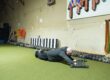
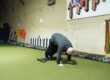
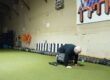
Set up on the back extension the way you always would. Lock your feet in against the footplate and the ankle pads so your lower body is anchored and stable. Take the medball and hug it around chest level — think about giving somebody a big, firm hug and holding it there for the entire set. That grip keeps the ball glued to your sternum and prevents it from drifting, which is what keeps your rotation controlled.
From the top, descend into your normal back extension. Get long through the whole body and keep your back relatively straight as you lower — you’re hinging at the hips, not crunching at the spine. Then, as you come up, add the rotation. On the first repetition, drive up out of the bottom and rotate toward your right side. Lower back down under control, then come up and rotate toward your left. Alternate sides, or complete all your reps on one side before switching — either works, but alternating tends to feel more natural for most people.
The key throughout is to keep your hips relatively square into the pad while you rotate. The movement happens through the trunk and thoracic spine, not by letting the pelvis swing open. At the same time, don’t be timid — rotate as far as you comfortably can on every single repetition. Half-hearted twists give you half the benefit. You’re chasing full, controlled range of motion, not just going through the motions.
The Muscles Doing the Work
When this exercise is performed correctly, you’ll feel it in a lot of places at once, and that’s exactly the point. The glutes and hamstrings drive hip extension, doing the majority of the concentric work. The erectors, quadratus lumborum, and the deeper stabilizers of the low back fire to maintain spinal position and resist the rotational forces the medball introduces. And as you twist, the thoracic spine and obliques come alive, opening up through the mid-back in a way that flat-plane hip extension simply can’t replicate.
That combination — hip extension plus loaded rotation — is what makes the movement so valuable. You’re not isolating a single muscle. You’re training the entire posterior chain to produce force while simultaneously teaching the trunk to rotate and stabilize under a small external load. For athletes and lifters whose spines have to brace and rotate under far heavier demands, that’s a rehearsal worth having.
Why I Use It to Prime Heavy Lower-Body Days
The reason this exercise earned a permanent spot in my training is simple: it makes my lower back feel dramatically better before I go do things that would otherwise aggravate it. Deadlifts and heavy hinge patterns are the movements most likely to leave my back feeling cranky, and I’ve found that a few sets of this before I lift changes that outcome.
The mechanism makes sense. Getting the glutes and hamstrings firing takes some of the load off the lumbar spine during the main work. Driving blood flow into the low back and erectors warms and lubricates the tissue. And adding the rotation opens up the thoracic spine, restoring some of the mobility that tends to stiffen up when we spend all day sitting or bracing in one position. Put those three effects together and you walk up to the bar with a back that’s warm, mobile, and switched on rather than cold and guarded.
If you don’t rotate well — and most people who train heavy in the sagittal plane don’t — this is an especially valuable addition. It’s a low-risk, high-reward way to build a little more resilience into a part of the body that tends to be neglected until it complains.
Common Mistakes That Quietly Kill the Benefit
The most frequent error is turning the movement into a lumbar flexion-and-extension exercise instead of a hip hinge. If your low back is rounding hard at the bottom and hyperextending at the top, you’ve lost the glute-ham emphasis and turned it into a spinal grind. Keep the back relatively straight and let the hips do the work.
The second mistake is letting the hips swing open during the rotation. If your pelvis rotates along with your torso, you’ve offloaded the trunk and you’re no longer training rotation the way you intended. Anchor the hips into the pad and rotate from above them.
The third is going too heavy with the medball. A heavier ball doesn’t make you stronger here — it makes you compensate. It pulls you out of position, shortens your range of motion, and encourages you to muscle through the rotation rather than control it. Stay light, hug the ball tight, and let the challenge come from the range and the control rather than the load.
And finally, plenty of people simply don’t rotate far enough. They add a token twist and call it a rotation. Commit to the full range on every rep. The thoracic mobility benefit lives at the end of that range, not in the middle of it.
Programming: Where and How to Use It
There are two clear spots for this movement, and both work well.
As a Priming Exercise Before Training
This is my preferred use. Program it early in the session, before you squat, bench, or get into any lower-body-dominant athletic work. Five to eight rotations on each side for two to three sets is plenty. You’re not trying to fatigue anything — you’re waking up the posterior chain, driving blood flow into the low back, and restoring thoracic rotation before the demanding work begins. Think of it as insurance that also happens to feel good.
As a Finisher at the End of Training
The other option is to throw it in at the end of a heavy lower-body session. Used this way, it serves as a way to decompress the back from the loading you just put it through, drive extra blood flow into the tissue, and finish off the posterior chain with some quality movement. The combination of hip extension and thoracic rotation makes it a satisfying way to close out a session and leave the back feeling worked rather than beaten up.
Regressions and Progressions
If the medball rotation is too much to start — whether because of mobility limitations or a back that’s currently touchy — regress it. Drop the ball entirely and perform a standard 45-degree back extension until you’re comfortable and confident with the hip hinge and the position. From there, add the ball with no rotation, simply holding it against the chest to add a bit of load. Once that feels solid, layer the rotation back in with a controlled, partial range and build toward full rotation over time.
To progress, you have a few honest options. You can increase the range of your rotation as your thoracic mobility improves. You can add repetitions or sets. You can slow the tempo down, pausing briefly at the top of each rotation to increase the time under tension and the demand on the stabilizers. Only after you’ve exhausted those should you consider a slightly heavier ball — and even then, keep it modest. This isn’t a movement that rewards ego.
Who Should Be Doing This
The honest answer is almost everyone who trains the lower body, but a few populations stand to gain the most.
Wrestlers, grapplers, and combat sports athletes live in rotation and hip extension, and they need a spine that can produce force while twisting. This movement rehearses exactly that pattern under light, controlled load, making it an excellent addition to a warm-up before mat work or heavy lifting.
Powerlifters and anyone who deadlifts or hinges heavy benefit from the priming effect described above. If heavy pulling tends to leave your back cranky, a few sets of this beforehand can meaningfully change how the session feels.
Older lifters and general fitness clients often lose thoracic rotation and posterior chain function first, and both are exactly what this exercise restores. Performed with a very light ball or no ball at all, it’s a safe, accessible way to keep the back mobile and resilient.
And athletes in rotational sports beyond combat — think swimmers, throwers, and rotational field athletes — get a low-cost way to reinforce the hip-extension-plus-rotation pattern that shows up throughout their sport.
The Bottom Line
The 45-degree back extension with medball rotation is a small upgrade to a familiar exercise that pays off far beyond its modest appearance. It trains the glutes, hamstrings, and erectors through hip extension while adding the loaded thoracic rotation that most heavy training neglects. Use it to prime your lower back before you hinge and squat, or as a finisher to decompress and flush the posterior chain after a hard session. Keep the ball light, the hips square, and the rotation full, and you’ll have a resilient, well-warmed back that’s ready for whatever the session demands. If you have any questions about programming it into your own training, drop them in the comments — I’m always happy to help.